Locations:





Join us in Cleveland July 17 for a practical, first-of-kind course
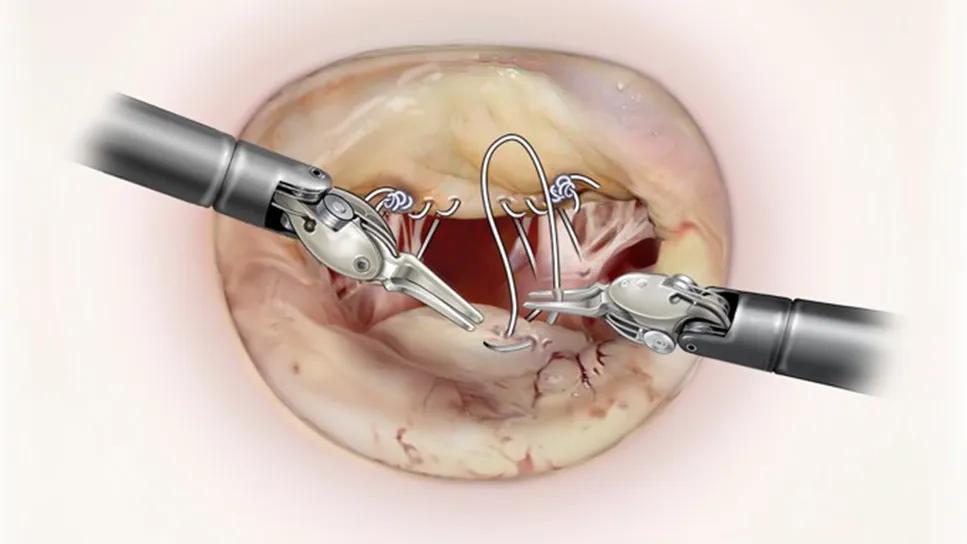
Image content: This image is available to view online.
View image online (https://assets.clevelandclinic.org/transform/9481fe71-e8ae-48f8-a0d1-213e7ebef6bf/robotic-MV-repair-feature)
illustrated robot arms tying a suture over a heart valve during an operation
As robotic assistance is applied to more and more types of cardiothoracic surgery, mastery of robotics requires an understanding of the art and science of the technology that goes beyond mere familiarity with techniques.
Advertisement
Cleveland Clinic is a non-profit academic medical center. Advertising on our site helps support our mission. We do not endorse non-Cleveland Clinic products or services. Policy
To address this need, Cleveland Clinic is hosting an immersive full-day CME program, “State-of-the-Art Robotics in Cardiac and Thoracic Surgery,” on Friday, July 17, 2026, designed to provide surgeons and their teams with real-world operative insights and technical strategies. The event is at the InterContinental Cleveland on Cleveland Clinic’s Main Campus.
“This type of course has not been offered before in the United States, and Cleveland Clinic is uniquely positioned to offer it,” says course co-director Lars Svensson, MD, PhD, Chief, Cleveland Clinic Heart, Vascular & Thoracic Institute. “The use of robotic assistance for heart and thoracic surgery has steadily grown since our first robotically assisted mitral valve repair on December 13, 2006 — two decades ago. We now have three robots running every day. We felt it was time to share insights on making the most of this technology to promote greater adoption of these approaches that are less painful for patients and require shorter hospital stays.”
The course is structured as a dual-track program, allowing for a comprehensive exploration of both cardiac and thoracic applications. This format ensures that attendees can focus on their specific areas of expertise while gaining a broader perspective on the capabilities of current robotic platforms.
For cardiac surgeons, the curriculum explores advanced robotic approaches to a wide array of procedures, including:
Advertisement
The simultaneous thoracic track likewise covers a range of robotic applications, including:
The course’s pioneering focus on robotics is matched by its remarkably broad sampling of robotic surgery expertise. Experts in robotically assisted cardiothoracic surgery from Cleveland Clinic sites in Ohio, Florida and Abu Dhabi are joined by their counterparts from at least two dozen leading U.S. and Canadian medical centers.
“The course’s nearly 40-member faculty represents a collection of the most skilled and innovative robotic cardiothoracic surgeons in the world,” says course co-director Sudish Murthy, MD, PhD, Section Head of Thoracic Surgery at Cleveland Clinic.
“This expert faculty from across North America will comprehensively cover the technical aspects and outcomes of the wide range of options in robotic cardiac and thoracic surgery,” adds course co-director Marc Gillinov, MD, Chair of Thoracic and Cardiovascular Surgery at Cleveland Clinic.
The agenda features a mix of expert lectures, panel discussions and case studies on handling complex presentations. A centerpiece of the thoracic track is a “master class video” session in which faculty review videos of their notable robotically assisted cases, sharing technical pearls, efficient strategies and novel approaches.
Advertisement
At the same time, all programming is aimed at building on the “how to” of procedural techniques to fully address the clinical decision-making process, such as evaluating patient-specific factors that inform candidacy for robotic intervention.
The course also reflects recognition that a successful robotic practice requires a cohesive multidisciplinary team and a solid administrative foundation. Dedicated sessions will outline essentials of launching or expanding a robotic program, including staffing, credentialing and resource allocation.
While directed toward cardiac and thoracic surgeons, the program is ideal for fellows and multidisciplinary surgical team members committed to the future of minimally invasive surgery.
For more information and to register, visit ccfcme.org/cardiacrobotic.
Advertisement
Advertisement
Procedure places the center among only a handful worldwide to offer the minimally invasive approach
Dr. Prabhu discusses mentorship, collaboration and her vision for the future of the department
Multidisciplinary collaboration is fueling breakthroughs in endoscopic and surgical technology

As robotics in the OR grows, so does the role of nurses
Center touts the benefits of neonatal MIS, trains others on the approach
Applications, outcomes and untapped potential
Study finds that fracture and infection are rare
Our new head of pediatric general and thoracic surgery shares his passion and vision
 Search