Locations:


In-depth live symposia in Florida and Cleveland feature interdisciplinary experts from around the nation
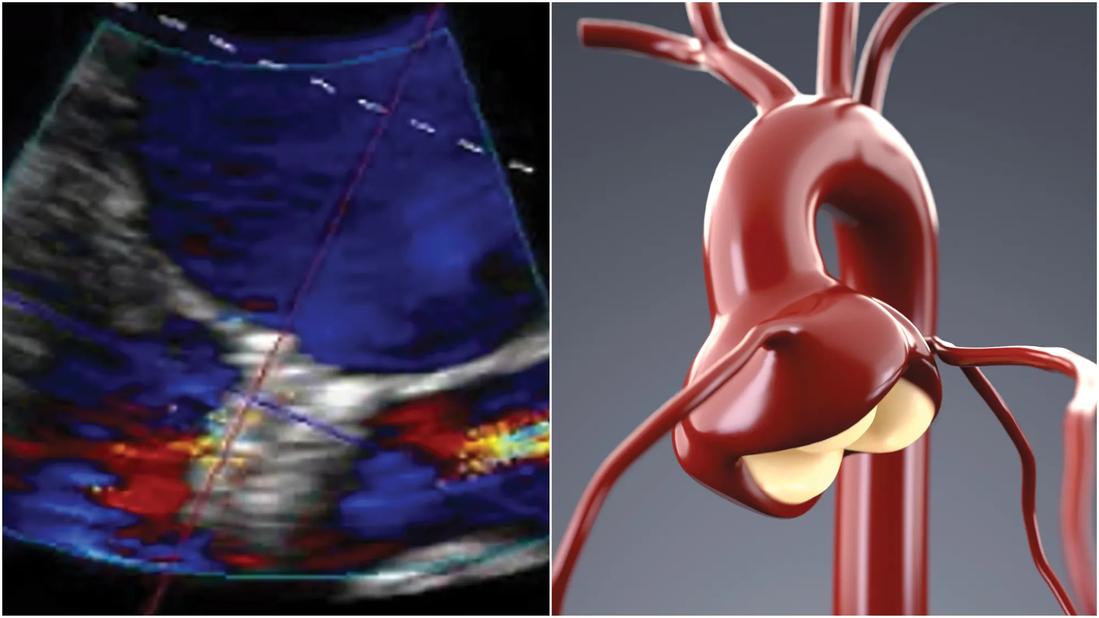
Image content: This image is available to view online.
View image online (https://assets.clevelandclinic.org/transform/a920bb97-2b13-4043-bc42-34216d62afa1/26-HVI-9298908-CQD)
color cardiac echo next to model of a bulging aorta
Cleveland Clinic has two live CME events in store for March 2027 that offer unique educational experiences around heart valve imaging and the comprehensive management of cardiac aspects of connective tissue disorders.
Advertisement
Cleveland Clinic is a non-profit academic medical center. Advertising on our site helps support our mission. We do not endorse non-Cleveland Clinic products or services. Policy
How can cardiac imaging better guide intervention, clarify difficult diagnoses and inform treatment decisions? This enduring CME favorite brings those issues into focus through a mix of case presentations, short lectures, interactive discussions and practical demonstrations.
Running March 3-6, 2027, at Loews Miami Beach Hotel, Miami Beach, Florida, the 29th Annual Valve Imaging Summit offers a 2.5-day agenda (preceded by an optional learning-lab session) that will deliver in-depth exploration of how best to connect imaging findings with a wide range of decisions facing multidisciplinary heart teams.
Sessions on mitral, aortic and tricuspid valve disease examine anatomic assessment, procedural planning, surgical approaches and evolving transcatheter therapies. Topics include individualizing mitral valve therapy, repeat transcatheter aortic valve implantation and evidence guiding intervention for tricuspid regurgitation. A debate on transcatheter aortic valve replacement versus surgery will weigh competing approaches to symptomatic severe aortic stenosis.
Beyond valve disease, the course’s nearly two dozen expert faculty will examine atrial fibrillation treatment, left atrial appendage closure, and imaging strategies before, during and after structural interventions. Additional sessions address heart failure with preserved ejection fraction, implementation of new diastology guidelines, hypertrophic cardiomyopathy, cardiac amyloidosis, sarcoidosis and pericardial disease, alongside cardio-oncology and radiation-associated heart disease.
Advertisement
Opportunities to move from concepts to application distinguish the meeting. “Read with the Experts” sessions invite attendees to work through cases with faculty, while dedicated tracks for sonographers and advanced practice providers feature live scanning demonstrations linking image acquisition to clinical context. An “Echo Jeopardy” segment adds another interactive learning format.
An optional interventional echo lab on the eve of the summit (Wed. evening, March 3) offers hands-on practice with 3D transesophageal echocardiography and multiplanar reconstruction, individualized learning tracks and a wet-lab demonstration.
“This is the premier heart valve course enabling attendees to learn through multimodality case presentations and expert-led panel discussions,” says summit director Allan Klein, MD.
For more details and to register, visit ccfcme.org/echo.
When should a patient with a genetic aortopathy undergo surgery, and what should guide care before and after intervention? Those questions are at the core of this daylong CME symposium featuring multidisciplinary faculty who will outline how advances in genetics and the understanding of connective tissue disorders (CTDs) can best guide practical decisions in cardiovascular care.
Held Fri., March 12, 2027, at the InterContinental Cleveland on Cleveland Clinic’s Main Campus — and also offered via livestream — Marfan Syndrome and Connective Tissue Disorders 2027 follows the patient journey from recognition of heritable CTDs to lifelong management. Opening sessions will examine the genetics of thoracic aortic disorders, differences among CTDs, precision medicine and genetic counseling. Presentations will explore how to identify patients and families who may benefit from genetic testing and cascade screening — and how those findings inform subsequent care.
Advertisement
Assessment and management discussions will move beyond aortic diameter to address comprehensive evaluation, risk stratification, bicuspid aortopathy, the natural history of aortic enlargement and guidelines for surgical timing.
The afternoon surgical program offers perspectives on acute type A dissection, valve-sparing root replacement, complex arch reconstruction, descending and thoracoabdominal aortic reconstruction, and endovascular and hybrid repair.
The final session turns to questions that persist beyond intervention: current and emerging medical therapies, exercise and athletics, pregnancy, shared decision-making and coordinated follow-up after aortic dissection.
Panel discussions and audience Q&As throughout the day will offer opportunities to discuss clinical uncertainties with expert faculty from multiple disciplines at Cleveland Clinic and other leading North American centers. A lunchtime panel will also address the evolution of genetic testing for CTDs.
“In the past 40 years there has been a tremendous explosion in knowledge, treatment and surgery for Marfan syndrome and other connective tissue disorders,” notes course co-director Lars Svensson, MD, PhD. “This meeting will aim to summarize all we know and also make information available to patients and their families.
For more details and to register, visit ccfcme.org/marfan.
“With our various CME offerings, Cleveland Clinic’s Heart, Vascular & Thoracic Institute strives to provide a broad perspective of cutting-edge continuing education that reflects multidisciplinary team practice encompassing complex clinical care, research and innovation,” adds Milind Desai, MD, MBA, Vice Chair of Education for the Heart, Vascular & Thoracic Institute. “These two courses are prime examples.”
Advertisement
These activities have been approved for AMA PRA Category 1 Credit™.
Advertisement
Advertisement
Join us in New York Dec. 4-5 for evidence-based instruction with real-world examples
Join us in Florida this winter for a long-standing CME favorite

Experts encourage customized care, concomitant treatment of substance use disorder and heart infection
International experts provide a guide for rapid decision-making focused on transcatheter options
Cleveland Clinic study points to need for new strategies to curb addiction relapse
Insights from guidelines and the Cleveland Clinic experience
Infant with complex congenital heart anomalies thriving after biventricular circulation is restored
New study illuminates mechanical underpinnings of secondary leaks
 Search