Locations:





Join us in New York Dec. 4-5 for evidence-based instruction with real-world examples
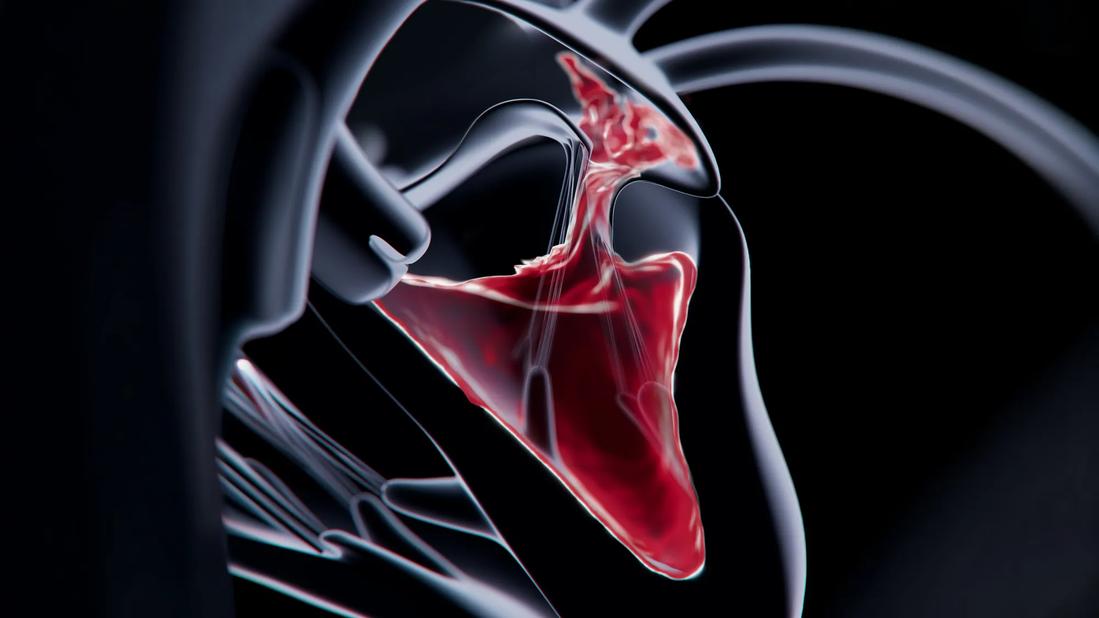
Image content: This image is available to view online.
View image online (https://assets.clevelandclinic.org/transform/ea439b09-df81-43e3-a6b8-991f65745fd9/mitral-valve-abstract)
stylized rendering of a blood coursing through a heart valve
For a decade now, Cleveland Clinic has been offering a heart valve-focused live CME event in December at a New York City venue just steps from Central Park. This year the focus of the day-and-a-half course returns to mitral valve disease and tricuspid valve disease with “Case-Based Management of Mitral and Tricuspid Valve Disease” on Fri.-Sat., Dec. 4-5, 2026, at the JW Marriott Essex House in midtown Manhattan.
Advertisement
Cleveland Clinic is a non-profit academic medical center. Advertising on our site helps support our mission. We do not endorse non-Cleveland Clinic products or services. Policy
“Diagnosis and treatment of mitral and tricuspid valve disease are in evolution, and understanding the opportunities and pitfalls of novel approaches is important,” says course co-director Brian Griffin, MD, Section Head of Cardiovascular Imaging at Cleveland Clinic. “This course will provide insights into nuances that are critical to care delivery for these prevalent and interesting conditions.”
“Advances in these areas mean new options for patients,” adds course co-director Marc Gillinov, MD, Chair of Thoracic and Cardiovascular Surgery. “Using a case-based approach, we will highlight the advances and their applications.”
With a mix of short lectures and case discussions, expert multidisciplinary faculty will share evidence and practice insights in eight topical sessions covering the following:
All sessions feature one or two case presentations with perspectives on case management from multiple disciplines and subspecialties, including cardiovascular imaging, interventional cardiology, surgery and electrophysiology. Each case presentation concludes with a recap of what happened to the patient and a panel discussion with attendee Q&A.
Advertisement
The course culminates in a final session exploring case-based management approaches to five complex clinical scenarios. The focus of the scenarios gives a sense of the course’s level of nuance:
Key emphases throughout the agenda include the complex interplay between valvular pathology and cardiac arrhythmias, the role of multimodality imaging, relative advantages and drawbacks of surgical and transcatheter therapies, evidence-based decision-making and the value of multidisciplinary collaboration.
“The fundamentals of appropriate patient selection and detailed imaging-driven planning also will figure prominently throughout,” says course co-director Milind Desai, MD, MBA, Vice Chair of Education for Cleveland Clinic’s Heart, Vascular & Thoracic Institute.
The core faculty of more than a dozen Cleveland Clinic experts in various cardiovascular disciplines will be supplemented with a couple of guests from other leading institutions.
“Continued evolution of mitral and tricuspid valve disease care makes this course as relevant as ever,” observes course co-director Lars Svensson, MD, PhD, Chief of the Heart, Vascular & Thoracic Institute. “Its case study-based review of imaging and treatments will serve as a helpful introduction to managing the challenges of these conditions.”
Advertisement
Register or learn more at ccfcme.org/mitralvalve. Early-bird pricing ends after Nov. 1.
Advertisement
Advertisement
Join us in Florida this winter for a long-standing CME favorite

Experts encourage customized care, concomitant treatment of substance use disorder and heart infection
International experts provide a guide for rapid decision-making focused on transcatheter options

Cleveland Clinic study points to need for new strategies to curb addiction relapse
Insights from guidelines and the Cleveland Clinic experience

Infant with complex congenital heart anomalies thriving after biventricular circulation is restored
New study illuminates mechanical underpinnings of secondary leaks
Housing multidisciplinary clinicians in one leading-edge facility can transform GME along with patient care
 Search