Locations:





 Search
Trial may lead to first FDA approval in this realm
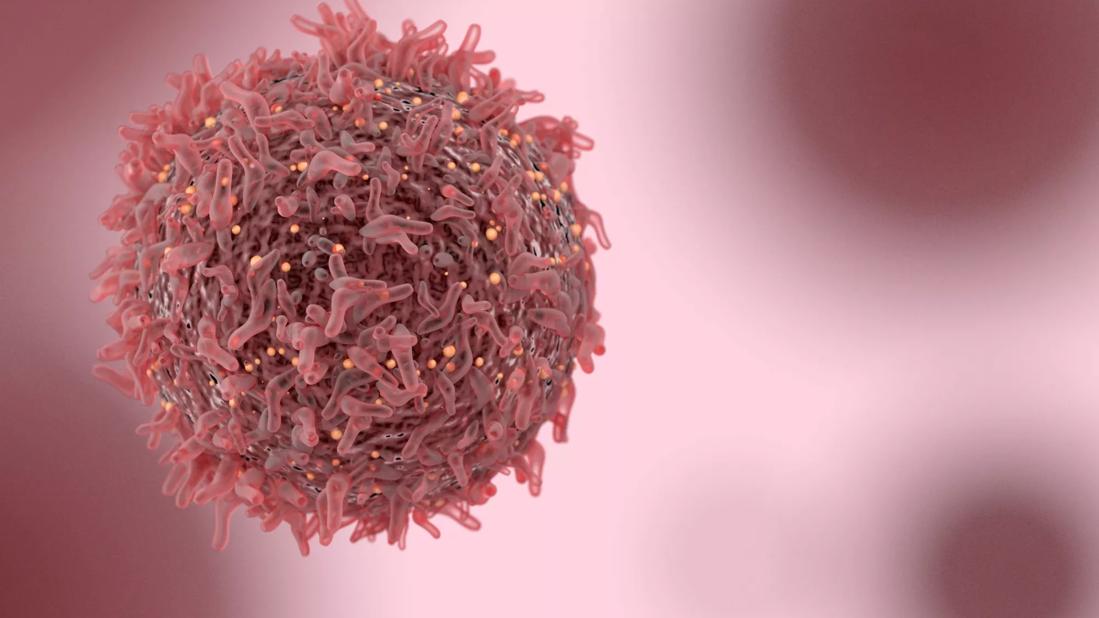
Image content: This image is available to view online.
View image online (https://assets.clevelandclinic.org/transform/6f298682-f84c-4dd3-84d3-7384d78d5309/cancerCell-3-scaled-jpg)
Breast cancer cell
Immunotherapy has offered great benefits to many cancer patients, but to date breast cancer patients have not numbered among them. A new trial, however, suggests that the outlook for immunotherapy in breast cancer treatment may brighten soon. The trials’ results may well prompt the first FDA approval of an immunotherapy treatment for breast cancer, says Megan L. Kruse, MD, a breast medical oncologist with Cleveland Clinic.
Advertisement
Cleveland Clinic is a non-profit academic medical center. Advertising on our site helps support our mission. We do not endorse non-Cleveland Clinic products or services. Policy
“Immunotherapy has been a blockbuster treatment in many cancer types,” says Dr. Kruse. It has dramatically improved prospects for patients with lung cancer, melanoma, bladder cancers, among others. For them, immunotherapy has proven effective and generally nontoxic though it can have some side effects.
“Our patients read a lot about immunotherapy. They really want a shot at these medications, but for the large majority of breast cancers we don’t have immunotherapy agents approved for use by the FDA,” says Dr. Kruse.
The Phase III Impassion130 study may change that. It has shown that the combination of chemotherapy (specifically Abraxane®, nab-paclitaxel) and immunotherapy (Tecentriq®, atezolizumab) significantly reduced the risk of disease progression among patients with metastatic triple negative breast cancer.
In prior studies, researchers had tried using atezolizumab alone to treat breast cancer but had only obtained response rates of 24 to 26 percent. In contrast, patients in the phase 2 study of atezolizumab with nab-paclitaxel had a 42 percent response rate. This led to development of the phase 3 Impassion130 study.
“Breast cancer was not traditionally thought to be one of the cancers involved with the immune system for several reasons,” says Dr. Kruse. For one, researchers previously lacked the technology to observe and understand the immune system’s role in breast cancer, but that has been changing. Now, she says, “We’ve seen that the more immune cells there are in a breast cancer specimen, the better the patient’s prognosis.”
Advertisement
Also, breast oncologists have had a fairly wide variety of other treatment options. However, for one patient group, those with metastatic triple-negative disease, breast cancer has been especially dangerous. This is precisely the group which was involved in the phase 3 Impassion130 study, which makes its promising results especially important.
At the same time, patients with triple-negative disease have more immune system infiltrates in their tumors than do patients with other forms of the illness, explains Dr. Kruse. This may increase the chances for good results with immunotherapy, she says, “Hopefully, everything is linking up to work the way we hope that it will.”
Patients with triple-negative disease tend to skew younger than breast cancer patients overall. This most virulent form of the disease also disproportionately affects African Americans.
Cleveland Clinic researchers are working on their own immunotherapy trials for high-risk breast cancer patients with metastatic disease, reports Dr. Kruse. Several studies are now open to test different pairings of chemotherapy drugs with immunotherapy drugs. “We are doing trial and error of various combinations that may have success together,” says Dr. Kruse.
One trial, pursued through the Case Comprehensive Cancer Center, also aims at improving outcomes for triple negative patients, uses nab-paclitaxel, the same chemotherapy drug used in the phase 3 Impassion 130 Study, to which the researchers have added carboplatin. They pair those two agents with pembrolizumab.
Advertisement
Also, a national trial sponsored by Pfizer on which Cleveland Clinic researchers are working will study the effects of the immunotherapy agent avelumab paired with a PARP inhibitor (talazoparib).
Cleveland Clinic researchers are also starting to explore vaccines that can harness the immune system to prevent the onset of metastatic breast cancer. “The vaccine has not yet been manufactured,” says Dr. Kruse. “It’s a long process and it’s really early, but we do hope to have a study in the next few years.”
Advertisement
Advertisement

Newer class of medications evolves care models for patients with hemophilia

Improving access to specialists
Dotatate PET/CT scan and molecular testing informed treatment trajectory

A proactive, framework-based approach

Patients on ibrutinib were more than twice as likely to experience atrial fibrillation or heart failure than those on second-generation alternatives.

Expert recommendations introduce use of targeted agents
Combination therapy may soon represent new standard of care

Research findings offer clues for improving disease outcomes in men