Locations:





Reflections from an oncology provider and communications educator on new ASCO Guidelines on Patient-Clinician Communication
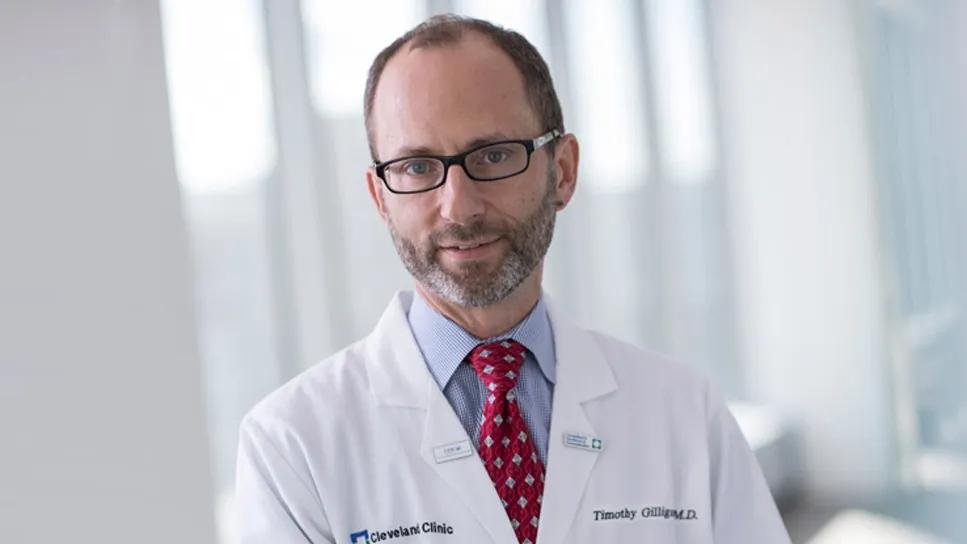
Image content: This image is available to view online.
View image online (https://assets.clevelandclinic.org/transform/6310460b-c405-43fe-a6ff-ac56268213ec/timothy-gilligan-md-hallway)
Dr. Timothy Gilligan
The conversations that happen in an oncologist's office are some of the most crucial that many people ever experience. However, many clinicians receive little formal training in having these discussions.
Advertisement
Cleveland Clinic is a non-profit academic medical center. Advertising on our site helps support our mission. We do not endorse non-Cleveland Clinic products or services. Policy
To support clinicians with practical guidance in this arena, the American Society for Clinical Oncology brought together a team of medical oncologists, hematologists, nurses, hospice and palliative medicine clinicians and communication skills and advocacy experts to update its Patient-Clinical Communication Guidelines. The new guidelines:
"High-stakes conversations with patients require careful planning and execution," says guideline co-author Timothy Gilligan, MD, an oncologist at Cleveland Clinic Cancer Institute, past President of the Academy of Communication in Healthcare and Director of Communication Skills at the Cleveland Clinic Lerner College of Medicine. “Walking someone through information that may be very unwelcome requires a considerable degree of skill.”
ConsultQD had the opportunity to talk with Dr. Gilligan, who shared further advice on improving patient-clinician communication.
Plan ahead. “Given the time-crunch that clinicians are under, they sometimes feel that they don't have time to prepare for challenging conversations. I would reframe that as we don't really have time not to prepare," he says. "If there’s been a major clinical change I need to discuss with a patient, I’ll be more efficient if I think in advance what kind of conversation it’s going to be and what kind of reactions I might hear. I can then start the conversation off on a better foot. It’s the same reason it’s important to begin a conversation with a patient by setting an agenda so we’re on the same page about what we’re going to cover.”
Advertisement
Focus on imparting what’s important to the patient. “As oncologists, we’re fascinated by medicine and how cancer therapies work, but most of our patients do not share our deep fascination with human biology,” says Dr. Gilligan. “They don’t want all the physiological details. They care about their health, avoiding suffering, being there for their loved ones and being able to do things they enjoy.”
Recognize the emotional experience as much as the patient’s cognitive understanding. Giving patients bad news is disheartening, but being beside them and acknowledging the difficulty of the news is a pillar of compassionate care. “For me, the meaning of the work is really being in the room with the patient,” says Dr. Gilligan. “We need to both treat the patient's medical problems as best we can and support them emotionally.”
Acknowledge suffering. Dr. Gilligan shared an anecdote of a physician interaction he observed to illustrate the importance of empathy in talking with patients. In this case, the patient told their physician that they had been up all night vomiting. The physician's response was that he would change the patient’s antiemetic regimen.
“Yes, changing the medication was the correct action, but the physician missed an opportunity to listen and empathize. Consider how different the patient would have felt if his doctor took a moment to say ‘I’m sorry you had such a bad evening' or 'we’re going to do everything we can to make sure that doesn’t happen again’.”
Actively listen. “One of the biggest mistakes we make in oncology is talking too much,” says Dr. Gilligan. “One of the things I’ve learned over the years is that it is often more helpful to the patient for me to listen to them than to speak to them. When I go in to see a patient now, I try to say as little as possible at the beginning of visits so I can pay more attention to emotional cues. I ask questions, I listen, I watch. I try to imagine who this person is and what kind of day they’re having. That way when I start to talk, I know more about who I’m talking to and have a sense of how to support them.”
Advertisement
Don’t try to rush patients past bad news. There’s a natural inclination to want to make people feel better, but it’s incumbent on physicians to make sure patients understand the implications of disease changes and give them the time to emotionally process the information.
“When we give bad news, we often try to turn the bad news into good news,” Dr. Gilligan says. “There’s almost a reflex if disease relapsed to say ‘your cancer is back and we’ll start another treatment'. But there needs to be a pause where you help the patient understand the significance of this news. You might say 'The cancer has grown. I’m wondering if we could talk about the meaning of that?' This gives the patient agency and helps ensure the next treatment decision corresponds with their goals and values."
These consequential discussions can be draining, which is one reason the ASCO guidelines address setting boundaries. “As healthcare providers, we sometimes draw boundaries in the wrong place,” Dr. Gilligan explains. “Young doctors might worry that if they let themselves care about their patients that they’ll burn out. I would argue that it’s the opposite.
The fact that we care about our patients is what gives meaning to our work and the chance to do meaningful work is a great antidote to burnout. If a patient has a bad outcome, it’s not the feeling bad that will burn you out. It’s not having a mechanism for processing and managing and recovering from those feelings.”
To that end, physicians can build resiliency by:
Advertisement
“Ultimately it’s the deep meaning of our work that recharges our batteries,” he says.
Advertisement
Advertisement
Adding 177Lu-PSMA-617 to ADT plus an ARPI cut the risk of radiographic progression or mortality by 28%

New program will help patients improve fitness and manage weight after cancer treatment
Cleveland Clinic hematologist highlights new guidelines and treatment advances in immune thrombocytopenia
NIMBLE replaces weekly tumor board delays with same-day multidisciplinary recommendations

Cleveland Clinic study provides validation for the test, which combines AI and pathological data to predict outcomes in postoperative patients

Advanced imaging technology catches metastases much earlier, allowing treatment with fewer side effects

Reduced radiation for lymph node areas reduces side effects

Large Cleveland Clinic analysis may help resolve a longstanding question over optimal fractionation
 Search