Locations:





Cleveland Clinic to administer first-of-its-kind T-cell therapy
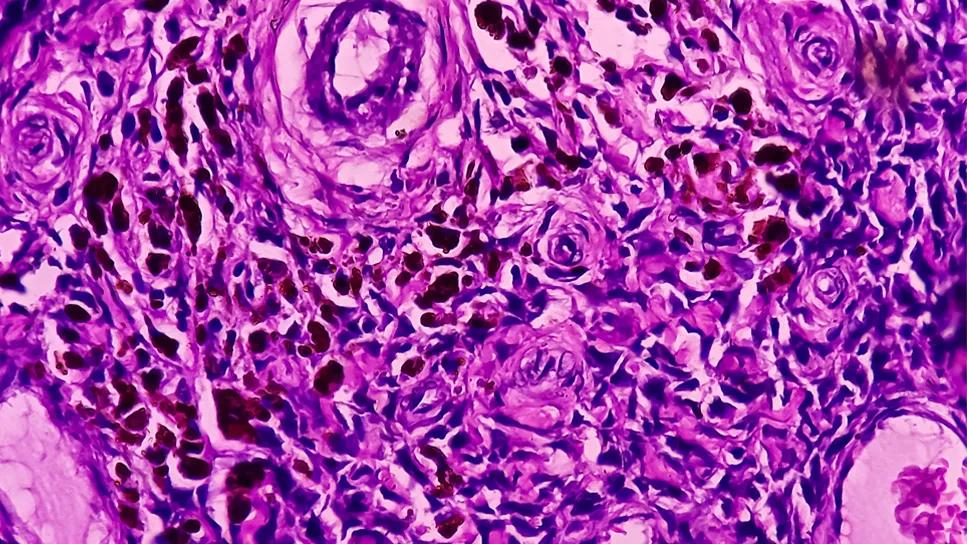
Image content: This image is available to view online.
View image online (https://assets.clevelandclinic.org/transform/7ef7a5ae-182b-4781-bb1f-c5e5eb79288e/synovial-sarcoma-cells-therapy-1372055546)
Synovial sarcoma cells
This spring, Cleveland Clinic Cancer Institute became one of the only centers locally that’s authorized to administer afamitresgene autoleucel (afami-cel) a newly FDA-approved cell therapy for adults with advanced synovial sarcoma. Amafi-cell has shown efficacy specifically in patients with synovial sarcoma whose tumors express the melanoma-associated antigen-A4 (MAGE-A4). It is the first FDA-approved cell therapy for any solid tumor.
Advertisement
Cleveland Clinic is a non-profit academic medical center. Advertising on our site helps support our mission. We do not endorse non-Cleveland Clinic products or services. Policy
Synovial sarcomas can be incredibly aggressive. “These tumors frequently metastasize and when they do, the current chemotherapy regimens are not very effective,” explains Dale Shepard, MD, PhD, a medical oncologist and Co-Director of the Cleveland Clinic Sarcoma Program. “Survival rates have historically been low.”
To address this gap, a team of researchers conducted a phase 2 trial of the genetically modified autologous T-cell immunotherapy afami-cel with patients in Canada, Europe and the U.S. Of the 52 patients enrolled in the study, 39% experienced a response, including two patients who had a complete response. Of the patients who responded, the median duration of response was roughly one year.
For the most part, the treatment was well tolerated. Side effects included low-grade cytokine release syndrome and prolonged blood count suppression. “With similar treatments like T-cell therapy we worry about neurological toxicity and that was not reported in this trial,” notes Dr. Shepard.
This small randomized trial led to FDA approval of the T-cell therapy in adults with unresectable or metastatic synovial sarcoma. Amafi-cell is effective specifically for the 25-30% of patients with synovial sarcoma who have the HLA subtype that expresses the MAGE-A4 protein.
Immune effector T-cell receptor therapy is a different immune mechanism than CAR T-cell therapy. While CAR T-cell therapy can recognize antigens that exist on the cell surface, T-cell receptor therapies can target proteins within a cell. This is advantageous because often solid tumors differ on the intracellular level from normal cells.
Advertisement
However, the delivery mechanism is similar to CAR T-cell therapy in that amafi-cell is derived from a patient’s own T cells. The process involves:
Cleveland Clinic wasn’t a participant in the trial but has added amafi-cell to its expanding portfolio of cell therapies. As a major academic center, Cleveland Clinic has the infrastructure and experience to deliver these complex treatments.
“The process - from identifying a patient through getting the T-cells manufactured - is about four to six weeks. That’s an important consideration for patient selection, particularly if you have a patient with rapidly progressing disease,” says Dr. Shepard, who is available to consult with referring physicians about recommending treatment options for any type of sarcoma and identifying patient eligibility for this cell therapy.
Amafi-cell can be administered to patients at Cleveland Clinic's Blood and Marrow Transplant and Cell Therapy at the hospital’s main campus. Clinicians hope to be able to deliver the therapy on an outpatient basis in the future.
The study data so far indicates patients with higher levels of MAGE-A4 and lower disease burden tended to achieve better responses. As Cleveland Clinic builds up its experience with amafi-cell, it’s looking to gather data to identify which patients are appropriate for the treatment and most likely to experience a response.
Advertisement
Advertisement
Advertisement
Adding 177Lu-PSMA-617 to ADT plus an ARPI cut the risk of radiographic progression or mortality by 28%

New program will help patients improve fitness and manage weight after cancer treatment

Cleveland Clinic hematologist highlights new guidelines and treatment advances in immune thrombocytopenia
NIMBLE replaces weekly tumor board delays with same-day multidisciplinary recommendations

Cleveland Clinic study provides validation for the test, which combines AI and pathological data to predict outcomes in postoperative patients
Advanced imaging technology catches metastases much earlier, allowing treatment with fewer side effects

Reduced radiation for lymph node areas reduces side effects
Large Cleveland Clinic analysis may help resolve a longstanding question over optimal fractionation
 Search