Locations:





Nurse researchers explore the relationship between readmission risk scores and acute care transfers

Image content: This image is available to view online.
View image online (https://assets.clevelandclinic.org/transform/41171b3f-9d6a-4b4b-8d2f-806d84dbc57f/CCC_5210909_09-03-24_042_MLC)
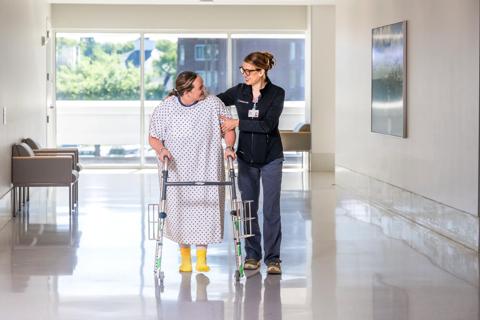
Rehab nurse with patient
Inpatient rehabilitation focuses on restoring function, promoting independence and improving quality of life in patients recovering from serious illness or injury. Readmission to acute care hospitals from inpatient rehabilitation facilities adversely impacts patients and the healthcare system by stalling therapy progress and increasing medical costs. Preventing avoidable readmissions is a common target of healthcare quality improvement initiatives.
Advertisement
Cleveland Clinic is a non-profit academic medical center. Advertising on our site helps support our mission. We do not endorse non-Cleveland Clinic products or services. Policy
The goal of a recent Cleveland Clinic study was to identify patient factors that predict risk for acute care transfers. Clinicians investigated relationships between patient variables, including the 30-day readmission risk score, and readmission from an inpatient rehabilitation facility back to the hospital, where rehabilitation progress can be interrupted.
By creating a predictive model of specific factors that are most closely aligned to hospital readmission, we can enable targeted early interventions for patients most at risk for acute care transfers (readmission), explains Cleveland Clinic researcher Jessica Gumucio, CNP, a physical medicine and rehabilitation nurse practitioner at Cleveland Clinic Rehabilitation Hospital in Avon, Ohio.
“Reducing preventable admissions is critical for quality improvement for a myriad of reasons, including safety, costs and outcomes,” Gumucio says. “With the aid of a reliable risk-assessment tool, clinicians may be able to utilize resources to intervene early and prevent complications that would require transfer back to acute care for more intensive treatment. After all, preventing complications allows patients to focus on what is most important: recovery.”
For the retrospective study, Gumucio and her team analyzed data from nearly 1,700 inpatient rehabilitation patients to identify the factors that were most strongly linked to transitioning patients back to acute care. Researchers found that elevated scores on Cleveland Clinic’s 30-day readmission risk assessment and lower scores on functional mobility measures were the two most significant predictors of acute hospital readmission.
Advertisement
Although patients’ medical and functional needs are reviewed throughout the rehabilitation admission process, readmission risk scores are not presently considered when planning care for patients admitted to our rehabilitation facilities. Utilizing objective data, such as a readmission risk score, could help rehab providers identify those most at risk.
“No prediction model is perfect, and clinical judgment is always important, but the risk score provides valuable data that can be leveraged to guide time-sensitive interventions in those most at risk,” she says. “We know that high-quality post-acute care is one of the most effective ways to prevent hospital readmissions, so a predictive tool can be enormously helpful in enabling our teams to provide personalized, data-driven treatments and support.”
Time-sensitive interventions may include verifying the patient ’s medical stability before transitioning them to rehab, increasing communication between acute and rehab providers about the patient ’s condition and ensuring timely follow-up in higher-risk cases, she adds.
In recent months, Cleveland Clinic added more variables to its readmission criteria, which has changed how the readmission risk score is calculated, Gumucio notes. As a next step, she and her team plan to repeat their study using the new criteria. Researchers also hope to use their findings to create a readmission risk calculator specifically for adults receiving rehabilitation care.
“Risk calculations can be used to create a model that enables u s to stratify patients into high, moderate and low risk — which are crucial distinctions that support more informed decision-making,” she says. “By understanding the individual rehospitalization risks of our rehab patients, we can better identify and prioritize potential complications before they escalate.”
Advertisement
Advertisement
Advertisement

Using meticulous preparation and teamwork to manage critically ill patients in constantly changing environments

Translating clinical questions into meaningful, sustainable change

Guidance for creating a relevant framework that reflects organizational values, supports professional practice

Helping patients recognize respiratory changes, navigate treatment barriers and stay connected to their clinical team
Initiative provides hands-on opportunities to promote early, progressive activity

Continuing to grow by following the right path at the right time

Teaching caregivers to recognize warning signs, de-escalate difficult situations and maintain professional boundaries

Veteran caregivers offer practical wisdom for building confidence and practicing with purpose
 Search