Locations:





First prospective study shows early extubation and low vasoactive/inotropic medication use
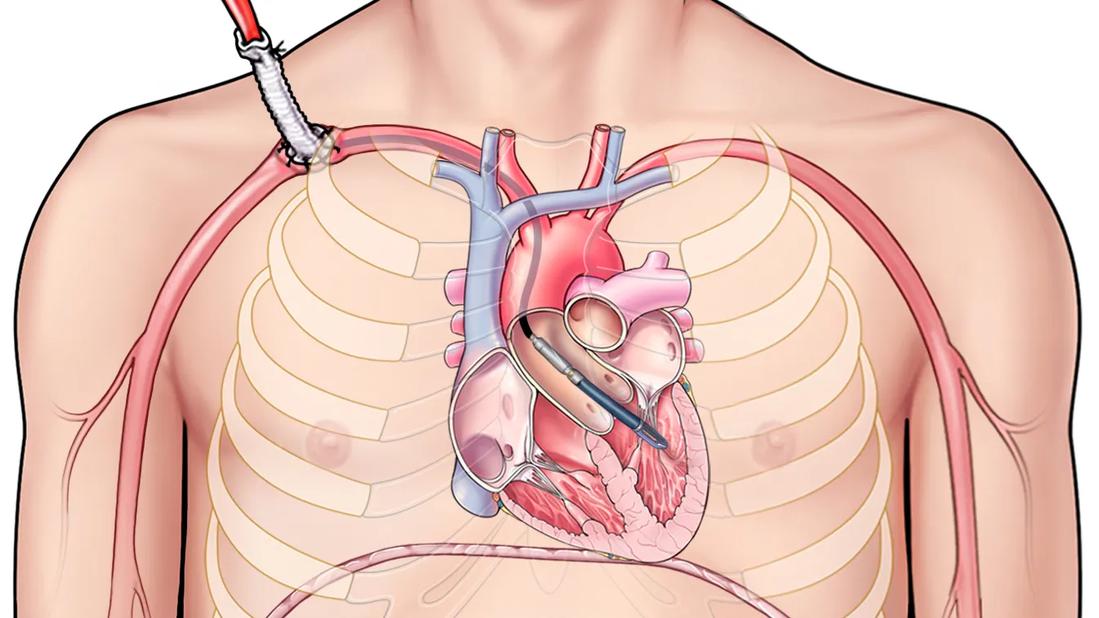
Image content: This image is available to view online.
View image online (https://assets.clevelandclinic.org/transform/5eff6fad-c213-4b42-b362-4c6fdcec971f/cqd-impact-trial)
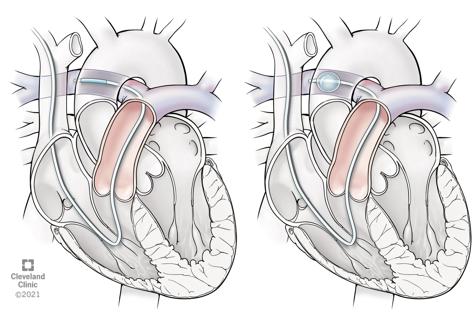
illustration showing device inserted into heart chambers via blood vessels
Early left ventricular (LV) unloading with intraoperative placement of a miniaturized transvalvular axial flow pump (Impella 5.5®) appears to be safe and feasible in cardiac surgery patients with severe preoperative LV dysfunction, according to 90-day results from the multicenter IMPACT trial. The incidence of post-cardiotomy cardiac failure with this preemptive LV unloading approach was low (6%), driven primarily by right ventricular dysfunction.
Advertisement
Cleveland Clinic is a non-profit academic medical center. Advertising on our site helps support our mission. We do not endorse non-Cleveland Clinic products or services. Policy
“Preemptive left ventricular unloading with the pump suppressed severe postoperative failure while also facilitating early extubation and lower reliance on vasoactive or inotropic medications,” says IMPACT co-principal investigator Edward Soltesz, MD, MPH, who presented the findings at the 2026 annual meeting of the American Association for Thoracic Surgery (J Thorac Cardiovasc Surg. 2026;171[4 suppl 1]:S363).
“While the findings of this feasibility study need to be confirmed in larger datasets, the results support our hypothesis that preemptive unloading in patients with severe LV dysfunction can safely reduce the risk of post-cardiotomy cardiogenic shock and promote improved operative outcomes and recovery,” continues Dr. Soltesz, a staff cardiothoracic surgeon at Cleveland Clinic. “I expect this approach will become the go-to strategy for offering cardiac surgery to this high-risk population.”
“We have learned from decades of experience that many patients deemed ‘inoperable,’ due to risk, can safely undergo successful surgical procedures, often deriving years of benefit and avoiding the need for therapies including cardiac transplantation,” adds Randall Starling, MD, MPH, a staff cardiologist in Cleveland Clinic’s Section of Heart Failure and Cardiac Transplant Medicine. “Many high-risk patients gain substantial improvement in ventricular function after surgical revascularization.”
Patients with LV ejection fraction (LVEF) < 35% face high rates of complications from cardiac surgery, with outcomes worsening sharply as LV function declines. A critical complication can be post-cardiotomy cardiogenic shock (PCCS), a severe form of low cardiac output syndrome. PCCS is reported to occur in roughly 10% to 25% of adult cardiac surgery patients with low LVEF and carries a reported mortality rate of 24% to 64%. IMPACT’s primary end point — post-cardiotomy cardiac failure (PCCF) — was designed as a composite proxy for this syndrome, capturing either device reinsertion; escalation to right ventricular (RV) assist device, extracorporeal membrane oxygenation (ECMO) or transplant; or transfer to higher-level care for low cardiac output.
Advertisement
Traditional management to prevent PCCS includes treatment with inotropes and/or vasopressors and temporary mechanical circulatory support with an intra-aortic balloon pump (IABP) or veno-arterial (VA) ECMO. However, high doses of inotropic/vasoactive medications are associated with poor surgical outcomes, and both IABP and VA-ECMO have shown mixed results in this setting.
Unlike IABP and VA-ECMO, another form of temporary support — the Impella 5.5 transvalvular axial pump — unloads the LV without substantially increasing afterload. This has prompted interest among Dr. Soltesz and other cardiac surgeons in offering “protected” cardiac surgery with preemptive implantation of the transvalvular axial pump before the patient is weaned from cardiopulmonary bypass.
“The idea is that it’s better to be proactive in these cases,” Dr. Soltesz explains. “Reactive initiation of support after PCCS has developed or after escalation to high-dose pharmacotherapy runs an excessive risk that end-organ damage will be sustained. Our objective is to use mechanical circulatory support preemptively to mitigate PCCS and related complications.”
While small single-center series have shown promising results with this preemptive LV unloading strategy, the current study is the first large prospective investigation of the approach.
IMPACT (Impella-Protected Cardiac Surgery Trial; NCT05529654) was designed as a prospective, multicenter, single-arm pilot study among 100 hemodynamically stable adult cardiac surgery patients with severe LV dysfunction. The latter was defined as LVEF ≤ 25% or ≤ 35% for patients with severe mitral regurgitation and planned mitral valve surgery. Patients were scheduled to undergo coronary artery bypass grafting, mitral valve repair/replacement, aortic valve replacement or some combination of these with or without tricuspid valve repair/replacement.
Advertisement
All patients received the transvalvular axial pump intraoperatively prior to weaning from cardiopulmonary bypass, and at least 24 hours of pump support was required before explantation.
The primary effectiveness end point was PCCF through hospital discharge. PCCF was defined as either of the following:
The primary safety measure was a composite of all-cause mortality, stroke or new requirement for renal replacement therapy through postoperative day 90.
All 100 enrollees underwent study device placement and were included in the primary outcome analysis. The cohort was 79% male and had a median age of 63.5 years (interquartile range, 58.5-70.0). Median LVEF was 25%, and median Society of Thoracic Surgeons Predicted Risk of Mortality score was 4.1%.
The access site for pump placement was the aorta in 74 patients, the right axillary artery in 25 patients and the innominate artery in one patient.
The primary end point of PCCF occurred in six patients (6%), including four who had significant postoperative RV dysfunction; three of the four patients with RV dysfunction required an RV assist device or VA-ECMO, and the other required escalation of inotrope/vasopressor support. Of the remaining two patients who developed PCCF, both required escalation of inotrope/vasopressor support upon explant of the transvalvular axial pump.
Advertisement
The composite safety end point occurred in 12 patients (12%), who collectively had four deaths, five strokes and six requirements for renal replacement therapy. Of these, three events in three patients (3%) were adjudicated to be related to the study device — zero deaths, two strokes and one requirement for renal replacement therapy. Rates of other adverse events related to the device were generally low:
Median time to key clinical milestones was as follows:
A key secondary end point was the vasoactive-inotropic score, an objective measure of vasoactive and inotropic medications used for a patient. Notably, the cohort’s median score remained below the target of ≤ 20 at every postoperative time point assessed through postoperative day 7.
“Use of inotropes and vasopressors trailed off very quickly, which is different from what we normally see in this population in the absence of this LV unloading strategy,” Dr. Soltesz observes. “This is important, because there is a linear correlation between the amount of these drugs used after surgery to support a patient’s heart function and that patient’s mortality.”
“Minimizing inotropes with this strategy is the key difference maker,” adds Dr. Starling. “Mechanical and full unloading allows the myocardium to recover after the surgical procedure, hence reducing many complications and leading to shorter ICU and hospital stays. Providing standard oral guideline-directed medical therapy for heart failure is also key to the long-term outcome.”
Advertisement
Additionally, the cohort’s median LVEF showed a steady trajectory of improvement throughout the 90-day postoperative assessment. “While IMPACT was not powered to assess LVEF changes in a formal way, this is an important finding because it suggests that not only are we getting patients through their surgery safely, but we are also improving their heart function for the longer run, which is an outcome that’s very useful to patients,” Dr. Soltesz says.
He adds that, although change in LVEF was not a prespecified end point, IMPACT is among the first studies to suggest LVEF improvement after conventional cardiac surgery in patients with ischemic cardiomyopathy. LVEF will continue to be monitored in IMPACT patients at six months and one year after surgery. Dr. Soltesz says he expects the LVEF improvement will continue through these time points based on unpublished observations in Cleveland Clinic patients to date.
These 90-day IMPACT results have been submitted for peer-reviewed publication. Meanwhile, patients are being followed out to one year for a survival check. Whether the manufacturer of the study device intends to file for regulatory approval of a new indication based on the trial is not currently known.
Regardless of formal regulatory approvals, Dr. Soltesz expects this preemptive approach to LV unloading “is going to be utilized more and more” for cardiac surgery in patients with severe LV dysfunction. He says IMPACT has provided several important insights to guide future use of the strategy:
Such future insights are most likely to come from registry studies of this preemptive LV unloading strategy, Dr. Soltesz suspects. “A randomized trial is going to be challenging in this area because it would be hard not to offer this approach to all patients, since IMPACT has already shown that it’s safe,” he concludes, though he acknowledges that larger comparative studies will be needed to confirm this study’s findings.
IMPACT was funded by Abiomed/Johnson & Johnson MedTech Heart Recovery, which markets the study device. Dr. Soltesz reports receiving honoraria from Abiomed/Johnson & Johnson MedTech Heart Recovery.
Advertisement
Cleveland Clinic research emphasizes taking a holistic and individualized approach to care of septic shock
Aortic valve replacement is best option for lowering mortality in this high-risk population
The benefits of multiarterial grafting are possible without opening the chest
How careful measurement, provocative testing and repeat assessment can maximize the diagnostic value of PAC
CMR-CLIP outperforms general AI tools; may one day expand patient access to CMR
Cleveland Clinic reports first U.S. series focused on use in this challenging setting
Large series confirms early and long-term survival advantages over partial pericardial resection
AVANT GUARD trial extends first-line role for ablation beyond paroxysmal atrial fibrillation
 Search