Locations:


Large cohort study suggests pseudophakia may offer functional benefits without increasing postoperative complications
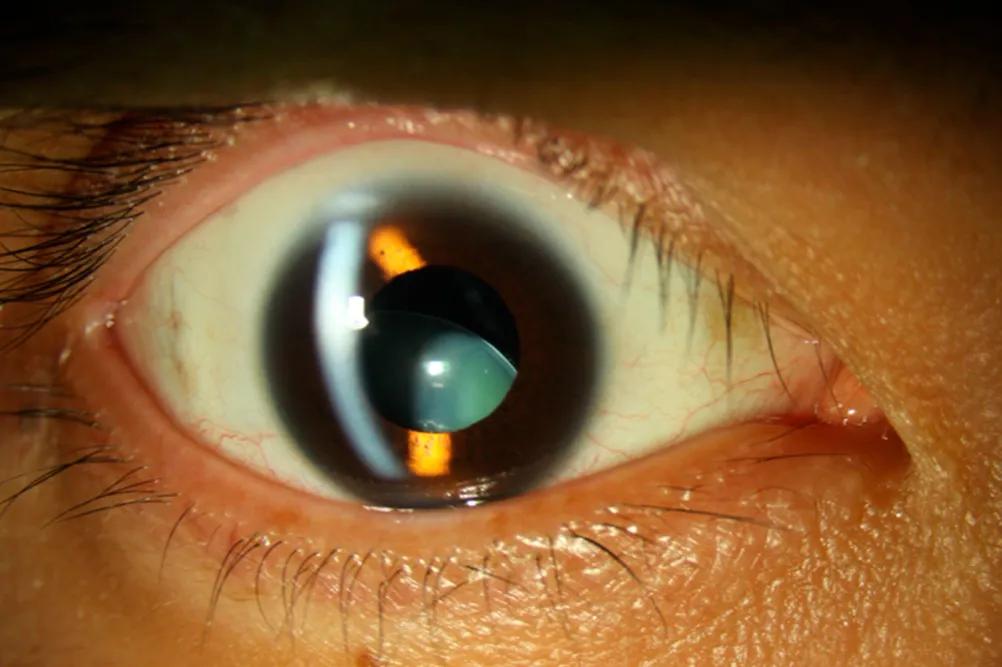
Image content: This image is available to view online.
View image online (https://assets.clevelandclinic.org/transform/acef9214-cd97-4ff8-9ab4-2ed7b78d3e05/ectopia-lentis)
Closeup of a brown eye
For decades, ophthalmologists have approached ectopia lentis in patients with Marfan syndrome with caution. Because of concerns about postoperative complications, many surgeons have preferred to leave patients aphakic after lens removal rather than implant an intraocular lens (IOL).
Advertisement
Cleveland Clinic is a non-profit academic medical center. Advertising on our site helps support our mission. We do not endorse non-Cleveland Clinic products or services. Policy
Now, a large-scale study led by Cleveland Clinic Cole Eye Institute challenges this cautious approach.
“Traditionally, patients with Marfan syndrome were not considered good candidates for IOL implantation because of concerns about retinal detachment, bleeding and atypical eye anatomy,” says Katherine Talcott, MD, a vitreoretinal surgeon at the Cole Eye Institute. “But an IOL can be transformative, allowing patients to wake up and see without immediately reaching for glasses or contact lenses.”
Ectopia lentis is one of the most common and distinctive ocular complications in Marfan syndrome, affecting about 50%-80% of individuals with the disease.
If the lens is badly displaced, patients are at risk for complications like glaucoma and retinal detachment, so surgery is often considered.
However, how best to treat ectopia lentis has been unclear due to a lack of comparative data. The new study by the Cole Eye Institute compares outcomes of surgery versus no surgery, and aphakia versus pseudophakia.
“We found no statistically significant differences in risk of postoperative complications or number of future intraocular surgeries in patients with Marfan syndrome who were managed with aphakia versus pseudophakia,” says Sonia Kim, a research assistant at the Cole Eye Institute.
Kim, a medical student, developed the study from questions arising in clinical care with guidance from Dr. Talcott. Kim presented the study findings at the 2026 ARVO Annual Meeting.
In the retrospective cohort study, the investigators reviewed electronic health records of a U.S. cohort in a large database. Out of more than 30,000 patients with Marfan syndrome, about 2,200 had ectopia lentis, and 568 had ocular surgery — about two-thirds receiving an IOL implant.
Advertisement
Compared with those who did not have surgery, surgical patients had higher risks for several complications, including:
However, eyes selected for surgery have baseline differences that may increase the risk for these outcomes, independent of surgical management, notes Kim. Among patients who underwent surgery, outcomes were similar regardless of whether an IOL was implanted. The study found no increased risk for complications, poor vision or the need for further procedures with IOL placement.
“These findings indicate that pseudophakia may actually be a clinically meaningful, safe and functional option for these patients,” Dr. Talcott says.
For ophthalmologists, the findings support a more individualized discussion with patients who require surgery for ectopia lentis. Rather than routinely avoiding an IOL, surgeons can consider whether pseudophakia may help a patient achieve greater visual independence and a better quality of life without adding measurable postoperative risk.
The decision still requires careful patient selection, notes Dr. Talcott. Surgeons should consider the patient’s age, ocular anatomy, cardiovascular health, use of anticoagulants and ability to tolerate an additional procedure.
The ophthalmologist’s training and comfort with secondary IOL placement and fixation techniques also may influence the surgical approach, underscoring the value of collaboration among pediatric ophthalmologists, retina specialists and other members of the care team.
Advertisement
Patients with Marfan syndrome should continue to be counseled about their underlying risk of retinal detachment, glaucoma and vision loss, regardless of whether an IOL is implanted, says Dr. Talcott.
She monitors these patients closely after surgery and advises them to promptly report warning signs such as decreased vision, a large shadow in the visual field or increasing pain.
“The reassuring message is that IOL implantation does not appear to increase these risks,” she says. “That represents an important shift in how we think about these patients. Pseudophakia can be a reasonable alternative to aphakia, allowing us to base the decision not only on safety, but also on the patient’s goals, visual needs and desired quality of life.”
Advertisement
Advertisement

When to recommend aortic root surgery in Marfan and other syndromes

Evidence mounts that these diabetes and obesity drugs may protect eyes, not endanger them

CFH gene triggers the eye disease in white patients but not Black patients
Study identifies factors that may predict vision outcomes in diabetic macular edema

Machine learning models assess intraoperative tissue perfusion
A primer on sustained release options

Approach could help clinicians identify patients at an increased risk of progression who could benefit from more aggressive treatment

This rare disease usually manifests as a firm, painless mass that is growing
 Search