Locations:





Research shows value of integrated, evidence-based approach
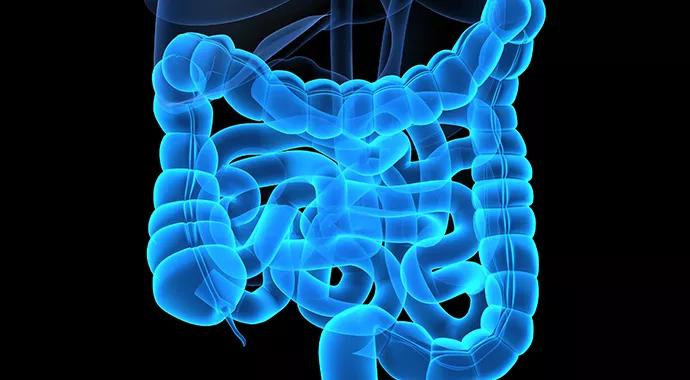
Image content: This image is available to view online.
View image online (https://assets.clevelandclinic.org/transform/c3cb656e-16d8-47fd-967e-09514efe4488/Gut-Transplant-690x380-jpg)
Intestinal transplant
The surgical management of patients whose digestive system fails to maintain their nutritional needs is often challenging due to the complexity of the underlying disease process.
Advertisement
Cleveland Clinic is a non-profit academic medical center. Advertising on our site helps support our mission. We do not endorse non-Cleveland Clinic products or services. Policy
Historically, the only hope for most was years of intravenous nutritional support while they waited for intestinal and multivisceral transplantation.
Now, Kareem Abu-Elmagd, MD, PhD, Director of Cleveland Clinic’s Center for Gut Rehabilitation and Transplantation (CGRT), and his colleagues have demonstrated the feasibility and validity of restoring native gut functions and nutritional autonomy in many patients using autologous gut reconstruction (AGR), without the need for gut transplantation.
Successful AGR eliminates the need for transplantation and long-term immunosuppression, and the attendant risk of rejection. While gut transplantation is more effective at re-establishing nutritional autonomy, AGR is cost-effective and associated with better long-term survival and improved quality of life, the investigators found. The researchers determined that AGR and transplantation are complementary in a multimodal gut failure management program.
Dr. Abu-Elmagd and colleagues highlight their techniques and compare outcomes in a groundbreaking study of 500 gut failure patients at Cleveland Clinic published in the October, 2019, issue of Annals of Surgery.
The research shows the value of an integrated, evidence-based approach for managing gut failure patients, utilizing a range of innovative autologous reconstructive/remodeling and transplant surgical techniques and guided by clinical status, organ function, the etiology of gut failure and residual gut anatomy.
The study also establishes and validates a new predictive tool that forecasts the probability of restored nutritional autonomy (RNA) after AGR. The model is available for use by medical professionals.
Advertisement
The study is the first to systematically define the management of gut failure patients using this integrated strategy. Dr. Abu-Elmagd believes the results are practice-changing.
The study cohort consisted of 500 patients with catastrophic or chronic total parenteral nutrition (TPN)-dependent gut failure referred to Cleveland Clinic’s CGRT for surgical treatment between August 2012 and February 2019.
Mean age was 45 years and 95% of participants were adults. The leading causes of gut failure included complex surgical interventions, mucosal diseases and neuromuscular disorders. The majority, 92%, underwent surgery, while 8% continued medical management. Participants came from a wide geographic area – 46% from Ohio and Pennsylvania, 44% from across the United States and 10% from other countries.
More than four out of five patients (82%) underwent definitive AGR. Another 9% had a primary transplant and 9% had gut reconstruction that was eventually followed by transplant.
Importantly, undergoing AGR does not rule out subsequent transplantation should it become necessary, Dr. Abu-Elmagd says. “Autologous reconstruction can be a definitive treatment or a bridge to transplantation.”
The 420 autologous reconstruction patients had a total of 790 reconstructive and remodeling procedures. Interventions included two novel, newly described procedures — serial transverse coloplasty (STCP) and the trifecta procedure (subtotal colectomy, pyloroplasty and chimney ileostomy) — as well as serial transverse enteroplasty (STEP), interposition alimentary-conduits, and reductive/decompressive surgery.
Advertisement
The 84 patients who had a gut transplant received a total of 94 allografts, 29% of which included a liver. Transplant recipient procedures were modified by Cleveland Clinic surgeons to preserve more native structures and require fewer donor organs while allowing safe surgical reconstruction.
The 82% of participants who underwent AGR experienced better long-term survival. They experienced 88% one-year survival and 74% five-year survival rates. Primary transplant patients had an 81% one-year cumulative survival rate and a 50% rate at five years.
Gut transplantation was more effective than AGR in restoring nutritional autonomy (freedom from total parenteral nutrition), with 3-month and 5-year cumulative rates of 50% and 82% respectively among reconstructive patients compared with restored nutritional autonomy rates among transplant patients of 70% at 3 months and 85% at 5 years.
The AGR group had higher Karnofsky/Lansky performance scores than did gut transplant recipients, with less need for oral medication and minimal long-term comorbidity, suggesting a better quality of life.
This clinical translational research could spark a paradigm shift in the field of gut failure, Dr. Abu-Elmagd says. As part of the study, the researchers developed and validated an algorithm to predict who is most likely to benefit from AGR. The algorithm estimates the likelihood of RNA based on the anatomy of the reconstructed gut, TPN requirements, serum bilirubin levels and the causes of gut failure.
“The algorithm should be considered for a national policy on autologous reconstruction … helping physicians who are trying to differentiate between those patients who would definitely require a transplant and those who could benefit from autologous reconstruction,” he says.
Advertisement
“This will be the landmark contribution of the paper,” Dr. Abu-Elmagd adds. “It will help patients, physicians and other care providers choose the appropriate treatment, with the aim to eliminate the need for TPN and to resume an unrestricted oral diet, which would significantly impact quality of life.”
“Look at the 40% of patients with catastrophic gut failure who exhaust all of their healthcare resources and wait up to two years to be referred to us to fix them,” he adds. “If these patients are referred earlier, their recovery will be faster, they can return to their jobs more quickly and become productive citizens again. It will save a significant amount of money for healthcare providers, including state governments, third-party payers and the federal Centers for Medicare and Medicaid Services.”
AGR also can save more lives and provide greater healthcare value, Dr. Abu-Elmagd says. “There are some state insurers that are not capable of paying $200,000 to $300,000 for a transplant, but they will be able to provide $60,000 for autologous reconstruction, which eliminates the need for and cost of TPN.”
In addition to potential cost savings, AGR eliminates the risks of long-term immunosuppression, including opportunistic infections, malignancy, renal failure and impaired bone health, he says.
Another potential advantage is avoiding the use of donor organs that could benefit other patients with life-threatening organ failure. “If you do unnecessary transplants or wait until a patient develops liver failure, you are actually taking lifesaving organs from other people who could benefit from them,” Dr. Abu-Elmagd says.
Advertisement
Cleveland Clinic operates the largest gut rehabilitation program in the world, including intestinal transplantation, autologous reconstruction and comprehensive medical management, Dr. Abu-Elmagd says. He credits the skill and experience of the program’s surgeons and its multidisciplinary team for keeping Cleveland Clinic at the forefront of innovative gut surgery.
“We are utilizing the RNA predictive model in our daily clinical practice,” Dr. Abu-Elmagd says. “I’m also currently teaching and training a younger generation of surgeons so they can continue the program’s progress .”
Advertisement

Discounting seronegative celiac and not asking about medications are among the most common clinical mistakes
G-TORe uses endoscopic suturing to stop peristomal leakage without upsizing the feeding tube

Findings suggest insurance coverage alone may not ensure timely specialty care and treatment

Study identifies patient and procedural factors associated with missed endoscopy appointments
Real-time case discussion connects IBD specialists across disciplines, institutions and countries
Findings show significant energy savings and no association with increased surgical site infection, mortality or ICU admission
A complex pelvic exenteration underscores the importance of early multidisciplinary planning for locally invasive cancers

Findings may help guide earlier AUD intervention
 Search