Locations:


Prospective international findings show a substantial survival benefit for patients with acute-on-chronic liver failure, while highlighting the importance of individualized transplant assessment
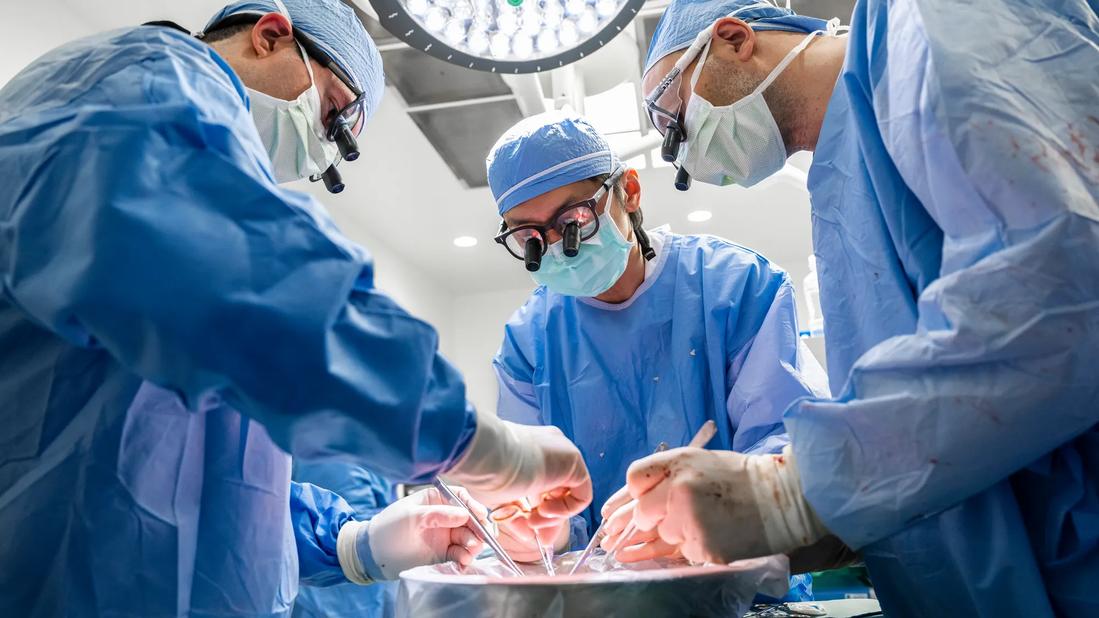
Image content: This image is available to view online.
View image online (https://assets.clevelandclinic.org/transform/7c285724-2275-4e7a-a25f-bb5bbda24d37/CCC_Tadiello_3561108_Dr-Kwan-Liver-Transplant_01-23-23_MLC)
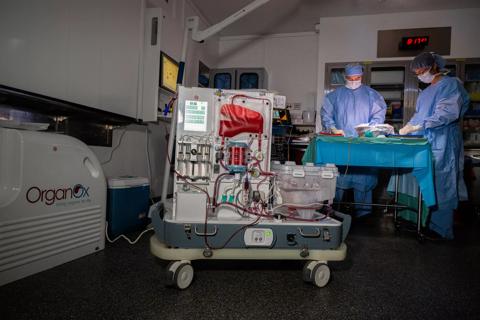
Surgeons working on liver
Patients with severe acute-on-chronic liver failure (ACLF) face a high risk of death as multiple organ systems deteriorate. Although liver transplantation can be lifesaving, uncertainty about postoperative outcomes has historically led some transplant centers to hesitate to offer surgery to the sickest patients.
Advertisement
Cleveland Clinic is a non-profit academic medical center. Advertising on our site helps support our mission. We do not endorse non-Cleveland Clinic products or services. Policy
The international CHANCE study, published in the Journal of Hepatology, provides the first large-scale prospective global evidence that liver transplantation can substantially improve survival for appropriately selected patients with severe ACLF. Across 63 transplant centers on four continents, investigators found that patients with ACLF grades 2 and 3 who underwent transplantation had considerably better one-year outcomes than patients who were declined for the procedure.
“A lot of transplant decisions come down to risk tolerance and experience,” notes Christina Lindenmeyer, MD, principal investigator for Cleveland Clinic’s participation in CHANCE. “This study shows that, with the right expertise and optimized critical care support, transplantation is feasible for carefully selected patients with severe ACLF, and we can achieve acceptable outcomes. It also helps us better understand when a patient may be too sick to benefit from liver transplant, allowing us to make better informed decisions about who should receive this lifesaving treatment.”
ACLF is a syndrome characterized by acute deterioration in patients with advanced chronic liver disease, accompanied by one or more organ failures. ACLF grade 2 involves two organ failures, while grade 3 involves three or more. Mortality is particularly high among patients with the most severe disease.
Previous research relied largely on retrospective registry analyses and single-center studies, which often lacked detailed information about bedside clinical decisions, the progression of organ failure and the factors influencing transplant candidacy. CHANCE was designed to address these limitations through prospective, standardized data collection across an international network of transplant centers.
Advertisement
Conducted between 2021 and 2023, CHANCE enrolled 995 patients across liver transplant centers in Asia, Europe, Latin America and North America. Investigators prospectively followed adults with decompensated cirrhosis across the spectrum of ACLF severity, including patients who underwent liver transplantation and patients with ACLF grades 2 or 3 who were declined for the procedure. Of the study population, 612 patients underwent transplantation, while 144 patients were declined for transplantation and followed for one year.
Using standardized clinical assessments, researchers evaluated one-year patient and graft outcomes, waitlist outcomes, including the relationship between the number and type of organ failures at transplantation, and subsequent survival. The study’s international design also enabled investigators to examine outcomes across different geographic regions and healthcare settings.
The scale of the collaboration was another distinguishing feature of the study. By bringing together centers with different clinical practices and regional definitions of ACLF, CHANCE established a foundation for evaluating transplant outcomes more consistently and informing future international research.
Dr. Lindenmeyer served as principal investigator at Cleveland Clinic, working alongside co-investigator Bijan Eghtesad, MD, a senior liver transplant surgeon. Cleveland Clinic was the second-highest-enrolling site in the United States.
The institution's experience with critically ill patients undergoing transplantation provided an important foundation for its participation. Dr. Lindenmeyer co-directs Cleveland Clinic's Medical Intensive Liver Unit, which opened in 2018 and specializes in the care of patients with severe liver disease.
Advertisement
The unit brings specialized liver intensivists and transplant clinicians together to manage patients through critical illness, transplantation and postoperative recovery.
“We have worked very hard to cultivate that expertise,” Dr. Lindenmeyer says. “We have specialized liver intensivists, our transplant team is at the bedside from minute zero, and everyone involved is very passionate about transplanting the sickest patients with ACLF. Being able to share that with the global community meant a lot to us, and we’re really excited about being part of that conversation globally going forward.”
Among patients with ACLF grades 2 or 3 who were declined for transplantation, one-year mortality was 73% and 88%, respectively. Among transplant recipients, one-year mortality without retransplantation was 10.5% for ACLF grade 2 and approximately 21% for grade 3. By comparison, mortality was 9% among recipients without ACLF.
These results demonstrate that severe ACLF should not automatically preclude transplantation. However, the likelihood of benefit depends on the patient’s condition at the time of surgery.
“The outcomes weren’t necessarily dictated just by the overall ACLF grade, but also by the number and specific types of failing organs at the exact time of surgery,” explains Dr. Lindenmeyer.
The distinction is clinically significant. Although outcomes were generally acceptable for selected patients with up to four organ failures, mortality increased sharply among those with five or six failing organs, reaching approximately 42% at one year. Brain, respiratory and circulatory failure were also associated with increased post-transplant mortality. These results underscore the need to assess the extent and nature of organ failure rather than relying on ACLF grade alone.
Advertisement
“There is a certain threshold at which patients may be too sick to transplant, and this study helped us understand that better,” Dr. Lindenmeyer says. She adds that patients with five or six failing organs need careful case-by-case evaluation rather than routine transplantation.
The benefits also extended beyond survival. Although patients with ACLF grade 3 experienced longer intensive care stays after transplantation, their subsequent hospital stays, readmission rates and need for long-term renal replacement therapy were broadly comparable to those of other transplant recipients.
For Dr. Lindenmeyer, these outcomes reinforce the importance of evaluating recovery as well as survival. Many patients who undergo transplantation are living at home and no longer require dialysis one year later.
“We’re not only meeting that survival metric; we’re also starting to look at quality of life: living at home, free of organ support,” she says. “Patients with ACLF not only survive liver transplant and survive to one year but also have the potential to thrive after liver transplant.”
The CHANCE study challenges longstanding concerns about transplanting patients with severe ACLF and supports a more individualized approach to candidacy and organ allocation. The results also raise questions about whether current allocation systems adequately reflect how urgent these patients’ conditions are.
“The Model for End-Stage Liver Disease (MELD)-based allocation system in the United States largely reflects liver and kidney dysfunction,” Dr. Lindenmeyer explains. “However, the CHANCE study shows that it may not adequately capture waitlist mortality or reflect the urgency of transplantation for patients with other organ failures, particularly respiratory or circulatory failure.”
Advertisement
Cleveland Clinic is continuing its involvement in CHANCE study Phase 2, which focuses on patients with ACLF grade 3 who have been listed for transplantation. Investigators are examining the factors associated with acceptable post-transplant outcomes and those that may indicate a lower likelihood of benefit. The team is also analyzing waitlist outcomes to identify strategies to reduce mortality and clinical deterioration among patients awaiting transplantation.
Dr. Lindenmeyer hopes this continued research will help inform a broader reassessment of how donor livers are allocated to patients with the most urgent needs. “This is an important part of the conversation and should prompt further consideration about how best to allocate our organs to the sickest patients,” she concludes.
Advertisement

A surge in transplants, advanced surgical techniques and multidisciplinary collaboration has helped shape and expand the Liver Transplant Program
Enhanced visualization and dexterity enable safer, more precise procedures and lead to better patient outcomes
Minimally invasive approach, peri- and postoperative protocols reduce risk and recovery time for these rare, magnanimous two-time donors
Patient receives liver transplant and a new lease on life
New research shows dramatic reduction in waitlist times with new technology
Cleveland Clinic study shows positive outcomes for donors and recipients
Program's approach maximizes donor safety without compromising recipients' outcomes
Program expands as data continues to show improved outcomes
 Search