Locations:





Embrace coaching and other tips to be a stronger leader
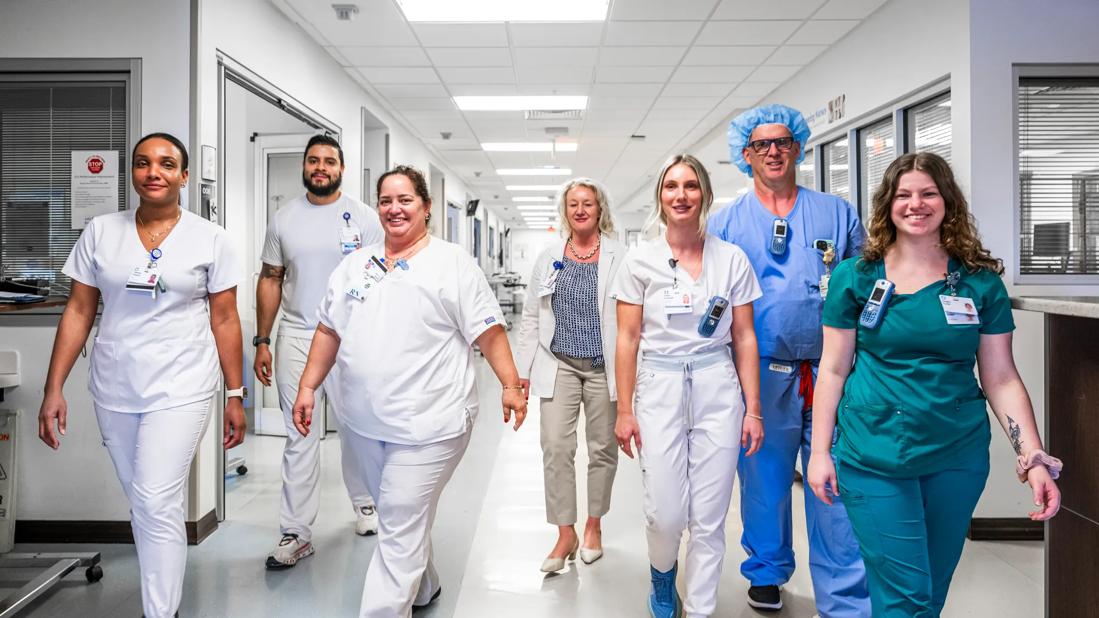
Image content: This image is available to view online.
View image online (https://assets.clevelandclinic.org/transform/bd313c39-714b-4bad-88d1-d60af3d0ad99/PHI_5273708_09-18-24_1103_MLC)
Nurses walking down hall
By Meredith Foxx, MSN, MBA, APRN, NEA-BC, Senior Vice President, Chief Nursing Officer, Cleveland Clinic
Advertisement
Cleveland Clinic is a non-profit academic medical center. Advertising on our site helps support our mission. We do not endorse non-Cleveland Clinic products or services. Policy
“We are living through a new era in healthcare. As leaders, it’s important to maintain a healthy perspective while inspiring confidence.” These words, delivered by Cleveland Clinic CEO and President Tom Mihaljevic, MD, captivated attendees at Cleveland Clinic’s 17th Annual Nursing Leadership Summit. More than 525 nurse managers, directors and executives gathered for the October Summit to embrace the future and advance the organization’s vision to deliver global nursing excellence.
Those who hold leadership positions in healthcare today are acutely aware that attaining excellence in this age is a tall order. Work is more complex due to an aging population, new treatments and tools, and the expanding scope of clinical practice. The pace of change is rapid. Ongoing financial pressures continue to elicit increased operational discipline. Patients require more from healthcare organizations, including additional access, enhanced safety, improved quality and better experiences, and caregivers want greater career progress and support.
In this new world of work, workplace and workforce, leaders must lead differently and look ahead with courage, clarity and determination to imagine what’s possible and turn ideas into action. For those who want to strengthen their leadership in this challenging and complex environment, the following advice, which was offered to Cleveland Clinic nurse leaders, may be helpful.
When one becomes a nurse, it is with purpose and meaning. Leaders who remember why they chose to serve and remain connected with their purpose often lead with an inspiring energy and passion that transcends to others.
Advertisement
The Power of Purpose is a recurring theme that is woven into Cleveland Clinic’s culture and patient care philosophy. At its core, the idea is that every individual has a unique "why" or purpose that drives their actions and contributes to the broader mission of transforming healthcare.
By encouraging connection to purpose, we build culture and relationships. Caregivers step up for each other, and their patients. Teams discover more compassionate, effective and efficient ways to care and support. Tough moments are met with renewed energy and fresh, innovative ideas, and team members become more engaged.
“Through The Power of Purpose, we create an environment where all nurses can connect and excel, be happy and reach their goals,” said Cleveland Clinic Executive Vice President, Chief Caregiver Officer and Chief Administrative Officer K. Kelly Hancock, DNP, RN, NE-BC, FAAN.
Experience shapes leadership, but it doesn’t define it. All leaders — even the most experienced — benefit from lifelong learning. Cassandra Johnson, Strategic Sourcing Director for Construction at Cleveland Clinic, told her colleagues, “Always remain students of leadership” and “learn from good leaders.”
She shared an example from when she was a new leader and assumed that her direct reports would simply follow her instruction. Learning from others, she quickly adapted her style to one that was relational based.
“I began building intentional relationships with them — what did they dream and value,” she said. “That journey was exhausting, but it paid off in so many ways. Team dynamic and productivity improved, and my new manager world view helped me realize that people can have many strengths, but no one can be an expert in everything.”
Advertisement
Nursing caregivers want leaders who support them in the ways they need supported. Those who do this build strong relationships, teams and work environments. “Leaders should be adaptable and change to what their caregivers need — be more like team coaches and less like bosses,” advised Cleveland Clinic Indian River Emergency Department Nurse Manager Rachel Becht, MBA, BSN, RN.
Becht shared a scenario where a nurse on her team approached her with questions about health and retirement benefits. “She needed a leader coach more than she needed a manager,” she said.
Leaders who are there for caregivers in moments like this and who can balance approachability and listening not only show that they care, but they also create a safe space for sharing. “When people know they’ve been heard, they’ll invest their hearts and their minds in their work,” she added.
Situational humility, as described by Rose Sherman in her book, Nursing Leadership in the New World of Work,is a willingness to transparently acknowledge the gaps in one’s knowledge and remain relentlessly curious about the opinions of others. It stresses the importance of agility and adaptability in leadership and the need to reimagine workforce strategies to meet the expectations of a new generation of caregivers.
“Situational humility is not to assume,” explained Maureen Schaupp, MSN, APRN-CNP, Cleveland Clinic Executive Director and Associate Chief Nursing Officer of APRNs, Quality & Clinical Practice. With a nursing workforce that is younger and less experienced, Schaupp recommended applying situational humility when coaching caregivers to better understand their views, opinions and concerns.
Advertisement
“Ask questions, use empathy and coach them to a solution,” she said. “Telling someone how to do it won’t help them the next time because they aren’t solving it on their own.”
All good leaders have qualities they value — from being authentic or intentional to having an ability to recognize different points of view or possessing a willingness to accept that knowledge must evolve. Allowing one’s valued qualities to intersect with their strategic influence is an impactful way to make decisions that drive toward standards.
“Consider the qualities you value and how they can influence decision-making,” suggested Cathy Kilbane, retired Senior Vice President, General Counsel and Secretary for Sherwin Williams, and current member of Cleveland Clinic’s Board of Trustees. Kilbane referenced notable quality traits she’s witnessed of Dr. Mihaljevic, including integrity and honesty, and how those inspire trust from others, as well as humility. “He gives the credit to others,” she said.
This type of values-based leadership brings strategy to life. Today, accountability in leadership is about creating clarity, encouraging shared ownership, and empowering teams to drive results that are connected to strategy.
Capable nurse leaders are vital to shaping healthcare and guiding and growing the workforce. According to Vice President and Chief Nursing Officer of Cleveland Clinic Marymount Hospital Barb Zinner, DNP, RN, NE-BC, CENP, leadership for the future is open, honest and flexible, applies lessons learned, innovates and explores new possibilities. Importantly, it’s purposeful. One of the greatest gifts nurse leaders possess is their ability to influence the care patients receive and the experience nursing caregivers have, and in these areas, the strongest leaders always strive for excellence.
Advertisement
Advertisement

Helping patients understand their options while navigating uncertainty
Nurse manager turns a patient safety concern into a data-driven effort to improve protocols and inspire innovation

Nurse draws on frontline experience and an engineering background to develop a new approach to incontinence management

How life experience, storytelling and a passion for service sparked a midlife nursing career
Plastic surgery nurses uniquely help patients meet medical, functional and aesthetic goals

Harnessing digital innovations to enhance nurse confidence and clinical outcomes
Regional organizations collaborate to address nurse faculty shortage

How wellness habits help nurses flourish
 Search