Locations:





Expanded reach, refined care pathways and multidisciplinary collaboration are shaping the next phase of lung nodule care
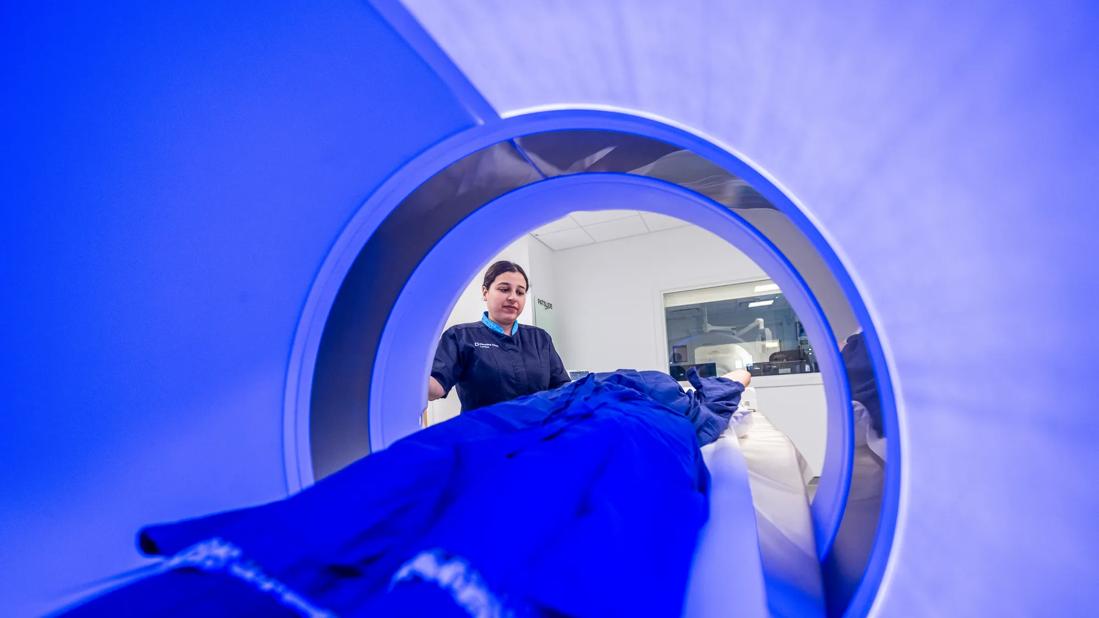
Image content: This image is available to view online.
View image online (https://assets.clevelandclinic.org/transform/a67da178-0dfb-4ce2-bf1d-0b2230b9e336/CCC_5210909_09-04-24_745_MLC)
Patient getting a CT scan
Since Cleveland Clinic established its Lung Nodule Program in 2020, the initiative has grown substantially across the health system. The program has strengthened collaboration among pulmonologists, primary care physicians and radiologists, while creating more standardized pathways for identifying, communicating and managing lung nodules. As the program continues to expand, leaders are using data, workflow improvements and a multidisciplinary approach to further improve patient follow-up and access to timely care.
Advertisement
Cleveland Clinic is a non-profit academic medical center. Advertising on our site helps support our mission. We do not endorse non-Cleveland Clinic products or services. Policy
“Our enrollment numbers have risen quite significantly over the past few years,” says Louis Lam, MD, Director of Cleveland Clinic’s Lung Nodule Program. “We’ve gone from a little over 6,800 patient visits in 2021 to just under 16,000 patient visits in 2025. The program is currently at 24 of our sites and includes 30 doctors and 17 APPs. That doesn’t include our radiology and primary care colleagues, who are a critical piece of the program.”
The program relies on primary care physicians to refer potential cases to radiology and on the identification of unsuspected (incidental) nodules on scans ordered for other reasons, like abdominal pain. Working with the Pulmonary Division, radiology has developed systems to flag actionable lung nodules and provide guideline-based management recommendations. They have also worked closely with electronic health record experts.
The Pulmonary Division developed lung nodule management care pathways based on current guidelines. It has also established a team to review the nodules, communicate findings with patients and providers and schedule patients with appropriate providers across the health system. A regular Nodule Evaluation conference allows providers to discuss challenging cases, learning together while optimizing clinical decision-making.
“As the program has expanded, we’re continuing to look for ways to improve our conversion rates from consultations to completed appointments,” says Dr. Lam. “Some of those steps have revolved around streamlining efficiency across the entire process. For example, when a nodule is marked by a radiologist, that patient gets siphoned into our automated patient outreach mechanism.”
Advertisement
In addition to radiology, Dr. Lam notes that primary care also represents a large piece of the process, since they are responsible for so many referrals to the Lung Nodule Program.
“We recognize our primary care physicians are extremely busy,” explains Dr. Lam. “So, we’re constantly communicating with them to identify opportunities for pulmonology to better support PCPs in managing these findings. For example, having nodules broken down by size is one of the ways we’re trying to unburden our PCP colleagues.”
These efforts have helped the program achieve a consult-to-completed appointment rate of about 60%, with leadership aiming to improve that number to 70%. The program has also streamlined referrals and patient notification, with patients automatically notified through MyChart of actionable incidental findings within one week.
“We’d like to get our conversion rates to 70%, which is ambitious, but I think it’s doable,” says Dr. Lam. “There’s research showing that follow-up rates for lung nodules have a lot of variance, so we’re doing our best to control what we can control.”
Part of what’s been beneficial for Cleveland Clinic’s Lung Nodule Program has been implementing a standardized reporting mechanism for radiology. Radiology also classifies each nodule based on size, with larger nodules given a higher priority.
Dr. Lam explains, “We updated the management algorithms and further divided care paths for intermediate and high-risk nodules — i.e., those that are 8 mm or greater — into low-intermediate risk, high-intermediate risk, high-risk and very high-risk nodules to provide higher resolution guidance.”
Advertisement
The group has also placed more emphasis on continued surveillance of pure ground-glass nodules and to only consider invasive testing when there is a discernible solid component. The group decided that for patients being referred for surgical biopsy without an established pathologic diagnosis, the case should be formally reviewed by the program’s multidisciplinary team, especially if the diagnosis requires greater than sub-lobar resection.
While the Lung Nodule Program has expanded as a result of its own success and merits, the expansion of Cleveland Clinic as an Enterprise has also been a contributing factor to its growth. The acquisition of Cleveland Clinic Mercy Hospital in 2021, for example, helped increase the number of lung nodule visits in that region from around 570 in 2021 to just over 3,000 in 2025.
“As we’ve expanded, we’ve made consistency of care across locations a key focus,” says Dr. Lam. “We want to ensure that patients seen at all our Cleveland Clinic locations receive the same high level of care. So, we’ve been working closely with our colleagues at these newer facilities to provide them with the resources to help them integrate smoothly into the Lung Nodule Program.”
Dr. Lam credits Peter Mazzone, MD, MPH, Director of the Lung Cancer Program and Lung Cancer Screening Program at Cleveland Clinic, for his help with these transitions. Each sub-market region has its own head: Hussein Hussein, MD, in the southern region; Mamoun Abdoh, MD, in the eastern region; and Joseph Cicenia, MD, in the western region. Being able to have clinicians on the ground and involved with care at each region helps ensure that the quality of care a patient receives at the main campus is the same level of care provided at the regional sites. Beyond Northeast Ohio, Cleveland Clinic Florida is also working to integrate the Lung Nodule Program into its structure.
Advertisement
Building on the program’s growth, leaders are continuing to refine patient communication and consultation efforts. Dr. Lam says he believes the recent hire of Kathryn Long, MD, will help with this. Dr. Long brings a great deal of research experience in patient populations and lung nodules
“We are working on a patient dashboard database that looks at the patients who have come through the program to help us determine how many of those patients are actually undergoing a diagnostic procedure,” explains Dr. Lam. “Dr. Long will help us review our data and help us determine if there are ways to optimize our care path. We're actually hoping to expand the data science team specifically for this program to help us extract and translate this data.”
The potential impact of technological advancements on the field also represents opportunity. Advancements in robotic navigational bronchoscopy are leading to a change in thresholds for pursuing non-surgical biopsies over surgical ones. Indocyanine green (ICG) marking of nodules for sub-lobar resection is also improving outcomes. The evolving role of biomarker testing for confirming or ruling out cancer is helping clinicians to be more precise in their care recommendations. The program is working to augment existing guidelines with consideration for these recent advancements in the field.
“We’ve seen exceptional growth and success with this program, but there’s always more that we can do to ensure our patients are receiving the best and timeliest care,” says Dr. Lam. “We hope that as we continue to refine the care path, such as patient outreach and consultation conversion rates, we can advance lung nodule care even further.”
Advertisement
Advertisement

Overexposure to the common alloy can lead to an autoimmune response called sensitization

A look into recent developments in the diagnosis of LAM and its clinical presentation

A review of treatment options for patients who may not qualify for surgery
Insights on ex vivo lung perfusion, dual-organ transplant, cardiac comorbidities and more
Collaborative patient care, advanced imaging techniques support safer immunotherapy management

Rising rates in young miners illustrate the need for consistent prevention messaging from employers and clinicians
Multidisciplinary focus on an often underdiagnosed and ineffectively treated pulmonary disease

Management and diagnostic insights from an infectious disease specialist and a pulmonary specialist
 Search