Locations:


Specialized training prepares caregivers to address the unique physical and emotional needs of young patients
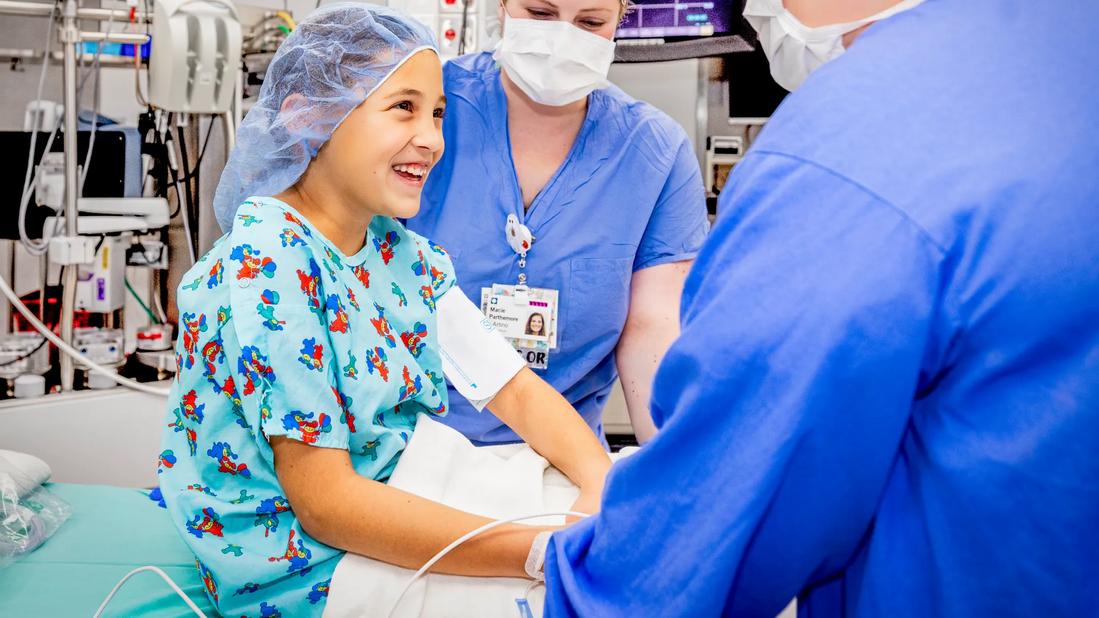
Image content: This image is available to view online.
View image online (https://assets.clevelandclinic.org/transform/b1fc6fcf-bbbd-40cd-8061-2c8bff14789e/NUR_6876858_10-02-25_021_LDJ)
Child in OR
Zach Bales, BSN, RN, has always had a special place in his heart for children — and that fondness led him to a career in pediatric nursing. “This is where I started, and this is where I will stay,” he says. “I wouldn’t trade pediatrics for anything.”
Advertisement
Cleveland Clinic is a non-profit academic medical center. Advertising on our site helps support our mission. We do not endorse non-Cleveland Clinic products or services. Policy
Bales works at Cleveland Clinic Children’s on an 18-bed, high-acuity medical-surgical unit at Main Campus — the largest of the hospital’s inpatient pediatric units. Patients at Cleveland Clinic Children’s range in age from newborn to 26 years.
“Knowing how to provide care across multiple age groups, while understanding patients’ unique physiological and psychological needs, is what sets pediatric nursing apart from other specialties,” he says.
In a single day, a pediatric nurse might care for a frightened toddler, a curious 10-year-old and a reserved teenager — all of whom require different levels of support. Caregivers in this specialized field are trained to understand child development and how to adapt care, communication and treatment accordingly.
“When I first approach a patient, I try to look beyond their medical needs,” Bales explains. “When greeting a 3-year-old, I might raise the bed or bend down to get on their level. I’ll try to strike up a conversation about a toy they have or ask about things they enjoy. Nine times out of 10, that interaction dissolves the tension in the room, and they become more willing to let me deliver the care they need.”
Having compassion for children, as well as a cheerful, positive attitude are necessary in this specialty. “Feelings are essential when working in pediatric nursing,” Bales adds. “Your heart must always be in it.”
Pediatric nurses frequently serve in a wide variety of practice environments, including hospitals, clinics, surgical centers, schools, health departments and public agencies. Depending on the setting, caregivers may be expected to manage everything from routine wellness visits to life-changing illnesses or accidents to complex and chronic medical disorders. They work closely with other disciplines, frequently collaborating with neonatologists and pediatricians.
Advertisement
“‘There is no I in team’ is an old saying that is especially true in pediatric nursing,” Bales says. “We partner with a broad multidisciplinary team of physicians, therapists, child life specialists and others to ensure everyone is on board with every plan of care.”
Among their unique strengths, pediatric nurses are proficient at assisting with procedures, taking and recording vital signs, providing patient education and – above all – adapting under pressure. They recognize that growing bodies react differently to illness, trauma and medications than adult bodies, and because their patients can’t always articulate how they feel, they develop keen observation and assessment skills.
“There are specific nuances that must be considered when caring for children,” Bales explains. “For example, a child’s weight is critical for guiding medication dosing and confirming that any medical equipment is appropriately sized.”
Nurses are also responsible for educating and communicating with patients’ parents, guardians and caregivers. “When you work with children, you also work with the adults in their lives,” he says. “One of the first things I learn from a parent is how their child may best cope with a situation.”
Bales also emphasizes the importance of maintaining clear lines of communication, especially when families are facing a challenging or vulnerable experience. “We do a lot to educate the parents by explaining disease processes, treatment phases and more,” he says. “We’re also there to provide emotional support.”
Advertisement
He adds, “Similarly, communicating with patients takes a lot of practice and patience because everything needs to be explained on the individual child’s level. I try to be silly and fun, even when performing a treatment that the patient doesn’t like. I want them to know that my job is to help them feel better.”
Cleveland Clinic pediatric nurses, who have myriad opportunities to sharpen their skills and advance their careers, are expected to participate in yearly pediatric competency training, ongoing process/procedure training, and maintain certifications, including pediatric advanced life support (PALS), certified pediatric nurse (CPN) and pediatric nursing-board certified (PED-BC). Many participate in shared governance, serve on internal committees and provide clinical instruction at local nursing schools.
“I get a lot of satisfaction from my work with the Nursing Policy Committee, whose efforts affect pediatric nursing professionals across the entire organization,” says Bales, who also serves as a clinical instructor and certified skincare resource nurse.
Tina DiFiore, MSN, APRN, NNP-BC, a Clinical Nurse Specialist (CNS) in the Neonatal Intensive Care Unit (NICU) at Cleveland Clinic Hillcrest Hospital, is equally passionate about sharing clinical knowledge. She also serves on the Nursing Policy Committee and is chair of the Pediatric Nursing Practice Council.
Before becoming a CNS, DiFiore worked as a clinical pediatric nurse in the NICU environment. A desire to make a larger global footprint eventually inspired her to become an APRN.
Advertisement
With the CNS credential, APRNs like DiFiore often work directly with patients, researchers and managers. “I recently educated a family on how to take their baby home with a feeding tube, including how to put the tube in and how to travel with the feeding pump,” she explains.
Experts in their field, CNSs specialize in training and educating their peers, while serving as valuable resources to their units and organizations. “I teach, mentor, design treatment plans, provide advanced physical assessment skills, and share my knowledge and experiences to help clinical nurses manage a wide variety of situations,” she says.
DiFiore appreciates that her role allows her to both experience the rewards of the nursing profession and exert a wider influence on the way patient care is delivered.
“I love caring for the tiniest, most fragile patients and having the opportunity to watch them grow,” she admits. “I’m also proud of my ability to help shape my hospital’s policies and procedures, speak up for nursing at the decision-making table and drive evidence-based practice for the entire organization.”
When conveying the depth of her work, she references the CNS spheres of influence: patients and families, nurses and nursing practice, and organization and healthcare systems.
“I really feel like I’m living the three spheres,” she says. “Cleveland Clinic CNSs are using their knowledge to develop standards of care for future practice.”
DiFiore, who recently celebrated 25 years in pediatric nursing at Cleveland Clinic, continues to stand by a statement she made at the onset of her career: “Not a day goes by that I don’t walk in these doors and touch a life, or a life touches mine.”
Advertisement
Both she and Bales agree that it takes a special type of nurse to care for children and their families.
“It’s incredibly fulfilling to be able to help a sick child and their family move toward a positive outcome,” Bales says. “But for me, the greatest reward comes from being able to put a smile on a patient’s face and know that I’ve made a positive difference.”
Advertisement
Using meticulous preparation and teamwork to manage critically ill patients in constantly changing environments

Translating clinical questions into meaningful, sustainable change
Guidance for creating a relevant framework that reflects organizational values, supports professional practice

Helping patients recognize respiratory changes, navigate treatment barriers and stay connected to their clinical team
Initiative provides hands-on opportunities to promote early, progressive activity

Continuing to grow by following the right path at the right time

Teaching caregivers to recognize warning signs, de-escalate difficult situations and maintain professional boundaries

Veteran caregivers offer practical wisdom for building confidence and practicing with purpose
 Search