Locations:





Cleveland Clinic experts discuss clinical clues, testing considerations and multidisciplinary care for patients with suspected short telomere syndromes
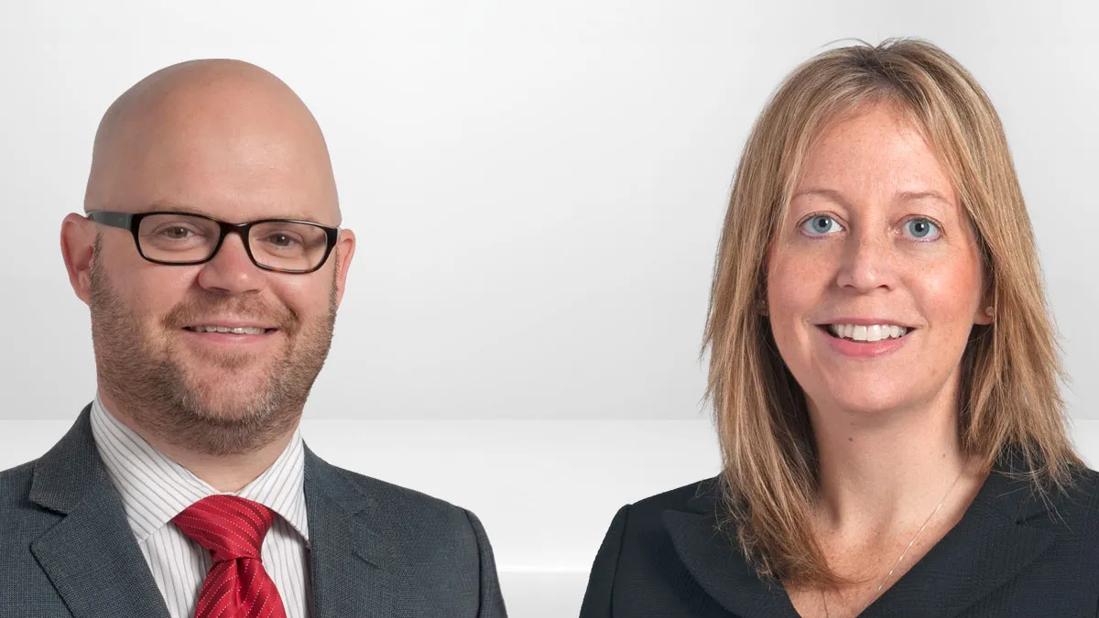
Image content: This image is available to view online.
View image online (https://assets.clevelandclinic.org/transform/d10f2bbd-0fe6-4612-bbd8-6a0dc9c489fa/Recognizing-and-Managing-Telomere-Biology-Disorders)
Brian Southern, MD and Hetty Carraway, MD
Podcast content: This podcast is available to listen to online.
Listen to podcast online (https://www.buzzsprout.com/2250706/19459268)
The field of telomere biology has expanded rapidly as clinical understanding of telomere-related disorders has improved. The rare, inherited conditions caused by harmful genetic mutations are characterized by abnormally short telomeres and premature cellular aging. Growing evidence has linked telomere biology disorders to pulmonary fibrosis, bone marrow failure, liver disease and other age-related conditions.
Advertisement
Cleveland Clinic is a non-profit academic medical center. Advertising on our site helps support our mission. We do not endorse non-Cleveland Clinic products or services. Policy
A recent episode of Respiratory Exchange dives into the clinical clues, diagnostic testing, genetic implications, and multidisciplinary management of short telomere syndromes. In the episode, Hetty Carraway, MD, Director of the Acute Leukemia Service at Cleveland Clinic, and Brian Southern, MD, Director of the Telomere Biology Clinic in Cleveland Clinic’s Division of Pulmonary Medicine, discuss when to test for short telomere syndromes. They also address genetic screening, transplant considerations and emerging research reshaping care for affected patients and families.
“We often use analogies to kind of talk about some of the biology in telomeropathy states,” says Dr. Carraway. “When we talk about DNA duplication, the analogy we use is the ends of the laces on your shoes, holding the end of the shoelace together. If those are not holding the end of the strand in place, then you can have shortening of the DNA. In telomere disorders where those are significantly shortened, then we start to worry about shortened telomere syndromes.”
What makes management challenging is that telomeres often affect organs with high cell turnover, particularly the lungs, bone marrow and liver. This makes the condition relevant across several specialties beyond genetics and pulmonary medicine. However, the disorders can be challenging to diagnose because they don’t present the same way in every patient or family. The signs can also be subtle, overlap with more common conditions or appear across different specialties.
Advertisement
As a pulmonologist, anybody who comes in and has a first-degree relative with pulmonary fibrosis or any type of interstitial lung disease automatically raises a flag with me,” says Dr. Southern. “Also, because of the different things you can see in telomere biology disorders, any patients who come in with unexplained pulmonary fibrosis and liver cirrhosis or pulmonary fibrosis and bone marrow failure also raises a red flag.”
Dr. Southern also points to subtle signs to be aware of, like patients presenting with a lacy hypopigmented skin rash. Other patients might present with oral leukoplakia—white spots in the mouth. Fingernail changes are other things to look out for on exam, but usually, having a family member with either pulmonary fibrosis or a bone marrow disorder or unexplained liver cirrhosis is the biggest clue.
When suspicion is high, telomere length testing can help with a diagnosis. In the episode, Dr. Southern explains that flow-FISH testing on peripheral blood is the most common method for measuring telomere length. However, results have to be interpreted in the context of the patient’s clinical picture and family history. When findings suggest an inherited disorder, genetic testing can help guide family screening, counseling and long-term preventive care.
Coordinated care is especially important once a diagnosis is suspected or confirmed. Telomere biology disorders can affect multiple organ systems, so patients need input from pulmonologists, hematologists/oncologists, geneticists, infectious disease specialists and transplant specialists. That level of collaboration can be critical when considering a lung or stem cell transplant, since shortened telomeres can impact conditioning regimens, immunosuppression strategies, infection prophylaxis and long-term surveillance.
Advertisement
At Cleveland Clinic, the Telomere Biology Clinic brings that multidisciplinary expertise together for patients with suspected or confirmed short telomere syndromes. Led by Dr. Southern in the Division of Pulmonary Medicine, the clinic draws on specialists including Dr. Carraway, whose hematology/oncology expertise is critical for patients with cytopenias, bone marrow failure, germline predisposition or transplant considerations. The Clinic also connects pulmonary, hematology/oncology, genetics, infectious disease and transplant expertise to help evaluate complex cases, guide testing and coordinate long-term management.
In the excerpt below, Drs. Southern and Carraway discuss one of the common misconceptions about short telomere syndromes — and why diagnosis can open the door to more intentional, preventive care. Listen to the full episode by clicking the podcast player above, or find more Respiratory Exchange episodes at https://my.clevelandclinic.org/podcasts/respiratory-exchange or wherever you get your podcasts.
Daniel Culver, DO (episode host): Well, I want to give you all a chance to answer one more question, but before that, I want to thank you both for joining me today. I think this is such an evolving and rapidly changing field, and I'm really grateful that you two got together and set up this telomere biology clinic. Really, I think multidisciplinary care is one of the keys to improving outcomes for the patients. I'll take a minute and ask you each one more last question, and I'll start with you, Dr. Southern. What do you think are the biggest misconceptions about short telomeres when people call you? What kind of things do they not understand that you have to explain to them?
Advertisement
Dr. Southern: Healthcare providers tend to want more specialized service, and they like the idea of referring patients to the Telomere Biology Disorder Center. So, I've actually had quite a few of our own pulmonologists refer their patients over because they get more comprehensive care with the Telomere Biology Disorder Center and its multidisciplinary group. A lot of referring physicians have the misconception that a person who has a telomere disorder is automatically going to have an interstitial lung disease or a bone marrow problem, and that's not always the case. There is a significant proportion of patients with short telomeres that don't have any manifestations. We don't know exactly why that's the case, and why some people won't have a detectable mutation, but they'll have shortened telomeres, or they'll have a mutation and their telomere length is normal. So, there are all these things you have to think about, and I think referring physicians like the concept of having a multidisciplinary team that looks at all those different things.
Dr. Culver: That really makes me think of the alpha-1 experience when we started screening for Alpha-1 and counseling people with ZZ or MZ genotype. The rate of smoking in that population is so much lower. And really, we can do the same thing for patients who have these germline mutations or even a family history of short telomeres to make sure that the way they conduct their lives is really as gentle as possible to the cells that have to divide over and over across a lifespan. It goes for the bone marrow and the lungs as well as the liver, I suppose.
Advertisement
Dr. Carraway: I think one of the misconceptions out there is that there's nothing to do, and I would argue differently. There's a lot we can do from an intentional preventative standpoint at the start. If you know you're at risk, you'll intentionally choose not to go out without sunscreen. You'll intentionally choose to wear a broad-brimmed hat and long sleeves or make that a practice that you share with your family. The same is true with X-rays or radiation exposure and/or other occupational exposures. You may choose not to be a person that spends time in the X-ray field, right?
Dr. Culver: Or sandblasting, for that matter.
Dr. Carraway: Or coal mining or whatever it is. So, you may be able to make more intentional choices about your overarching health as a result of that knowledge and the knowledge for your family.
I think the other part to that is just underscoring the importance of research and opportunities within the multidisciplinary care that we deliver. We have lots of people who are very curious about this space and are excited to try and have effective change in the future. Whether that is building new technologies in terms of identifying how we best measure telomere length. We know there's ongoing work—Dana-Farber in Boston with Chris Riley and others trying to make better testing for these patients.
I imagine that we'll continue to see that as a new frontier, not just for telomeropathies, but also for hematologic malignancies as we're embracing this clonal hematopoiesis of indeterminate potential. We know patients in general right now with telomeropathies are at increased risk for clonal hematopoiesis and clonal cytopenias of undetermined significance. I think there's a lot more exciting work that we would like to do at this institution regarding that. I know other institutions are also looking at that and seeing if we can predict who might be the people who are more at risk for an underlying hemalignancy and if there are ways that we can mitigate that risk and follow that risk by looking at NGS.
I think about identifying additional germline mutations, and the work by Richa Sharma and others here about the DNA repair mechanisms that happen. A shout-out to her and the work that people are doing here. I think it is also really important to have a community of physicians and scientists who are excited about that and want to grow the program So, that we can pay it forward and pay it back to the community that's affected by this.
Advertisement
Exploring the true prevalence of AATD among Americans and why so many remain undetected

Recommendations on identifying and managing neurodevelopmental and related challenges

National database study reveals insights into survival outcomes
Phenotypic clustering study reveals four distinct disease trajectories
Rare genetic disorder prevents bone mineralization
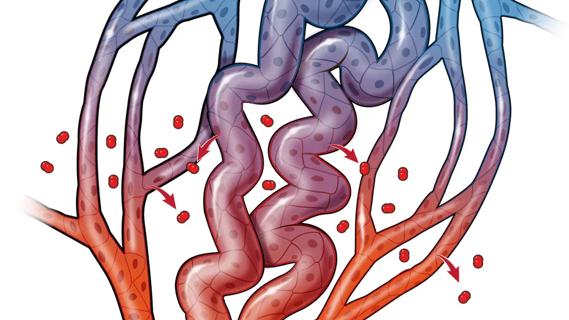
Oral medication reduces epistaxis and improves quality of life for patients with rare vascular disorder
A recently published case series highlights the broad range of laryngeal findings that can present among individuals with EDS
The disorder can greatly impact patients’ quality of life, but sclerotherapy and a multidisciplinary approach to care can be life-changing
 Search