Locations:





Practical takeaways for the reality of overlapping cardiovascular, kidney and metabolic disease

Image content: This image is available to view online.
View image online (https://assets.clevelandclinic.org/transform/424a2657-40c1-46d5-9ea1-fd0fa4e99e51/HVI_5466190_12-13-24_041_MLC)
Doctor examining patient's heart with a stethoscope
Cardiologists increasingly care for patients whose cardiovascular disease coexists with obesity, Type 2 diabetes, chronic kidney disease and heart failure.
Advertisement
Cleveland Clinic is a non-profit academic medical center. Advertising on our site helps support our mission. We do not endorse non-Cleveland Clinic products or services. Policy
The new American Heart Association and American College of Cardiology guideline on cardiovascular-kidney-metabolic (CKM) syndrome is the first to address that clinical reality, offering a practical outline for staging risk, broadening assessment and guiding treatment across traditional specialty silos.
Coauthored by Amanda Vest, MBBS, MPH, Section Head of Heart Failure and Transplant Cardiology at Cleveland Clinic, the document is intended to complement, not replace, existing heart failure guidance. It gives cardiologists, endocrinologists, nephrologists and other clinicians a shared language for managing patients who don’t fit neatly into a single disease category.
“Rather than focusing on one condition in isolation, this guideline considers the whole patient,” Dr. Vest says. “It also supports better collaboration among the different clinicians involved in a patient’s care as CKM syndrome progresses across stages.”
CKM syndrome is a relatively new concept for understanding the relationship among cardiovascular disease, kidney disease, Type 2 diabetes and obesity. Each condition can contribute to the onset or progression of the others.
The American Heart Association’s 2023 presidential advisory helped define CKM syndrome and challenged cardiovascular clinicians to routinely account for kidney and metabolic risk when managing patients with cardiovascular disease. The new guideline translates that concept into a more practical approach for everyday care.
“For example, cardiologists need to become more comfortable using urine albumin-creatinine ratio, or uACR, to identify kidney damage related to hypertension, diabetes and other cardiometabolic conditions,” Dr. Vest says.
Advertisement
While not traditionally part of a standard cardiovascular workup, uACR can add important information to risk assessment and help identify patients whose kidney disease should influence staging, monitoring and therapy.
“This is new to my practice,” Dr. Vest says. “I think the new CKM guideline will provide every cardiovascular professional with practical changes. When helping draft the document, I certainly learned a lot from the endocrine and nephrology specialists about ways to better serve our patients and ultimately become a better cardiologist.”
“For practicing nephrologists, the links between kidney health and metabolic and cardiovascular diseases have been well-recognized, but care has been challenging to implement in a siloed healthcare environment,” adds Crystal Gadegbeku, MD, Chair of Kidney Medicine at Cleveland Clinic and President-Elect of the American Society of Nephrology. “The nephrology community is excited to have these guidelines as a framework for coordinated, holistic management in an era of significant therapeutic advancement.”
The CKM syndrome guideline reviews the evidence on diagnosis, risk assessment, general principles of care, management of cardiovascular disease in CKM syndrome, and monitoring and follow-up after therapy is initiated. While the document summarizes the top take-home messages for readers, here Dr. Vest highlights her own take-home tips for cardiologists:
One of the most tangible takeaways is to start using the CKM staging system:
Advertisement
Staging helps organize prevention, risk refinement, treatment intensity and follow-up, while giving cardiologists, nephrologists, endocrinologists and the broader care team a common language.
“Think about your next five patients in clinic and stage them,” Dr. Vest suggests.
Risk assessment in CKM syndrome extends beyond traditional cardiovascular tools. Familiar tools such as the American Heart Association PREVENT™ calculator still matter, but they should be used alongside kidney and metabolic measures to refine risk more comprehensively.
For cardiologists, that may mean incorporating measures such as estimated glomerular filtration rate and uACR more routinely into cardiovascular assessment. The guideline also outlines how PREVENT estimates can help inform CKM staging.
The broader point, Dr. Vest says, is that cardiovascular risk should no longer be assessed in isolation from kidney and metabolic health.
Medical therapy should be selected with the patient’s full CKM profile in mind, including cardiovascular disease, kidney disease, diabetes, obesity and heart failure phenotype.
For example, in patients with cardiovascular disease and Type 2 diabetes, SGLT2 inhibitors or GLP-1 receptor agonists may offer important cardiometabolic benefit. In patients with cardiovascular disease and chronic kidney disease, the guideline highlights the role of renin-angiotensin system blockade, SGLT2 inhibitors and, in appropriate patients, additional agents such as nonsteroidal mineralocorticoid receptor antagonists or GLP-1 receptor agonists.
Advertisement
“We now have very clear recommendations about the prioritization of therapies,” Dr. Vest says. “We can easily discern which are primary and which may be considered as add-ons, all within the spectrum of improving cardiovascular health.”
The CKM guideline does not supersede the 2022 heart failure guideline, she adds. Guideline-directed medical therapy for heart failure remains essential, including ACE inhibitors, beta-blockers, mineralocorticoid receptor antagonists and SGLT2 inhibitors for heart failure with reduced ejection fraction, with SGLT2 inhibitors also foundational in heart failure with preserved ejection fraction.
An estimated 9 in 10 U.S. adults may meet criteria for CKM syndrome, raising concerns about overmedicalization. But the guideline does not overlook lifestyle treatment, Dr. Vest emphasizes.
“Optimizing nutrition, physical activity and other lifestyle factors remains fundamental for patients with CKM syndrome,” she says. “Those interventions need to be addressed alongside appropriate medical therapy.”
The guideline emphasizes the need for a CKM coordination point person, which could be a pharmacist, nurse, advanced practice provider or other clinician, depending on the healthcare system. That role may help track staging, ensure key laboratory tests are obtained, support medication titration and reduce fragmentation across specialties.
Cleveland Clinic continues to explore different models for delivering that kind of coordinated care.
The goal is not to add more appointments or confusion for patients, Dr. Vest notes.
Advertisement
“Adding more clinic visits or encounters onto a patient’s schedule is not ideal, especially when the patient has multiple diagnoses and already is spending a lot of time in doctors’ offices,” she says. “The challenge for health systems is to integrate care, bringing together various treatments and delivering them seamlessly.”
For cardiologists, the message is that CKM syndrome is no longer someone else’s domain. The new guideline offers a practical starting point for recognizing it earlier, staging it more consistently and treating it more comprehensively.
“Dr. Vest and the entire guideline-writing committee are to be congratulated for providing this first framework for the risk assessment, prevention and treatment of CKM syndrome,” says Dennis Bruemmer, MD, PhD, Director of the Center for Cardiometabolic Health at Cleveland Clinic. “Close to 90% of U.S. adults are affected by this syndrome, making these guidelines relevant to a very large patient population. The focus now is on implementing these recommendations more broadly and applying strategies that prevent the development of risk factors leading to metabolic disease and its cardiovascular and kidney complications.”
Advertisement

Cleveland Clinic pioneers a new paradigm in cardiovascular care delivery

Site visits offer firsthand lessons in clinical and operational excellence in cardiovascular care

Cancer drug helps treat decades-long symptoms in patient with complicated lymphatic issue

Findings support emphasis on markers of frailty related to, but not dependent on, age
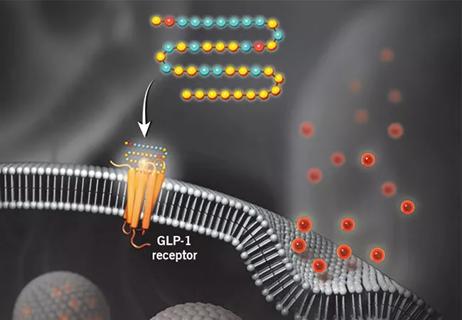
Findings establish overweight/obesity as a modifiable risk factor for cardiovascular disease
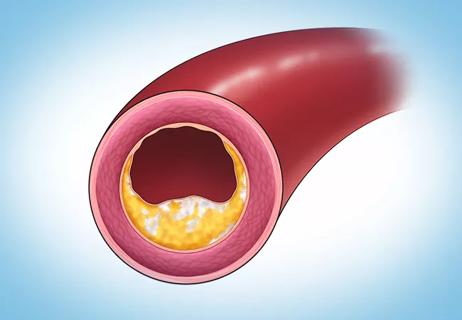
Observational study supports adding CAC score to traditional risk factors for precision medicine approach
Visual snapshots of how we manage challenging cases
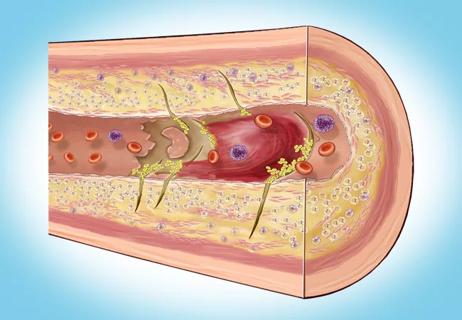
Inflammation found more predictive of events than LDL-C in pooled analysis of RCTs
 Search