Locations:





Findings may help guide discussions around prognosis and allogeneic stem cell transplantation
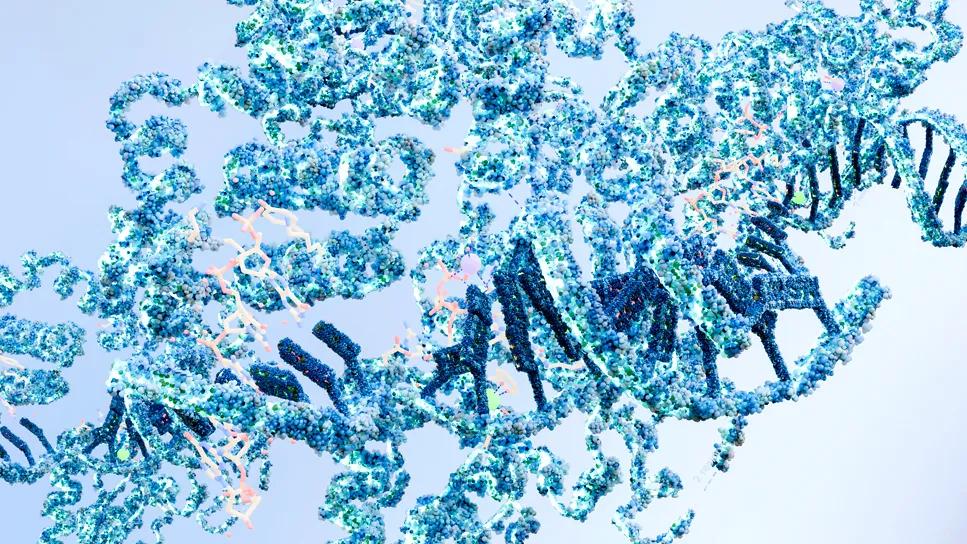
Image content: This image is available to view online.
View image online (https://assets.clevelandclinic.org/transform/cad7fa89-0933-4557-9740-662d6d6f0d83/human-antigen-protein-p53-2199177173)
T53 mutation illustration
The timing of TP53 mutation acquisition carries important prognostic implications for patients with myeloproliferative neoplasms (MPNs) and myelodysplastic syndromes/MPN overlap disorders. Later emergence of the mutation is associated with significantly worse survival outcomes, according to a recent study.
Advertisement
Cleveland Clinic is a non-profit academic medical center. Advertising on our site helps support our mission. We do not endorse non-Cleveland Clinic products or services. Policy
The findings, presented at the 2026 ASCO annual meeting, suggest that the interval between initial diagnosis and TP53 mutation detection may provide clinically meaningful risk stratification beyond age and presence of TP53 mutation alone.
Survival analyses demonstrated that later TP53 acquisition was associated with poorer outcomes after adjustment for age at TP53 detection.
“We looked at survival not from the time of diagnosis of the MPN, but from the time of acquisition of TP53 mutation,” says lead investigator Akriti G. Jain, MD, Associate Staff, Cleveland Clinic Taussig Cancer Institute, Leukemia and Myeloid Disorders. “We saw that if someone acquired TP53 mutation later in the course of disease, their prognosis was worse compared to someone that had the TP53 mutation at diagnosis.”
P53 is a tumor suppressor gene. “We know TP53 is not a good mutation to have in any type of cancer, and right now we don’t have any FDA approved drugs to specifically target TP53,” she says. Although TP53 mutations have been extensively studied in myelodysplastic syndromes (MDS) and acute myeloid leukemia (AML), less is known about their role in MPNs and MDS/MPN overlap syndromes.
Dr. Jain notes that previous research has established TP53 mutations as adverse prognostic markers in myeloid malignancies, but whether the timing of mutation acquisition influences outcomes in myeloid disorders has remained unclear.
To address that question, the investigators retrospectively identified all patients Cleveland Clinic with TP53 mutations detected on an institutional next-generation sequencing panel between 2018 and 2024. Among 497 screened patients, 54 patients with MPN or MDS/MPN overlap disorders were included in the analysis. Diagnoses included essential thrombocythemia (ET; n=27), polycythemia vera (PV; n=7), myelofibrosis (MF; n=9), and chronic myelomonocytic leukemia (CMML; n=9).
Advertisement
The median age at diagnosis was 65.1 years, 56% of patients were male, and 81% were white. Approximately 22% of patients were diagnosed with their MPN or MDS/MPN at the same time the TP53 mutation was detected.
More than half of patients (52%) had received hydroxyurea before TP53 detection. At the time the mutation was identified, 13 patients had progressed to AML and 11 had progressed to MF. The most common co-mutations were JAK2 (n=19), CALR (n=11), TET2 (n=10) and ASXL1 (n=9).
The median interval from initial diagnosis to TP53 detection was 6.7 years, with a broad range spanning from diagnosis to 38 years later. Patients were divided into quartiles based on timing of TP53 acquisition: <6 months, 6 months to 7 years, 7.1 to 14 years and >14 years after diagnosis.
Older patients were significantly more likely to develop TP53 mutations earlier in their disease course (Spearman r = −0.61; P < .0001). Patients in the earliest acquisition group also tended to have higher variant allele frequencies and more co-mutations at diagnosis, although these findings did not reach statistical significance.
After adjusting for age, longer disease history before TP53 detection was associated with progressively worse survival in a dose-response fashion. Patients who acquired TP53 mutations after >14 years of disease had 4.3-fold worse overall survival (P for trend = .002) and 4.5-fold worse progression-free survival (P for trend = .001) compared to those with early TP53 detection, even after age adjustment.
Advertisement
Older age at TP53 detection also independently predicted worse outcomes, with median overall survival of 3.6 months versus 27.2 months among older versus younger patients (P = .002). Median progression-free survival was similarly reduced at 3.6 months in the latest acquisition group versus 17.5 months in the earliest (P < .001).
The biological explanation remains uncertain, but Dr. Jain suggests that a TP53 mutation arising in a patient with long-standing, heavily treated MPN may reflect a fundamentally different biology (possibly therapy-related clonal selection, accumulated genomic instability or exhaustion of normal hematopoietic reserves) compared to TP53 detected early in the disease course.
“There’s potential that hydroxyurea or other medications, or just having a disease for a long time and having multiple treatment modalities during that time, can contribute to clonal instability, says Dr. Jain.”
Clinically, the findings may help guide discussions around timing of allogeneic stem cell transplantation in these otherwise chronic disorders.
The findings provide another piece of the puzzle that can help guide risk stratification and patient counseling. “This is something that can help physicians and patients discuss stem cell transplant in a more informed way and refer patients for stem cell transplants so it can be considered earlier rather than later,” says Lauren Granat, DO, MS, first author of the study.
She adds that conversations about transplant candidacy typically begin as soon as TP53 mutations are detected, although the timing of transplantation remains individualized based on comorbidities, disease control and evidence of progression.
Advertisement
Advertisement
Advertisement

Adding 177Lu-PSMA-617 to ADT plus an ARPI cut the risk of radiographic progression or mortality by 28%

New program will help patients improve fitness and manage weight after cancer treatment

Cleveland Clinic hematologist highlights new guidelines and treatment advances in immune thrombocytopenia
NIMBLE replaces weekly tumor board delays with same-day multidisciplinary recommendations

Cleveland Clinic study provides validation for the test, which combines AI and pathological data to predict outcomes in postoperative patients

Advanced imaging technology catches metastases much earlier, allowing treatment with fewer side effects

Reduced radiation for lymph node areas reduces side effects

Large Cleveland Clinic analysis may help resolve a longstanding question over optimal fractionation
 Search