Locations:


The demands of collegiate competition add nuance to injury management and return-to-play decisions
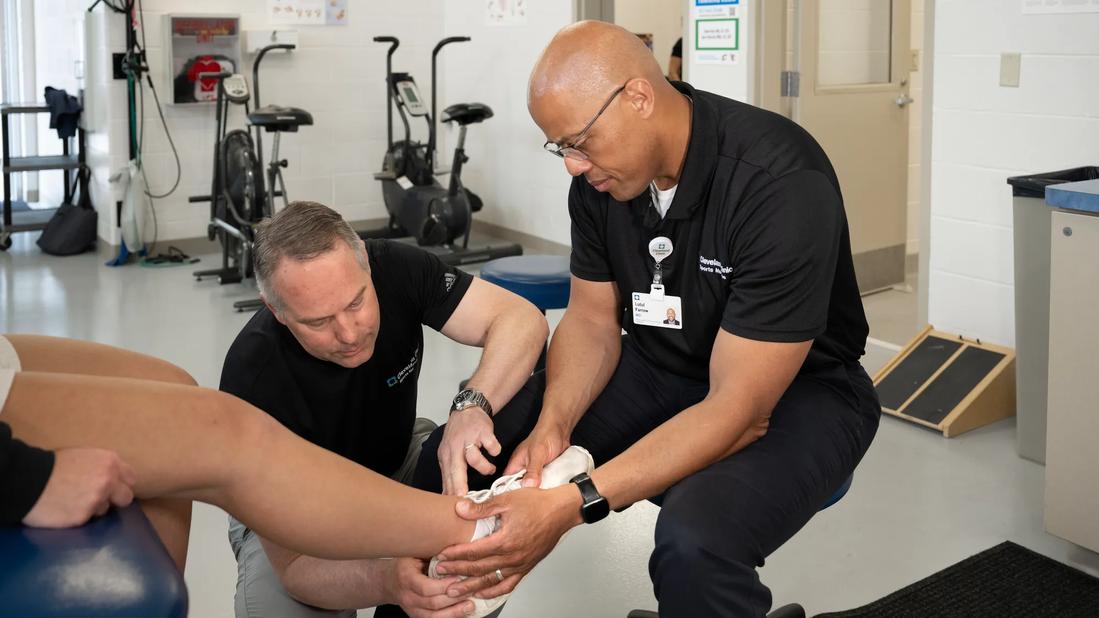
Image content: This image is available to view online.
View image online (https://assets.clevelandclinic.org/transform/db2ce750-84a8-4b29-9aaf-bed4f0adc9fa/ORI_4886985_05-15-24_109_DG)
Two medical professionals examine the ankle of a person sitting on a clinical table
“When you’re an NCAA physician, whether it’s Division 1, 2, 3 or JUCO, you have to be a sort of jack of all trades,” explains Lutul Farrow, MD, a staff orthopaedic surgeon at Cleveland Clinic and head team physician at Kent State University. “You may see a football player followed by a swimmer, followed by a wrestler, followed by a cheerleader. You not only need to be knowledgeable about all sports, but you also need to understand that not all sports produce the same types of injuries nor have the same return-to-play criteria. I think it’s a role that has helped me with my everyday patients.”
Advertisement
Cleveland Clinic is a non-profit academic medical center. Advertising on our site helps support our mission. We do not endorse non-Cleveland Clinic products or services. Policy
Those sport-specific considerations can make post-injury care of a Division 1 student-athlete more complex than it may appear. Physicians outside of sports medicine may be less familiar with the nuances that shape each step after an injury, from the initial evaluation through rehabilitation and return to play.
As a former NCAA athlete, Dr. Farrow has extensive experience in caring for athletes at all levels of training, ranging from recreational sports to professional athletics. He has served as a team physician for the NFL Cleveland Browns, Baldwin Wallace University, the University of Arizona Wildcats, Pima Community College Aztecs, the Tucson Rodeo, and both the MLB Arizona Diamondbacks and Colorado Rockies during their spring training in Tucson.
“I’ve served as a team physician at a lot of different levels, but there is something special about caring for student-athletes at the Division 1 level,” he says.
In any injury situation, Dr. Farrow says his first priority is assessing any life- or limb-threatening emergencies.
“We check if the student-athlete is alert and awake and determine what their main concern is,” he explains. “This is especially the case if this involves a head or a spine injury because that raises our level of concern, and we’re going to work quickly to activate the emergency action plan.”
Athletic trainers generally conduct the initial assessment and may determine whether a student-athlete can return to play or needs evaluation by a team physician.
“Athletic trainers are almost like our first responders,” he explains. “They typically spend the most time with the student-athletes and know their personalities, which is important because they have real insight into the way a student-athlete responds to an injury. Maybe they’re typically very stoic, and now they’re being much more emotional. Or maybe they’re typically loud and boisterous, and now they’re much quieter. The athletic trainer has the familiarity to recognize those subtleties and know when this person is in significant pain.”
Advertisement
Dr. Farrow explains that athletic trainers also serve as liaisons between the medical and coaching staffs.
“Most coaches do not come to visits with their student-athletes, and obviously during the game, their job is to coach,” he says. “Generally, I evaluate an injury, and that decision is communicated in real time to the athletic trainer, who is typically right by my side. Then, they’ll communicate everything to the coach.”
Despite the competitive stakes, Dr. Farrow says pressure to return often comes from student-athletes themselves. The medical team must balance that urgency with its responsibility to protect the athlete’s immediate safety and long-term health.
“An old NCAA commercial said, ‘There are more than 400,000 student-athletes, and just about all of us will be going pro in something other than sports,’” says Dr. Farrow. “Most student-athletes will have careers and families beyond sports. So, when I treat them, my major concerns are whether they can safely return to play without worsening the injury, and long-term, how can we prevent arthritis or another major medical condition later in life?”
He continues, “I think my background as an NCAA student-athlete, a team physician and a father to a Division 1 student-athlete helps give me that perspective and ability to relate to a student-athlete dealing with an injury. I’m able to wear all of those hats at once — student-athlete, parent and physician — to really understand what they might be going through.”
For many student-athletes, being a part of a team and competing is a core part of their identity. Being unable to compete can contribute to anxiety or depression and affect their overall well-being.
Advertisement
“The medical team has to protect student-athletes without treating return to play as medically or emotionally insignificant,” Dr. Farrow explains. “Obviously, protocols and guidance supersede everything when it comes to injuries, but there is still a lot of nuance involved.”
In some cases, injury diagnoses can be made directly on the field. Physical examination maneuvers can help clinicians identify suspected ACL, meniscal or Achilles tendon injuries before imaging is considered. However, in instances with less certainty about the type or extent of the injury, Dr. Farrow says it’s important to err on the side of caution.
“We all have criteria and protocols when it comes to care,” he says. “So, if there are times when the diagnosis is in doubt, that’s when we may want to get advanced imaging done. But there are dozens of different scenarios that dictate MRI versus X-rays versus CT scans. Ultimately, we want to protect our student-athletes, and sometimes that means holding them out of play until we have enough information to make an informed decision.”
Following a confirmed injury, care transitions into a multidisciplinary system, including athletic trainers, physicians, physical therapists, nutritionists and sport psychologists working together on recovery.
“We try to bring the hospital essentially to the university, meaning that we try to do all of our care within the university environment,” says Dr. Farrow. “Student-athletes have academics, practice and lives on campus, so we don’t want to make them drive 30 minutes to an appointment. If we can manage things on campus, we do so.”
Advertisement
Athletic trainers and team physicians manage much of that on campus every day of the week. Athletic trainers and physical therapists may see the athlete daily, physicians may assess progress regularly, and nutritionists and sport psychologists may participate at key points.
“Our team of physical therapists comes to campus four to five days a week, and we have sport nutritionists, sport psychologists, and strength and conditioning coaches here as well,” says Dr. Farrow. “We recognize that recovery is a process and a journey, and the whole team of caregivers ensures that student-athletes are well cared for in an environment that’s more convenient for them. I tell my student-athletes that excellent surgery cannot compensate for inadequate rehabilitation, so we really stress the importance of attacking recovery purposefully every day.”
For an athlete returning to play after a more substantial injury, Dr. Farrow describes an ongoing process rather than a single clearance visit. The medical team considers the student-athlete’s recovery, immediate function, sport-specific demands, risk of reinjury and possible long-term consequences. This approach supports a return to competition without losing sight of the athlete’s long-term health
“Our goal is to help student-athletes return to the sports they love, reach their goals and become the best they can be,” says Dr. Farrow. “But as a team physician, I also recognize that they are so much more than simply athletes.”
Advertisement
Advertisement

Cleveland Clinic’s Global Peak Performance Center and PGA TOUR partnership pair advanced assessment with longitudinal follow-up to enhance clinical decision-making
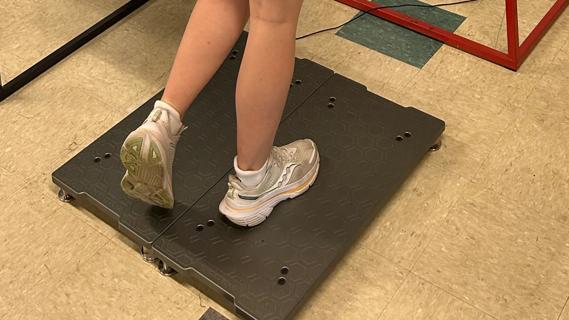
Innovations and practical insights for safe return to sport after lower-limb injury
Research by Cleveland Clinic and Sports Data Labs to improve health and function in everyday patients as well as elite athletes
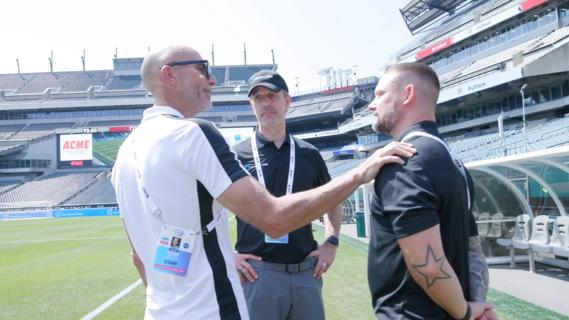
A behind-the-scenes look at Cleveland Clinic’s role as medical services provider of the 2023 Summer Series

Rest is often not the best care for gamers’ overuse injuries
With a better understanding of timelines and contributing factors, clinicians can help athletes undergoing TKAs set realistic expectations
Systematic review of MOON cohorts demonstrates a need for sex-specific rehab protocols
Clinical complexity demands personalized care strategies
 Search