Locations:





Transplant centers vary substantially in how they assess, document and follow patients after allogeneic transplantation
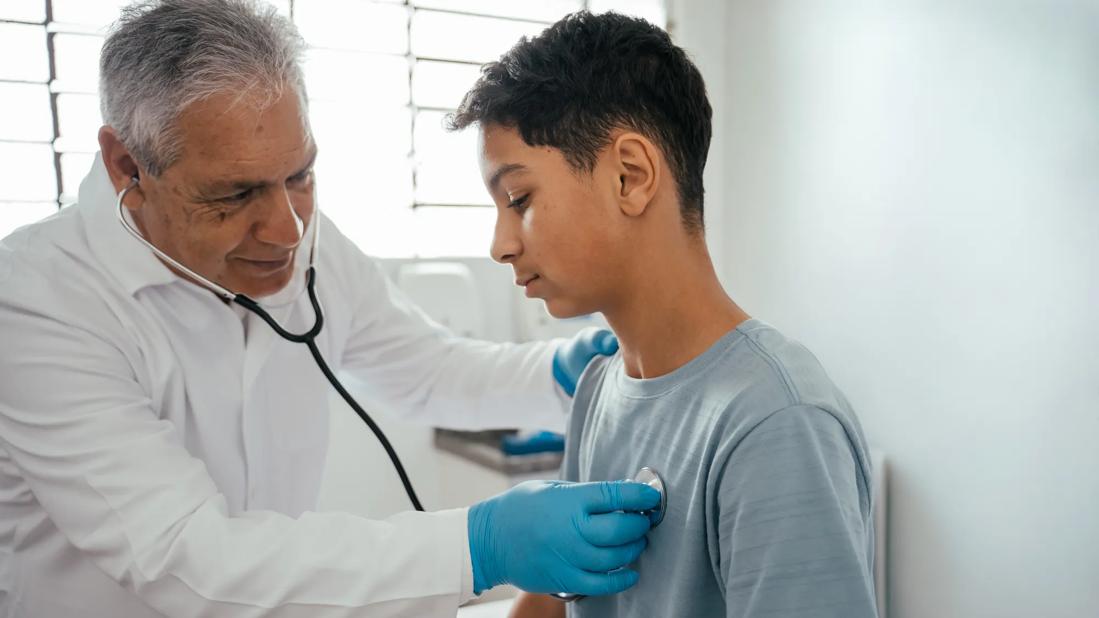
Image content: This image is available to view online.
View image online (https://assets.clevelandclinic.org/transform/803569b0-cd35-4b32-9373-1fa86b131749/doctor-screening)
Doctor uses stethoscope to listen to chest of boy in clinic
Chronic graft-versus-host disease (cGVHD) can begin quietly, with symptoms subtle enough to be missed in a busy follow-up visit. Delayed recognition may allow manifestations to progress to fibrosis, permanent organ dysfunction and other complications that may be difficult or impossible to reverse.
Advertisement
Cleveland Clinic is a non-profit academic medical center. Advertising on our site helps support our mission. We do not endorse non-Cleveland Clinic products or services. Policy
A new study by the Engraft Learning Health Network suggests that this risk may be compounded by wide variation in how transplant centers screen for cGVHD after allogeneic hematopoietic cell transplantation. The findings point to a need not for new guidelines, but for a more practical and standardized way to apply existing ones in real-world care.
“We have excellent guidelines for cGVHD screening,” says lead author Laila Alkhouli, MD, chief fellow of pediatric hematology, oncology, and blood and marrow transplantation at Cleveland Clinic Children’s. “The challenge is translating them into something practical enough for clinicians to use in routine practice.”
Existing standards include NIH consensus criteria, recommendations from the Foundation for the Accreditation of Cellular Therapy, and reporting requirements from the Center for International Blood and Marrow Transplant Research. But cGVHD can affect the skin, eyes, oral mucosa, lungs, gastrointestinal tract, genitourinary tract and musculoskeletal system, making comprehensive assessment time-intensive and often dependent on subspecialty expertise.
“In a busy transplant clinic, clinicians are also managing infections, medications, immune reconstitution and relapse surveillance,” Dr. Alkhouli says. “Screening can vary by provider, center workflow and available resources.”
The study, published in Transplantation and Cellular Therapy, was based on 33 interviews across 10 major U.S. transplant centers in the Engraft Learning Health Network. Investigators found variation at nearly every level of cGVHD screening.
Advertisement
“I was most surprised by the degree of variability,” Dr. Alkhouli says. “These were all experienced transplant centers caring for the same types of patients and watching for the same types of complications. Yet there was no uniform approach, not only in what was screened, but also in screening frequency and documentation.”
Among the more striking findings involved:
“The reasons for these variations are likely multifactorial,” says coauthor Seth Rotz, MD, a pediatric hematologist-oncologist at Cleveland Clinic Children’s. “Time is probably part of it. In some areas, especially genitourinary screening, clinician comfort may also be a factor, particularly with adolescent and young adult patients. I do not think this is primarily a knowledge gap.”
Early recognition of cGVHD is important, say Drs. Rotz and Alkhouli. The disease can begin with mild symptoms, but over time some manifestations can progress to permanent organ damage.
Advertisement
“Standardized screening can help clinicians identify those changes sooner and follow them more reliably over time,” Dr. Alkhouli says. “If the same organ systems are assessed and documented consistently at each visit, gradual decline may be easier to recognize before it becomes clinically advanced.”
This is especially important in organ systems where delayed recognition can lead to irreversible harm.
Pulmonary cGVHD, including bronchiolitis obliterans syndrome, is one of the most concerning examples, Dr. Alkhouli says. Early disease may present with a barely noticeable decline in lung function. Once significant obstruction develops, however, the damage may carry substantial morbidity.
That is why serial PFT is so important, particularly during the first few years after transplant. Current recommendations support more frequent pulmonary surveillance than was reported by many centers in the study.
Skin sclerosis and musculoskeletal involvement are also high-stakes areas. Progressive fibrosis can lead to restricted range of motion, fasciitis and contractures that significantly affect function and quality of life.
Screening children and adolescents for cGVHD poses unique challenges, says Dr. Rotz.
Young children may not be able to describe symptoms such as dry eyes, oral discomfort or reduced exercise tolerance. In those cases, clinicians often rely on parents and caregivers to notice changes in activity, breathing, eating or comfort.
Pulmonary screening can be especially challenging. Spirometry, a cornerstone of pulmonary cGVHD surveillance, requires patient cooperation and may not be feasible in children younger than age 6 or 7. For those patients, clinicians may need to depend more heavily on caregiver observations, such as new exercise intolerance or faster breathing with routine activity.
Advertisement
For adults, the Lee Symptom Scale remains a well-established tool for collecting patient-reported outcome measures as part of cGVHD screening. However, it was developed and validated in adults, and no equivalent validated tool is yet available across pediatric age groups, although several are in development.
“We can’t just take an adult screening approach and shrink it down for kids,” Dr. Rotz says. “Pediatric patients need age-appropriate tools, significant caregiver involvement and a screening process that reflects where they are developmentally.”
The Engraft Learning Health Network is now using the study’s findings to inform development of a cGVHD screening bundle designed for routine clinical use.
“We don’t want it to be lengthy or burdensome for clinicians,” Dr. Alkhouli says. “The goal is to take the most important components of existing evidence and guidelines and translate them into a streamlined workflow.”
The proposed bundle is anticipated to include:
Not every component has to be completed within the transplant clinic itself, Dr. Alkhouli notes. Concerning findings can prompt referral to dermatology, ophthalmology, pulmonology, gynecology, rehabilitation or other specialists.
“The goal is not a maximal assessment at every visit,” she says. “It is to have a reliable plan for covering all domains over time.”
Advertisement
Although the study did not directly evaluate whether inconsistent screening leads to missed diagnoses or underreporting, the findings suggest that more systematic surveillance could improve both patient care and data quality.
“The goal is better screening for every patient, and ultimately better outcomes,” Dr. Alkhouli says. “If we can detect cGVHD earlier and document it more consistently, we also have an opportunity to improve the quality of the data that help move the field forward.”
Advertisement
Pre-operative SMA balloon occlusion helped reduce intraoperative blood loss in a high-risk procedure

Insights on bringing Cleveland Clinic even closer to becoming the best transplant enterprise in the world
Consensus statement aims to increase use of the perfusion technology and raise transplant volumes
Minimally invasive pancreas-kidney replacement reduces patient’s pain, expedites recovery
AHA recommendations for pretransplant evaluation, peritransplant and long-term management
First-ever procedure restores patient’s health

The agent-based model aims to improve prediction accuracy
New guidelines expand on psychosocial, sexual health, cognitive and other issues
 Search