Locations:





Study shows a simplified three-factor model performed comparably with the standard five-factor framework
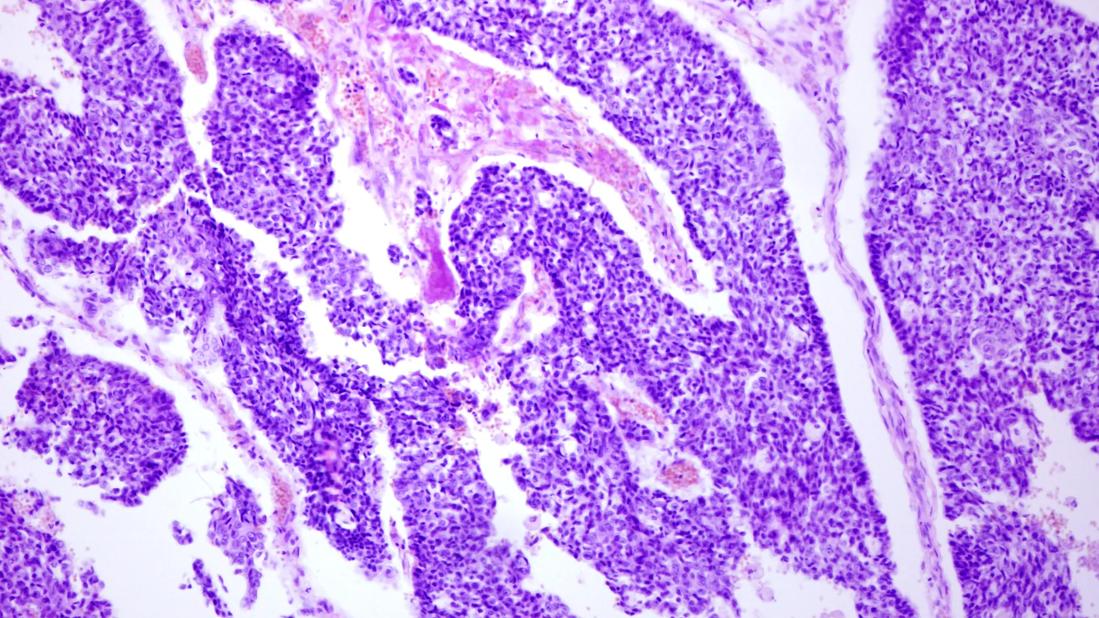
Image content: This image is available to view online.
View image online (https://assets.clevelandclinic.org/transform/529a175d-ef54-4a2e-8a4e-7496e859effc/bladder-carcinoma-2248253023)
bladder cancer pathology view
A simplified three-factor model may help urologic oncologists more easily stratify patients with intermediate-risk nonmuscle-invasive bladder cancer (IR NMIBC) without sacrificing prognostic accuracy, according to a Cleveland Clinic-led study published in BJU International.
Advertisement
Cleveland Clinic is a non-profit academic medical center. Advertising on our site helps support our mission. We do not endorse non-Cleveland Clinic products or services. Policy
The model, based on multifocality, early recurrence and prior intravesical treatment failure, performed comparably with the standard five-factor International Bladder Cancer Group (IBCG) framework in a cohort of 2,822 patients. The authors emphasize that it’s an internally validated model but say it has the potential to inform updated definitions and alter treatment escalation decisions.
Nonmuscle-invasive bladder cancer accounts for approximately 75% of new bladder cancer diagnoses and is typically classified as low, intermediate or high risk. Among these groups, intermediate-risk disease remains especially challenging to manage.
“The intermediate-risk group is the largest and most heterogeneous, and patients within this category have very different outcomes,” explains Laura Bukavina, MD, MPH, senior author of the study. Tumor burden, recurrence and prior treatment can differ significantly, making consistent management difficult.
To better define this population, the IBCG, a global consortium of experts, established a subclassification system based on five readily available clinical features:
Although clinically accessible, applying all five factors in a high-volume clinic can be cumbersome, particularly when treatment escalation and trial eligibility may depend on risk subgroup assignment.
Dr. Bukavina and colleagues evaluated the IBCG model in a Cleveland Clinic cohort of 2,822 patients with IR NMIBC to validate the model’s risk performance.
Advertisement
“We validated that the system is effective,” says Dr. Bukavina. “However, we wondered if we could take it one step further by identifying the top two or three that actually make the most difference.”
Using a multivariable analysis, the researchers made an important discovery. “We found that, out of those five, only three independently predicted oncologic outcomes,” she says. Those variables include multifocality, early recurrence and failure of prior intravesical treatment.
The researchers reevaluated the cohorts with the simplified model using three risk categories: IR-low (no risk factors), IR-intermediate (one risk factor) and IR-high (two or more risk factors).
The investigators found the simplified model preserved stepwise separation of outcomes at three years, and its predictive performance was comparable to the full model.
| 3-factor model | 5-factor model | |
|---|---|---|
| IR-low | 1535 (54%) | 1143 patients (41%) |
| IR-intermediate | 906 (32%) | 1535 (54%) |
| IR-high | 381 (14%) | 144 (5%) |
| IR-low | ||
| 3-factor model | ||
| 1535 (54%) | ||
| 5-factor model | ||
| 1143 patients (41%) | ||
| IR-intermediate | ||
| 3-factor model | ||
| 906 (32%) | ||
| 5-factor model | ||
| 1535 (54%) | ||
| IR-high | ||
| 3-factor model | ||
| 381 (14%) | ||
| 5-factor model | ||
| 144 (5%) |
The simplified model also appeared to better distinguish among the IR-intermediate group, reclassifying more patients as IR-low or IR-high than the five-factor model. The authors state that the reclassification patterns were not random.
For example, those initially classified as IR-intermediate and downgraded to IR-low showed less aggressive features. Similarly, those reclassified to IR-high in the simplified model had more concerning features. This finding suggests the simplified model may sharpen risk separation.
Dr. Bukavina notes that the team used an AI-enabled data extraction tool to extract data from electronic medical records, rather than relying on a manual chart review. After checking about 100 patients for accuracy, they found the system to be 97% accurate.
Advertisement
“This approach could become an important methodological advance in itself, allowing future retrospective analyses to be performed much more quickly and potentially with less manual burden,” she says.
Dr. Bukavina is using the three-factor approach in her clinic to make risk assessment more practical, and the goal is to eventually automate these variables to make the process even more efficient.
However, she emphasizes that the data is only internally validated, although plans involve external validation to confirm generalizability.
Further investigation into the IR-high cohort is also needed, according to Dr. Bukavina. Redefining the IR-high threshold—from three or more of the five factors to two or more of three factors—has broadened the category. This change could have clinical implications for treatment, surveillance or trial eligibility.
The investigators suggest this framework could be useful to reassess risk outside of the IR group. "Reevaluating patients may reveal those who are considered very high risk,” she says. She adds that such a category does not exist in the current American Urological Association guidelines, although it does in the European guidelines.
She says the work may help support a more personalized treatment approach.
“We now can escalate treatment versus de-escalate treatment, so those who are very high risk could be good candidates for combination therapies to prevent progression and metastases,” concludes Dr. Bukavina.
Advertisement
Advertisement

Device may offer a practical middle-ground option for some patients
Investigators evaluated ambient air toxins and emission sources

Findings underscore the importance of a multifaceted prevention strategy

Innovative single-port technique results in no visible scarring

The new application that could augment cancer detection, improve efficiency

Pediatric urologists lead quality improvement initiative, author systemwide guideline

Fixed-dose single-pill combinations and future therapies

Reproductive urologists publish a contemporary review to guide practice
 Search