Locations:





Innovative single-port technique results in no visible scarring
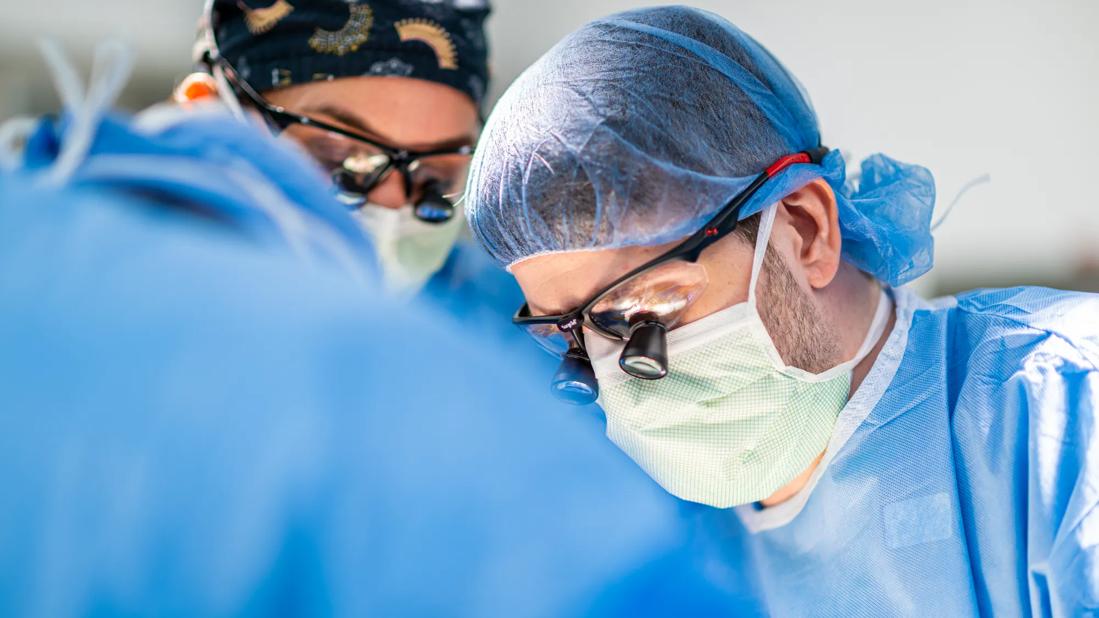
Image content: This image is available to view online.
View image online (https://assets.clevelandclinic.org/transform/0d35878e-69e9-428d-939e-e8bcaeff4871/URL_8109308_03-24-26_025_SCG)
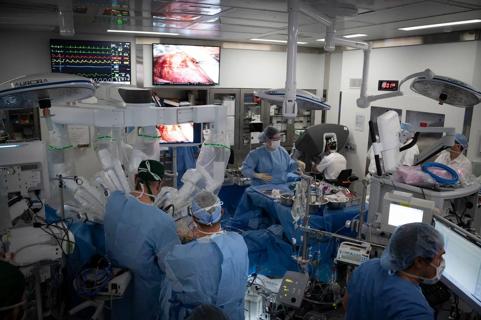
Dr. Weaver in the operating room
Vesicoureteral reflux (VUR) is a common urologic abnormality in children, affecting nearly 1% of newborns. In many cases, VUR can be managed with antibiotic prophylaxis, and spontaneous resolution may occur as the child’s bladder grows. However, a recent case at Cleveland Clinic Children’s represented a more severe form of VUR with persistent infections, making surgical repair the only option.
Advertisement
Cleveland Clinic is a non-profit academic medical center. Advertising on our site helps support our mission. We do not endorse non-Cleveland Clinic products or services. Policy
The patient’s team, led by pediatric urologist John Weaver, MD, performed an extravesical ureteral reimplant using a novel surgical technique with the single-port (SP) robotic system. Dr. Weaver repaired the ureter-bladder junction through the patient’s belly button, resulting in no visible scarring. The outcomes further demonstrate the benefits and safety of this approach in a young child.
A 4-month-old female presented with high-grade unilateral VUR and a history of recurrent febrile urinary tract infection. Dr. Weaver was her treating physician, then at another healthcare system.
At the time, her VUR was managed with antibiotic prophylaxis, a preferred approach for younger, nontoilet-trained children or milder forms of VUR. Surveillance without antibiotics is another option for management but can pose issues in younger or minimally speaking children who aren’t able to communicate the symptoms of an infection.
“Due to her persistent high-grade reflux, we were not able to safely stop her antibiotic prophylaxis,” says Dr. Weaver. The American Urological Association guidelines recommend surgery for breakthrough UTIs while on antibiotics and for other severe forms of VUR.
Several years later, at 5 years old, she was finally a candidate for surgery. Dr. Weaver continued to manage the child’s care, now at Cleveland Clinic Children’s.
However, persistent bladder and bowel dysfunction (BBD), a common occurrence in older, toilet-trained patients with VUR, began to complicate the plan for surgery.
Advertisement
“She was really constipated and not able to void completely or relax her sphincter properly, and we don’t like to operate when that’s the case,” explains Dr. Weaver. These issues can contribute to postoperative complications and limit recovery. Around this time, she also developed another infection, prompting new concerns about delaying the surgery any longer.
Dr. Weaver worked with the family to create a new plan: they switched the antibiotic to treat the new infection as a bridge-to-surgery and recommended biofeedback therapy. Alongside a nurse practitioner, the patient learned strategies to address incomplete voiding and constipation. After the infection and BBD were controlled, the team proceeded with surgery.
The most conventional approach for ureteral reimplantation is open surgery with a Pfannenstiel incision, although the robotic multiport approach has gained popularity in recent years. However, the SP robotic system, which has been widely used within Cleveland Clinic’s Department of Urology, represents a newer approach to ureteral reimplantation. The type of incision Dr. Weaver used—through the navel—is even more novel.
“It’s just one incision that you can hide in the belly button,” says Dr. Weaver on the use of the SP robot. “Whereas the multiport robot results in three incisions, one in the belly button and two adjacent to it.”
He adds that robotic surgery generally offers a different, improved recovery experience because the surgeon can utilize an extravesical technique to avoid entering the bladder. “It’s a faster recovery and often with less pain and bladder spasms afterward,” he says.
Advertisement
SP ureteral reimplantation is the latest in a series of robotic innovations from Cleveland Clinic’s Department of Urology, a program known for its use of novel SP robotic applications. The pediatric urology program has expanded significantly in recent years, along with the addition of new surgeons and new techniques, such as SP nephrectomy and pyeloplasty, aimed at improving recovery and minimizing scarring for young patients.
Advertisement
Advertisement
The low anterior access approach using the single-port robot is gaining attention within the field
Retrospective study shows SGLT-2 inhibitors may lead to worse urologic outcomes
New study sheds light on national trends in urology residency, former CCLCM alum comments
Procedure places the center among only a handful worldwide to offer the minimally invasive approach
Findings show significant energy savings and no association with increased surgical site infection, mortality or ICU admission
Common misconceptions about perioperative management and strategies to improve care

Dr. Prabhu discusses mentorship, collaboration and her vision for the future of the department
Multidisciplinary collaboration is fueling breakthroughs in endoscopic and surgical technology
 Search