Locations:


Patient-centered treatment preserved function while addressing medical and behavioral needs
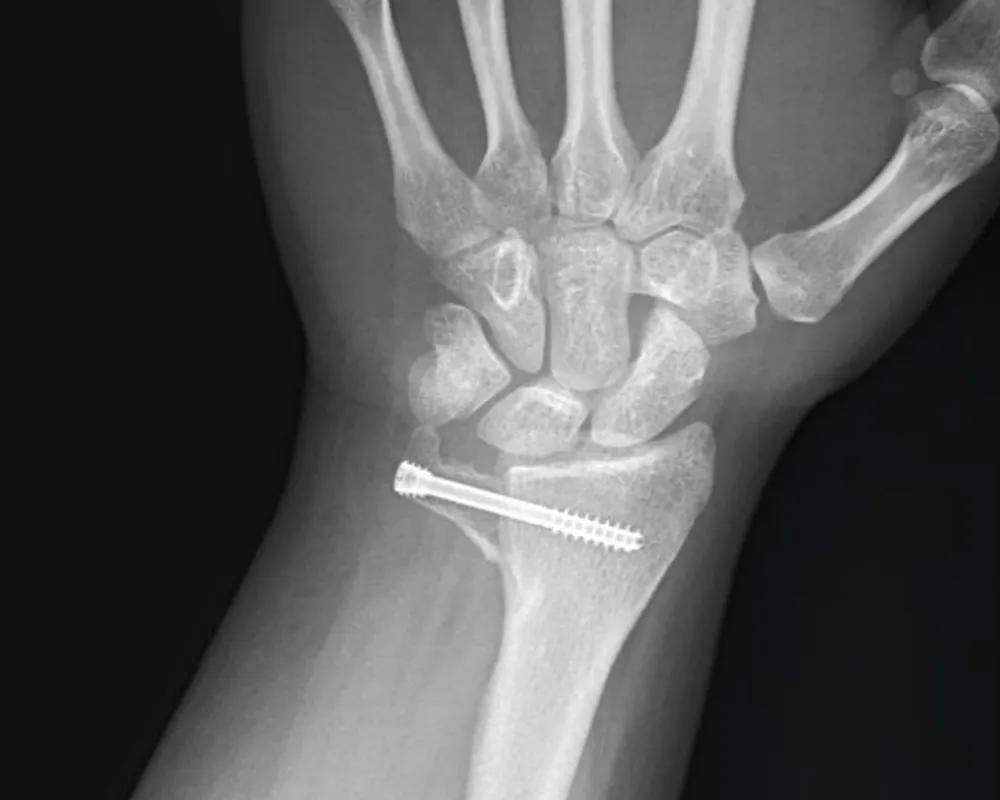
Image content: This image is available to view online.
View image online (https://assets.clevelandclinic.org/transform/ca5ffbb8-5a1a-4ea9-ac5c-3edb30ca9414/fig1-burke-feature)
Postoperative wrist and forearm X-rays
Ewing sarcoma is very rare, with fewer than 1,000 cases diagnosed in the U.S. each year. Cases involving the ulna are rarer still, with only a handful reported annually and no clear guidelines on surgical management.
Advertisement
Cleveland Clinic is a non-profit academic medical center. Advertising on our site helps support our mission. We do not endorse non-Cleveland Clinic products or services. Policy
Zachary D. Burke, MD, a pediatric sarcoma surgeon at Cleveland Clinic and Director of the Pediatric Musculoskeletal Tumor Clinic, is accustomed to operating within this ambiguity. In pediatric sarcoma, he notes, large case series often do not exist.
“It’s not uncommon for us to perform a novel surgery, or one done only a few times,” says Dr. Burke. “So we rely on a clear set of principles to guide decision-making, and work within these to account for priorities of the child and their family,” he says.
That framework is threefold: prioritize oncological control, optimize functional outcomes and personalize care based on the patient’s and family’s unique needs.
A recent case at Cleveland Clinic Children’s illustrates each of these tenets. Dr. Burke along with pediatric oncologist Peter Anderson, MD, PhD, and the care team, treated a patient with an ultra-rare form of Ewing sarcoma using an individualized plan that included tailored outpatient chemotherapy, surgery, and postoperative management to achieve both oncological and functional goals.
The patient, an 18-year-old from western Pennsylvania, presented with a firm mass arising from the left ulna, with extraosseous extension and visible swelling from the wrist to the elbow. He has autism spectrum disorder with limited verbal communication, as well as a seizure disorder. While being treated at another institution, he experienced ifosfamide-related seizures.
With these factors in mind, the Cleveland Clinic care team worked closely with the referring institution, the patient, and his family to navigate challenges, particularly around prolonged imaging and procedural tolerance. Dr. Anderson worked with the patient, eventually coaching him through a CT scan; however, sedation was needed for MRIs, which are much longer.
Advertisement
The care team also discussed sedated radiation therapy as a consideration if definitive radiation were chosen for treatment. It was important to the family that, whatever the treatment approach, the instructions be manageable for a young adult with severe autism.
Neoadjuvant and adjuvant VDC/IE (vincristine, doxorubicin and cyclophosphamide alternating with ifosfamide and etoposide) is the standard multiagent chemotherapy regimen used to treat Ewing sarcoma. Because of the patient’s history of ifosfamide-related seizures and limited verbal communication, the outpatient regimen was adjusted to maximize benefit while minimizing symptoms, including seizure risk.
The tumor responded very favorably, shrinking substantially and making forearm limb salvage a feasible option, though still one with significant complexity.
“It was intuitively obvious to the casual observer that the chemotherapy was working very well. The swelling diminished quickly with each cycle,” says Dr. Anderson. “The goal of the chemotherapy was to make surgery easier for Dr. Burke and for this special patient.”
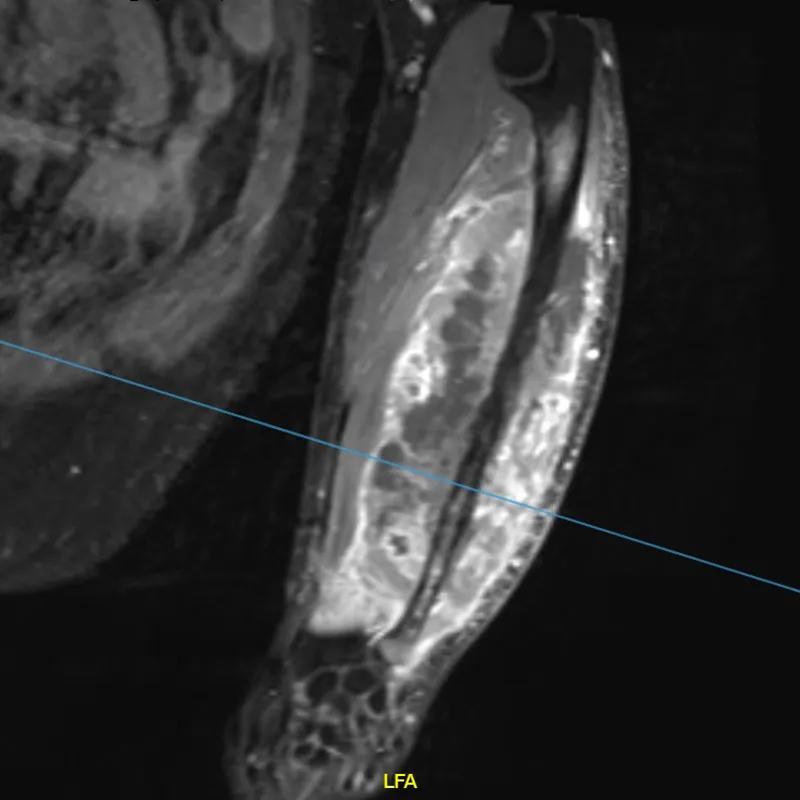
Image content: This image is available to view online.
View image online (https://assets.clevelandclinic.org/transform/b52d3672-f6f8-45be-8b3a-67f8d37ed692/fig3-LFA)
Figure 1. MRI image before chemotherapy with a large soft tissue mass
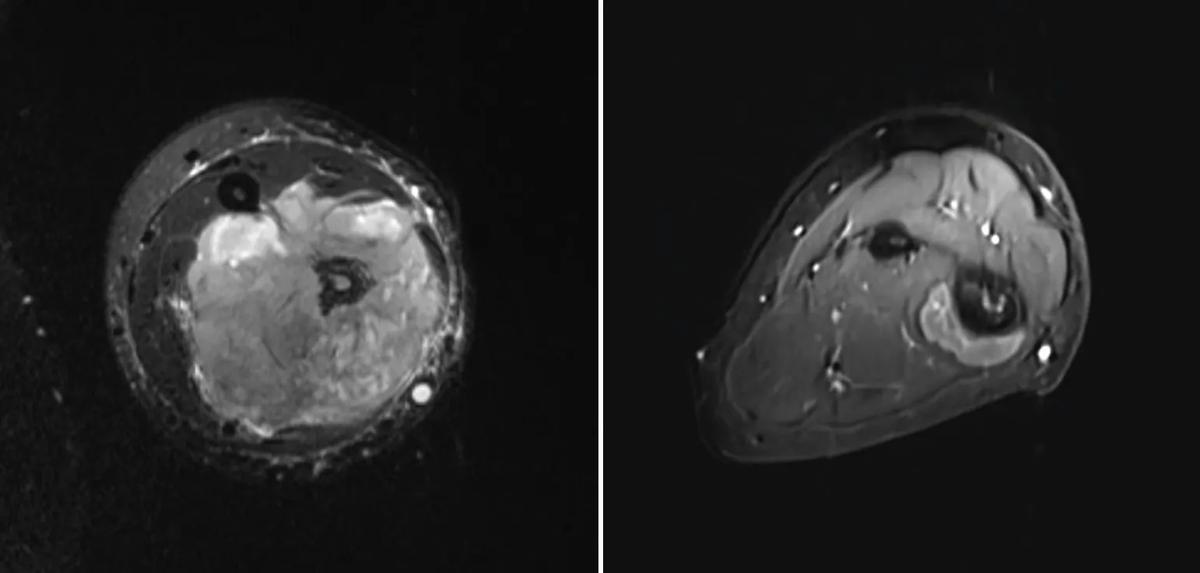
Image content: This image is available to view online.
View image online (https://assets.clevelandclinic.org/transform/006d64a5-18a3-45ce-add8-38676838a41a/fig2-before-after)
Figures 2-3. MRI images before chemotherapy with a large soft tissue mass and post-chemotherapy MRI with much smaller soft tissue mass, enabling limb salvage.
Ewing sarcoma presents unique challenges for surgeons. “These tumors can occur anywhere, in any bone, any place,” says Dr. Burke. “We need to resect the tumor in a way that prioritizes oncological control, while secondarily balancing function, durability, and quality of life with an acceptable risk of complications.”
In each case, Dr. Burke reviews all feasible options with patients and their families, including the benefits and risks of each. For this patient, the team reviewed both nonsurgical and surgical options for local control.
Advertisement
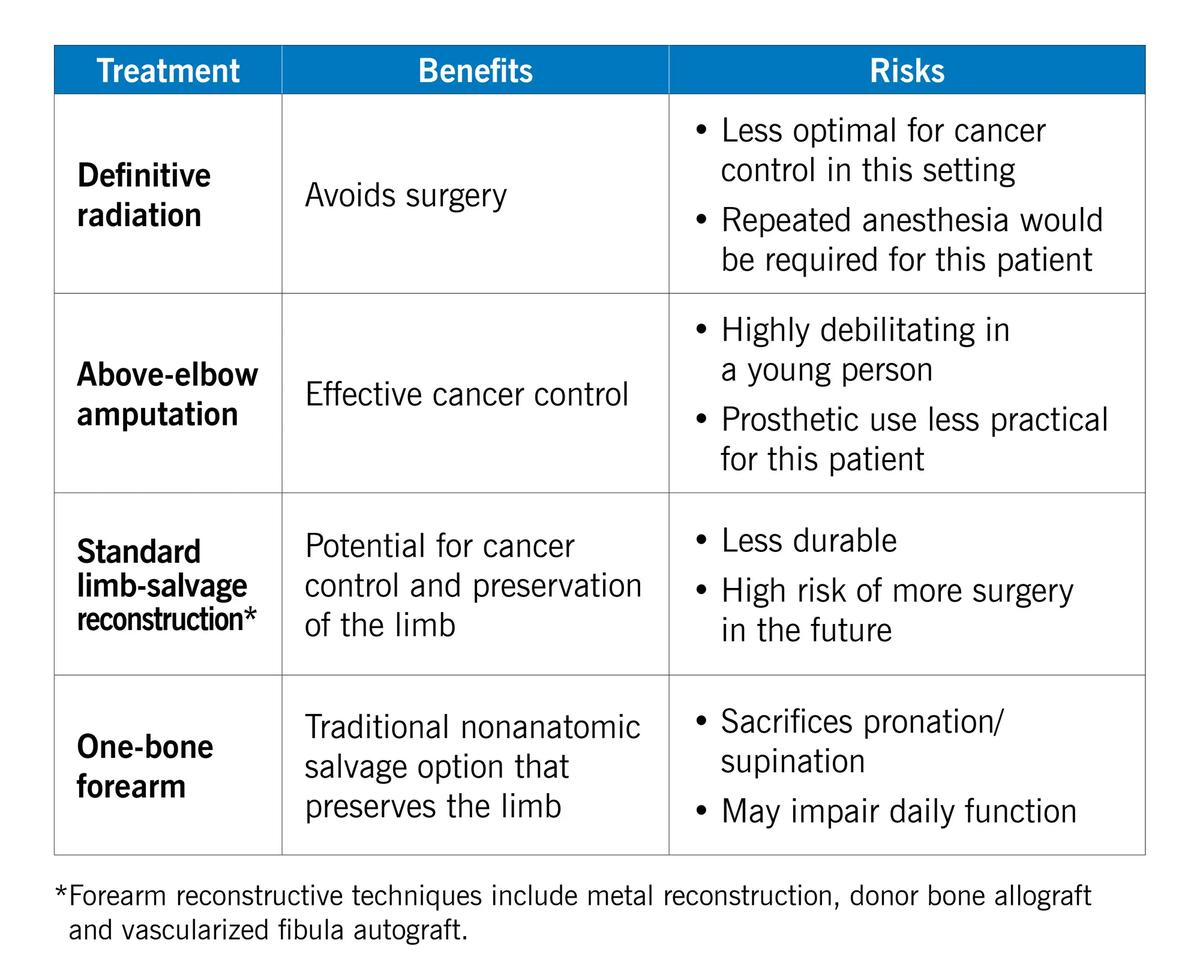
Image content: This image is available to view online.
View image online (https://assets.clevelandclinic.org/transform/51e53ffe-8b72-400e-9298-098059731434/26-CHP-8772908-CQD-Burke-chart)
Table. A summary of the nonsurgical and surgical local control options presented to the patient and family.
Dr. Burke also offered the patient and his family another option that could provide oncologic control, high function, and relatively few postoperative restrictions.
The procedure was a variant of the one-bone forearm procedure involving near-total resection of the ulna and fusion at the wrist to stabilize the wrist joint. According to Dr. Burke, the main advantages are preservation of functional motion, durability, and a relatively low risk of complications and simple recovery compared to more complex reconstructions.
Although this exact approach is not well described in the literature, Dr. Burke believed it was technically achievable and well suited to the patient. He had performed the technique previously at the Cleveland Clinic and with his mentors during residency and fellowship while training at high-volume pediatric sarcoma centers. In those cases, he had also observed favorable oncological and functional outcomes.
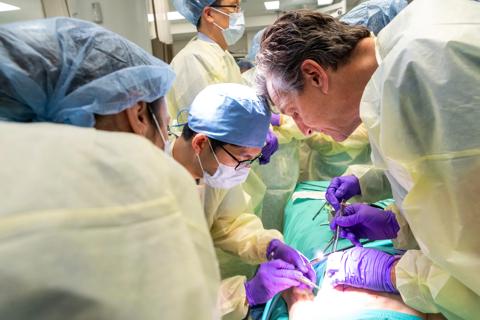
Forearm limb salvage presents a unique surgical challenge because it requires navigating high-value anatomy in a very small space and complex mobility in multiple planes. The surgery lasted a little over six hours, Dr. Burke says, and much of that time was spent carefully balancing tumor margins with preserving the tiny motor branches that control the thumb, index finger, and wrist.
“If it’s oncologically safe to keep the motor branches of the posterior and anterior interosseous nerves intact, dedicate time to identify and preserve them,” he says. “They are critical to function.”
Advertisement
For the fusion portion of the surgery, Dr. Burke shares several technical considerations:
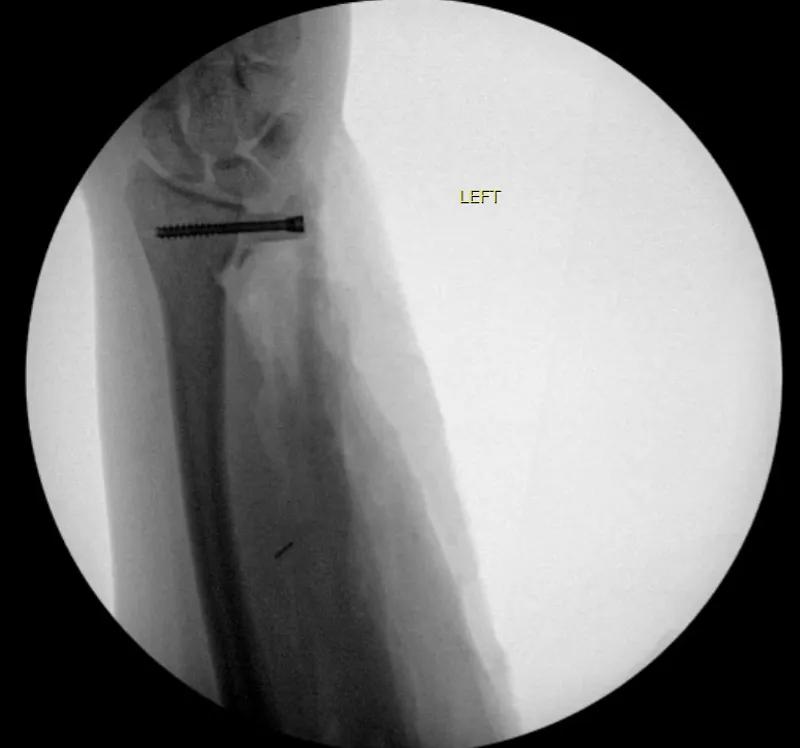
Image content: This image is available to view online.
View image online (https://assets.clevelandclinic.org/transform/bc8e85ea-50b9-433d-a498-be10717a4709/fig4-left)
Figure 4. Intraoperative image of wrist fusion with screw and bony bridge technique.
Dr. Burke also worked with the family to develop a postoperative strategy that fit the patient’s needs. The team buried the sutures to avoid removal issues and used a soft, bulky dressing rather than a rigid cast before transitioning him to a removable hinged elbow brace. He wore the brace for about 12 weeks allow movement while minimizing stress on the elbow.
After surgery, he completed the final rounds of chemotherapy and was able to resume his active lifestyle.
Two years later, he has no evidence of recurrent disease and no apparent loss of function per his parents. “He comes into clinic, and you would never know that anything happened to that arm if not for the incision,” adds Dr. Burke.
Standard surveillance for Ewing sarcoma includes up to 10 years of imaging follow-up, though the patient’s favorable response to chemotherapy is an encouraging prognostic factor. From a surgical standpoint, Dr. Burke says he would like to follow the patient annually to monitor for arthritis, stress fractures or issues related to instability and nonanatomic joint loading.
Advertisement
Dr. Burke notes that the patients for whom he has performed this surgery at the Cleveland Clinic have done similarly well.
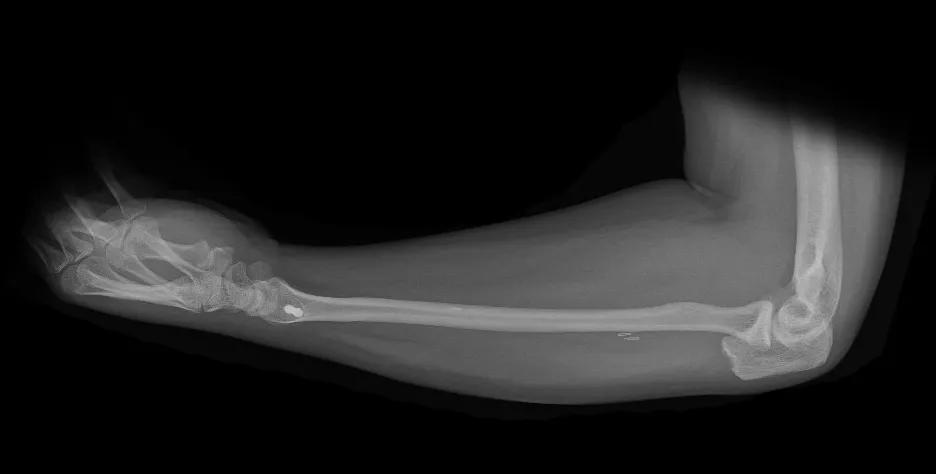
Image content: This image is available to view online.
View image online (https://assets.clevelandclinic.org/transform/6008d2df-dc89-4e55-b234-39fb5acb7e59/fig6-arm)
Figure 5. Postoperative wrist and forearm X-ray at 1-year postop follow-up
Cleveland Clinic Children’s sarcoma and medical oncology programs share a philosophy of adapting treatment to the patient and family. Dr. Anderson calls this family-centered care.
“You have to pretend you are the patient, and then you do what’s right for both the patient and their caregivers,” says Dr. Anderson. “It’s more than knowing the dose and schedule of chemotherapy; it’s also about how to give it more safely in a family-centered manner. This is one of those cases that makes me smile because our team was able to make a lasting difference in this family’s journey.”
Adds Dr. Burke, “You must prioritize getting rid of the cancer, but quickly thereafter, restoring function, maximizing durability and quality of life, and minimizing complications become the goal. This case highlights those objectives in practice.”
Advertisement

Multicenter effort aims to standardize information about diagnosis and early management
Case study of radial-to-axillary nerve transfer for tumor-related deltoid nerve injury
Key takeaways from the newest STS-Pedimacs report

Pediatric Syncope Clinic helps rule out serious disease and guide next steps
Cleveland Clinic findings highlight gains in stability, chest wall contouring and correction

What the discovery means for clinicians and patients
Why preparedness matters right now

Early diagnosis, specialized assessment and high-frequency motor-based therapy can improve outcomes
 Search