Locations:





Why preparedness matters right now
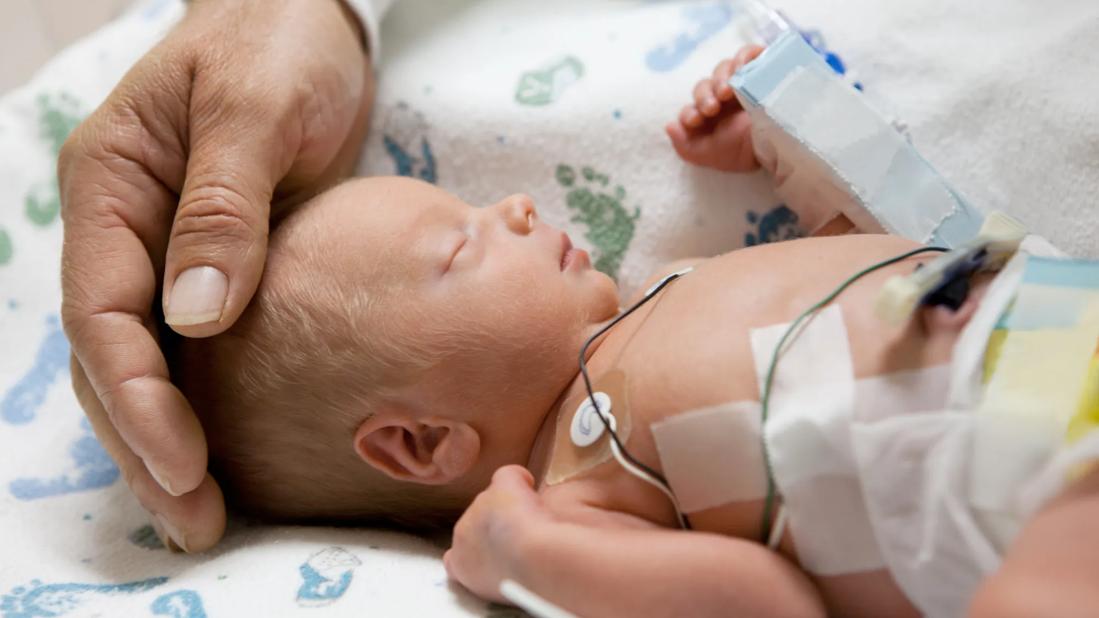
Image content: This image is available to view online.
View image online (https://assets.clevelandclinic.org/transform/20f67a79-e4d9-472d-8c78-5fa9abd5e93d/nicu-baby)
baby in the NICU
Congenital cytomegalovirus (cCMV) is the most common congenital infection and a leading cause of nongenetic hearing loss. Yet there is still no national consensus on the best newborn screening approach, resulting in centers with widely varying protocols, or no formal programs at all.
Advertisement
Cleveland Clinic is a non-profit academic medical center. Advertising on our site helps support our mission. We do not endorse non-Cleveland Clinic products or services. Policy
This may soon change, according to Frank Esper, MD, a pediatric infectious disease physician at Cleveland Clinic. He says cCMV screening mandates are expanding at the state level, with more than a dozen states having implemented targeted protocols and two now requiring universal screening.
“Many hospitals may soon need a screening program but are simply not operationally prepared,” he says.
When Dr. Esper first joined Cleveland Clinic nearly a decade ago, he suspected too few infants with cCMV were being identified and seen in follow-up. “We were only screening about 100 newborns annually and barely confirming any cases of cCMV,” he says.
Based on that observation, Dr. Esper and his colleagues formalized a comprehensive cCMV screening program, a multidisciplinary effort involving infectious disease, audiology, otolaryngology, neonatology, nursing and laboratory medicine.
“Now we are screening upwards of 2,000 infants a year, and we have increased detection more than two-and-a-half-fold,” says Dr. Esper. He and his colleagues describe the program and report their institutional findings in Pediatrics. Beyond reporting the data, the paper is intended to serve as a practical guide for hospitals seeking to create or improve their own cCMV screening efforts.
Dr. Esper says screening for cCMV requires thoughtful planning because the infection is common, often undetectable and needs a timely diagnosis. It affects up to 1.2% of infants.
“About 90% of infected infants are asymptomatic at birth. Many are likely to pass a clinical examination, and many will even pass a newborn hearing screen,” Dr. Esper explains.
Advertisement
Confirming the diagnosis within the first 21 days of life is critical to determine whether the infection was congenital or acquired after birth. Identifying cCMV early and distinguishing it from acquired CMV matters because the course of care differs, Dr. Esper says.
Infants who acquire CMV after birth do not have the same risk of hearing loss as those infected in utero. For infants with confirmed cCMV, audiology surveillance is essential because early intervention, including hearing aids and even cochlear implants, can improve language and developmental outcomes. Some severely affected infants, or those with hearing loss at birth, may also benefit from antiviral therapy.
Another benefit of a screening program, Dr. Esper says, is that testing and follow-up become much more challenging for families once the baby is home from the hospital.
The program uses universal screening for all infants admitted to the neonatal intensive care unit (NICU) and targeted screening for infants in the newborn nursery who fail newborn hearing screening or have clinical features concerning for cCMV.
“The hybrid approach made sense to us,” says Dr. Esper. “In the NICU, where infants are already medically complex, it’s difficult to distinguish congenital CMV from other illnesses.” In the newborn nursery, where patient turnover is high, the team uses a more selective protocol that integrates more easily into existing workflows.
They used a two-step screening process, using saliva for initial screening and urine testing for confirmation. They also embedded orders into the workflow by adding a NICU admission order set that included prechecked CMV screening, along with a newborn nursery order set based on a simple criterion that nursing staff could apply.
Advertisement
Dr. Esper and colleagues evaluated outcomes from 2022 to 2025 under the new screening protocol and found that both screening volume and detection increased significantly.
Among 50,438 live births across the healthcare system, 7,491 (14.9%) infants were screened, and 34 infants were confirmed to have cCMV, including 17 in the targeted group and 17 in the universal group.
As expected, targeted screening had a higher yield (0.74%) than the universal group (0.33%), reflecting the higher probability among selected infants. But universal screening found infants who would otherwise have been missed.
“Nearly 40% of those infants were completely asymptomatic and passed their newborn hearing screening, so if you were not doing active surveillance, you were not going to find them,” says Dr. Esper.
Dr. Esper offers several specific insights from Cleveland Clinic’s experience implementing the program, with much greater detail available in the published paper, including sections for every clinical stakeholder involved.
Plan for potential false positives. The saliva assay's sensitivity, combined with potential CMV-contaminated breast milk in the infant’s oral cavity, created an unexpected challenge for the team. Early on, they produced a high rate of false positives, Dr. Esper explains. Through repeat testing and a transition to a high-throughput platform already in clinical use, the team improved the program and reduced false positives.
Consider audiology capacity and barriers to follow-up. Long-term follow-up is one of the most important and most challenging parts of a cCMV screening program. Infants require repeated audiology surveillance during the first several years of life because hearing loss can emerge later, even after a normal newborn screening result.
Advertisement
“Audiology capacity is essential,” Dr. Esper says, along with family education and active outreach to reduce missed appointments and loss to follow-up.
Use a multidisciplinary model with site-specific leads. Success depends on involving all stakeholders from the beginning, according to Dr. Esper. In this case, the effort included specialists in infectious disease, audiology, otolaryngology, neonatology and laboratory medicine, as well as nursing and newborn nursery teams.
Although infectious disease leads the program at Cleveland Clinic, he notes that other specialties could lead similar efforts elsewhere. He also recommends a central coordinator at each site who understands the workflow and can troubleshoot problems.
The screening program is now the standard at Cleveland Clinic, but Dr. Esper and his colleagues see it as only the beginning. They are continuing to refine the program, including:
There is also interest in developing a statewide multicenter registry to promote collaboration and transparency in screening workflows. “We may even be able to standardize recommendations across the state and make recommendations to our legislature from a medical perspective,” he says.
Advertisement
In the near term, however, he hopes that greater awareness of cCMV and the need for well-coordinated screening will prompt institutions to build programs and medical societies to make recommendations.
“Now is the time to plan, and I hope insights from our institutional experience help others do that,” says Dr. Esper.
Advertisement
Research combining genomics, database analysis and RNA sequencing suggests possible role for antiviral drug therapy
Cleveland Clinic researchers discover what drives – and what may halt – virus-induced cancer

Pediatric Syncope Clinic helps rule out serious disease and guide next steps
Cleveland Clinic findings highlight gains in stability, chest wall contouring and correction

What the discovery means for clinicians and patients

Early diagnosis, specialized assessment and high-frequency motor-based therapy can improve outcomes
Transplant centers vary substantially in how they assess, document and follow patients after allogeneic transplantation

Helping pediatricians and families make safer, more individualized activity decisions
 Search