Locations:





Helping pediatricians and families make safer, more individualized activity decisions

Image content: This image is available to view online.
View image online (https://assets.clevelandclinic.org/transform/a89c56a9-754a-4fc4-90d6-4b26b377025c/pediatric-sports-cardiology-program)
Boy sitting on bleachers while holding a football
A heart murmur, exertional syncope, unexplained chest pain or a concerning family history can raise questions during a routine sports clearance evaluation. For pediatricians, the challenge is not only identifying cardiovascular disease, but also determining whether, when and under what conditions a child can safely return to play.
Advertisement
Cleveland Clinic is a non-profit academic medical center. Advertising on our site helps support our mission. We do not endorse non-Cleveland Clinic products or services. Policy
Cleveland Clinic’s Pediatric Sports Cardiology Clinic was created to help answer that question with timely evaluation and more nuanced guidance than a simple yes-or-no clearance.
For children with possible or known cardiovascular conditions, the clinic offers rapid access — sometimes within 24 hours — to cardiologists with expertise in return-to-play assessment. These specialists provide individualized, sport-specific recommendations that, if feasible, support safe participation.
“Our goal is to get kids back in the game whether or not they have a cardiovascular disease,” says pediatric electrophysiologist Peter Aziz, MD, co-Director of the Pediatric Sports Cardiology Clinic.
“We do not want to restrict patients,” adds clinic co-Director Nicholas Szugye, MD, a pediatric cardiologist who also directs Cleveland Clinic’s Pediatric Cardiopulmonary Exercise Lab. “Physical activity is important for body development and for helping kids live normal lives.”
Historically, children with known or suspected cardiovascular disease were often restricted from sports out of caution. While that approach may reduce risk, it also can unnecessarily sideline children from physical activity and its developmental, psychosocial and cardiovascular benefits.
Over time, return-to-play recommendations have evolved due to:
Advertisement
“Today, we know that return-to-play decisions are more nuanced,” Dr. Aziz says. “Once a child has proper therapy for a cardiovascular condition, their risk of a cardiac event is much lower — although maybe not zero. They often can return to play, sometimes with modifications or safeguards.”
For example, a teen with treated long QT syndrome may be able to play school soccer if they are adherent to therapy and appropriate safeguards are in place, such as ready access to an AED and personnel trained in CPR.
“Ensuring the child, the parents, and the school or sports organization agree to all of that may be more difficult than simply telling the child they can’t play, but it’s a lot better for the child in the long run,” Dr. Aziz says.
The clinic is designed for active children and adolescents, not only competitive athletes.
According to Dr. Szugye, the most common referrals include:
“Generally, we see kids beginning around ages 9-10, when cardiovascular concerns start to emerge and athletics start to become more competitive,” Dr. Szugye says. “However, we also can see younger patients with symptoms and older kids in high school. Young adults, including college students, transition to our adult sports cardiology group.”
Advertisement
The clinic also sees children recovering from surgery, intervention or prolonged illness who need help returning not only to organized sports, but also to physical education, recess, the playground or other daily activities.
“Let’s say a patient had an anomalous coronary artery that was repaired,” Dr. Aziz says. “They may be following up with their cardiologist, but it can be hard to understand what criteria they need to meet to be cleared to return to the playground. That’s the next layer of expertise that our program provides.”
At Cleveland Clinic Children’s, the Pediatric Sports Cardiology Clinic brings together pediatric cardiology, electrophysiology and exercise physiology experts.
The clinical pathway typically includes:
For patients with a cardiovascular diagnosis, cardiopulmonary exercise testing can be especially helpful.
“That test can help us determine a patient’s risk — if a patient with an inherited arrhythmia is prone to arrhythmia while they’re running, for example,” Dr. Aziz says. “The test also can help us determine if a patient’s treatment program is effective and sufficient.”
Adds Dr. Szugye, “If the patient is cleared for sports, we’ll send letters to update the referring provider and athletic program. If the patient needs more care, we help them schedule visits with our support network of respiratory, nutrition, sports psychology and other experts.”
Advertisement
As awareness grows about the benefits of physical activity for children with cardiovascular conditions, return-to-play decisions increasingly require individualized assessment rather than blanket restriction.
“Our goal is to get kids back to the activities they love as efficiently and safely as possible,” Dr. Aziz says. “We aim to offer easy access to appointments, determine whether there’s an underlying diagnosis and, if there is, develop a plan that helps kids return to play.”
The clinic also emphasizes shared decision-making, recognizing that families need more than a simple clearance recommendation. They need a clear understanding of what a child can do safely and confidently.
“What a physician says and what a family hears can sometimes be two different things,” Dr. Szugye says. “We take the time to evaluate each patient carefully, explain the risks and benefits, and help families feel empowered to make informed decisions.”
While some uncertainty can never be eliminated, Dr. Szugye notes that the risks of lifelong inactivity may, for some patients, outweigh the risks of carefully monitored exercise.
“For many children, the question isn’t whether they should be active, but how we can help them be active safely,” he says. “Instead of automatically saying no, we focus on finding a path forward.”
Advertisement
Advertisement
Collaborative citywide initiative reshapes protocols to boost cardiac arrest survival
For severe cases, complete unroofing of the bridge is imperative
Cleveland Clinic’s new program uses a cross-institute model to provide complete care for women of all ages and athletic levels
Heart Rhythm Society calls for nationwide CPR and AED education for high school students
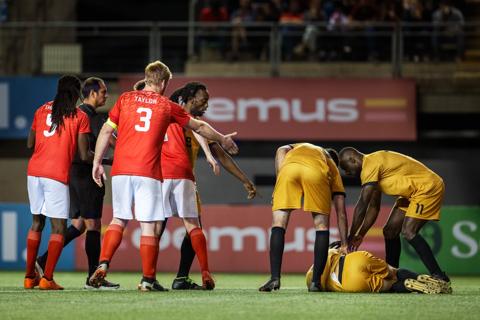
Even seemingly healthy athletes can be at risk for SCD, making prevention a complex challenge

Findings reinforce the benefits of long-term high physical activity, lower smoking rates and better baseline health

Consortium makes key recommendations to improve prevention practices

Clinical complexity demands personalized care strategies
 Search