Locations:





Dialysis nurses help patients through complex, life-altering conditions
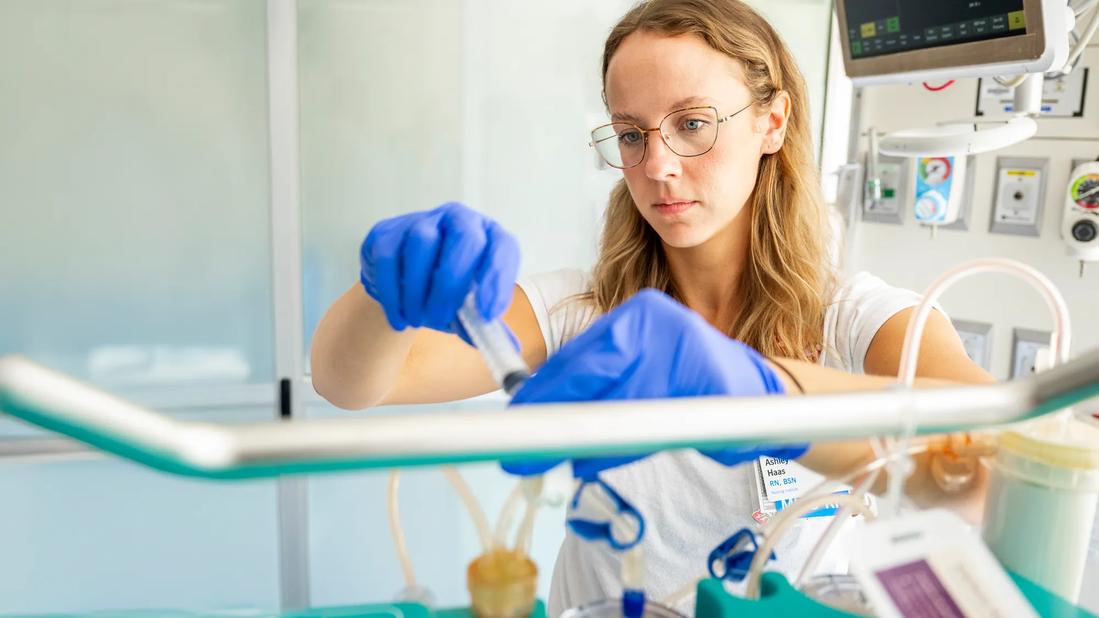
Image content: This image is available to view online.
View image online (https://assets.clevelandclinic.org/transform/caab6027-30cc-46fc-87d5-9c7b9355aa08/NUR_6729408_08-13-25_034_SCG)
Dialysis nurse
Thirty-five years ago, Tracy Coates, MSN, RN, found her purpose caring for patients in need of dialysis. “I was working as a phlebotomist when a coworker’s transition into dialysis sparked my interest,” she shares. “I pursued a technician opportunity; the dialysis specialty has fueled my passion ever since.”
Advertisement
Cleveland Clinic is a non-profit academic medical center. Advertising on our site helps support our mission. We do not endorse non-Cleveland Clinic products or services. Policy
Coates later earned her bachelor’s degree in nursing. “One of the most impactful moments in my career was realizing I could become a nurse,” she says. “In the beginning, I was working as a technician and still had young children at home, so nursing school felt out of reach. A colleague suggested taking one class at a time, and that simple advice made my goal achievable.”
Coates is now the nurse manager of the acute dialysis unit at Cleveland Clinic’s Main Campus. She and her team of dialysis nurses, also called nephrology nurses, manage patients who have impaired kidney function, including end-stage renal disease and acute kidney injury.
These caregivers specialize in intermittent hemodialysis, peritoneal dialysis, continuous renal replacement therapy and prolonged intermittent renal replacement therapy. They also perform lab draws, administer medications and blood products, and provide complex patient care. The unit has 21 beds and services the hospital’s inpatient units, intensive care units and select outpatient populations.
“Our team covers every dialysis need for any adult patient in this hospital,” explains Stephen Pishnery, BSN, RN, a charge nurse on the unit. “We do more than care for patients with kidney injuries; we would also manage a patient who broke their arm but is on regular dialysis and needs treatment while they are here.”
He adds, “We might see as many as 50 patients on our unit every day – 10 in the ICU and others across the hospital.”
When asked what he does for a living, Pishnery responds with his go-to analogy: “I’m a nurse, but I’m like a Swiss Army knife,” he says. “I’m always doing something different. Depending on the day, I may be in the charge room coordinating treatments, monitoring patients remotely or out in the hospital caring for people.”
Advertisement
In addition to acute inpatient, intensive care and chronic outpatient settings, dialysis nurses commonly provide home therapy and transplant services.
Pishnery admits that there’s nothing quite like being called in to help with a transplant. “We care for a lot of pre- and post-transplant patients, and I love that aspect of the job,” he says. “It’s very rewarding to be part of the process when someone gets a new kidney.”
Dialysis nurses have ample opportunity to shape their own careers. “The pathways from technician to registered nurse to leadership or advanced practice nursing are clear and flexible,” explains Coates, past president of the local chapter of the American Nephrology Nurses Association. “The diversity in this field allows for skill development and career customization based on individual interests and strengths.”
In the near future, Pishnery says he plans to become professionally certified by the Nephrology Nursing Certification Commission as a Certified Dialysis Nurse (CDN).
Because kidney failure can be associated with other medical issues, including cardiovascular disease and cancer, dialysis nurses often collaborate with other clinical specialties. “We partner with caregivers from a variety of clinical areas like kidney transplant, neurology and thoracic surgery,” says Pishnery. “The specialty calls for a high level of clinical complexity and the ability to manage multiple comorbidities while adhering to strict dietary restrictions. Rapid critical thinking is imperative, especially when managing patients’ fluids, electrolytes and hemodynamics.”
Advertisement
Because dialysis nurses use a variety of advanced technological tools, Coates says sharp technical and assessment skills help caregivers anticipate patients’ needs and risks. She notes that the ability to communicate clearly with physicians and patients is equally important.
“The job comes with significant communication-related responsibilities like teaching families and patients about lifestyle practices that can reduce further kidney injury,” she explains.
Coates adds that dialysis care is held to strict regulatory standards, which require consistent adherence. “I balance leadership, coordination and operational and clinical oversight to ensure safe, efficient, high-quality and compliant dialysis care,” she explains. “One of the first things I do every day is round throughout the department to ensure regulatory compliance, check in with support staff and address any concerns.”
Coates highlights a core motto that she regularly shares with her team, which reflects the importance of preparedness, patient safety and operational readiness: “Stay ready so we don’t have to get ready!”
Due to the frequency and duration of dialysis treatments, dialysis nurses often build meaningful, long-term relationships with their patients – connections that require them to blend technical expertise with personal compassion.
“What makes this work especially meaningful is the continuity of care it demands,” shares Coates. “Patients often receive dialysis several times per week, so we’re supporting them as they learn to cope with a challenging, life-altering condition. It’s incredibly rewarding when you’re able to improve someone’s quality of life.”
Advertisement
Pishnery recalls the first time he witnessed a patient go from extremely critical to stable by the end of a dialysis treatment — and it’s a memory that will never leave him.
“I was thoroughly impressed by the entire process, and I thought: Wow, this job really makes a difference for people,” he shares. “It’s satisfying to know that you are doing the best you can for others and that your care makes people feel better.”
Advertisement
Advertisement
Howley ASPIRE Program prepares caregivers for the professional road ahead
Specialized training prepares caregivers to address the unique physical and emotional needs of young patients
Using meticulous preparation and teamwork to manage critically ill patients in constantly changing environments

Translating clinical questions into meaningful, sustainable change
Guidance for creating a relevant framework that reflects organizational values, supports professional practice

Helping patients recognize respiratory changes, navigate treatment barriers and stay connected to their clinical team
Initiative provides hands-on opportunities to promote early, progressive activity

Continuing to grow by following the right path at the right time
 Search