Locations:





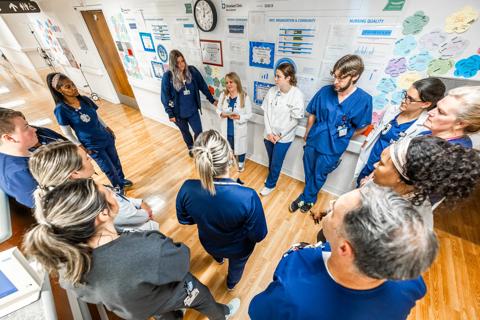
Bimonthly breakfasts and council meetings foster open dialogue, shared decision-making and meaningful action

Image content: This image is available to view online.
View image online (https://assets.clevelandclinic.org/transform/6ebea6a8-0beb-494a-9159-3a79171ad869/breakfast-meeting-1387042133)
Breakfast meeting
When Sue Behrens, DNP, RN, ACNS-BC, NEA-BC, began her nursing career more than 40 years ago, it was uncommon for clinical nurses to routinely interact with chief nursing officers and other top hospital leaders. But times have changed.
Advertisement
Cleveland Clinic is a non-profit academic medical center. Advertising on our site helps support our mission. We do not endorse non-Cleveland Clinic products or services. Policy
“The leadership style in today’s environment is to be authentic and open while engaging nurses,” explains Behrens, Vice President and Chief Nursing Officer at Cleveland Clinic Hillcrest and Mentor hospitals. “It’s important to hear the voices of our clinical nurses.”
Since becoming CNO at Hillcrest in 2021, Behrens has introduced two formal ways to encourage open communication with nurses: CNO breakfasts and a CNO Advisory Council.
Behrens began holding monthly breakfasts with frontline caregivers in 2022. Clinical nurses from every area of the hospital are invited to join the CNO in Hillcrest’s administrative offices to share a meal and discuss whatever is on their minds.
“There is no agenda. This is really their time to talk,” says Behrens, who tries to limit the breakfasts to 12 attendees to help ensure meaningful exchanges. “Everyone from new graduate nurses to 30-year veterans who work at the bedside – whether in surgery, the emergency department, medical-surgical units, the ICU – have come to the breakfasts.”
Behrens typically begins with an icebreaker, such as asking everyone to share a fun fact about themselves. She says it doesn’t take long for the nurses to open up. Topics have ranged from unit-based issues to work-life balance and staffing concerns.
Behrens provides a summary of the discussions to nursing directors and Cleveland Clinic's Senior Vice President and CNO Meredith Foxx, MSN, MBA, APRN, NEA-BC, PCNS-BC, PPCNP-BC, CPON, leaving out names to preserve confidentiality. When possible, Behrens and her team act on the feedback.
Advertisement
For instance, a nurse from a busy medical-surgical unit recently mentioned the potential benefits of hiring a dedicated admission and discharge nurse. Following the breakfast, the unit trialed the role and now assigns one nurse to oversee admissions and discharges when staffing allows, freeing up the other caregivers to focus on patient care.
After several years of CNO breakfasts, nurses now routinely consult their teams before the meetings and arrive with a list of discussion topics.
“The breakfasts are received really well,” says Behrens. “They’ve helped me develop stronger connections with our clinical team and have allowed nurses to build relationships with colleagues in other areas of the hospital.”
A few years after starting the CNO breakfasts, Behrens developed the idea for a CNO Advisory Council.
“I wanted to provide a more structured environment and give nurses time to think about specific topics before each meeting,” she says.
Launched at the start of 2026, the CNO Advisory Council includes 10 to 12 clinical nurses from Hillcrest and Mentor hospitals. The members are selected by their nurse managers to serve on the council for one year. The council meets every other month, with CNO breakfasts now held six times a year on alternating months at both hospitals.
Behrens selects the topics for each meeting based on Press Ganey results and any current challenges or concerns raised at the CNO breakfast. She shares the potential discussion topics with council members beforehand and asks them to bring feedback from their colleagues to the meeting.
Advertisement
The first CNO Advisory Council meeting focused on improving and increasing nurse recognition efforts. One participant suggested displaying a banner with a QR code to make it easy for people to send Caregiver Celebrations – Cleveland Clinic’s online program for peers, leaders, and patients and their families to honor caregivers. Behrens jumped on the idea, and the banner now hangs in Hillcrest’s atrium near the front door and valet area.
“When people are waiting for their car, they can take out their phones and send a Caregiver Celebration,” she says. “Little things like that may not seem like much, but the nurses are grateful when their voices are heard and we act on what they’ve said.”
In addition to the special CNO gatherings, Behrens conducts leadership rounds and maintains an open-door policy. “I will meet with anybody,” she says. “I recently met with a patient care nursing assistant who wanted to talk about career growth.”
She also encourages other nurse leaders to be available for frontline caregivers.
“We become so focused on our own meetings and agendas, but our interactions with our fellow caregivers are important,” says Behrens. “Nurses have told me that whether their ideas get implemented or not, they just want to be heard.”
Meeting with nurses is rewarding for Behrens, too: “It brings me joy and fills my cup.”
Advertisement
Advertisement
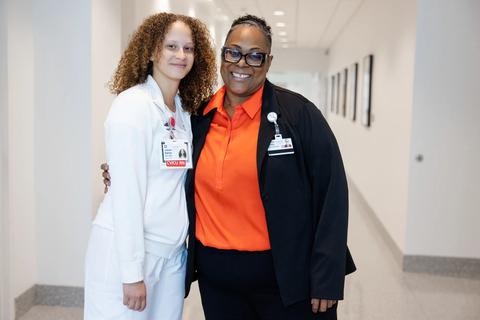
Howley ASPIRE Program prepares caregivers for the professional road ahead
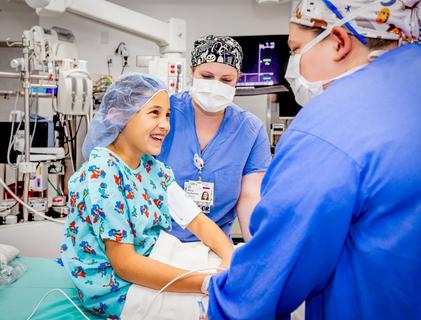
Specialized training prepares caregivers to address the unique physical and emotional needs of young patients
Using meticulous preparation and teamwork to manage critically ill patients in constantly changing environments
Translating clinical questions into meaningful, sustainable change
Guidance for creating a relevant framework that reflects organizational values, supports professional practice
Helping patients recognize respiratory changes, navigate treatment barriers and stay connected to their clinical team
Initiative provides hands-on opportunities to promote early, progressive activity
Continuing to grow by following the right path at the right time
 Search