Locations:





Benefits of neoadjuvant immunotherapy reflect emerging standard of care
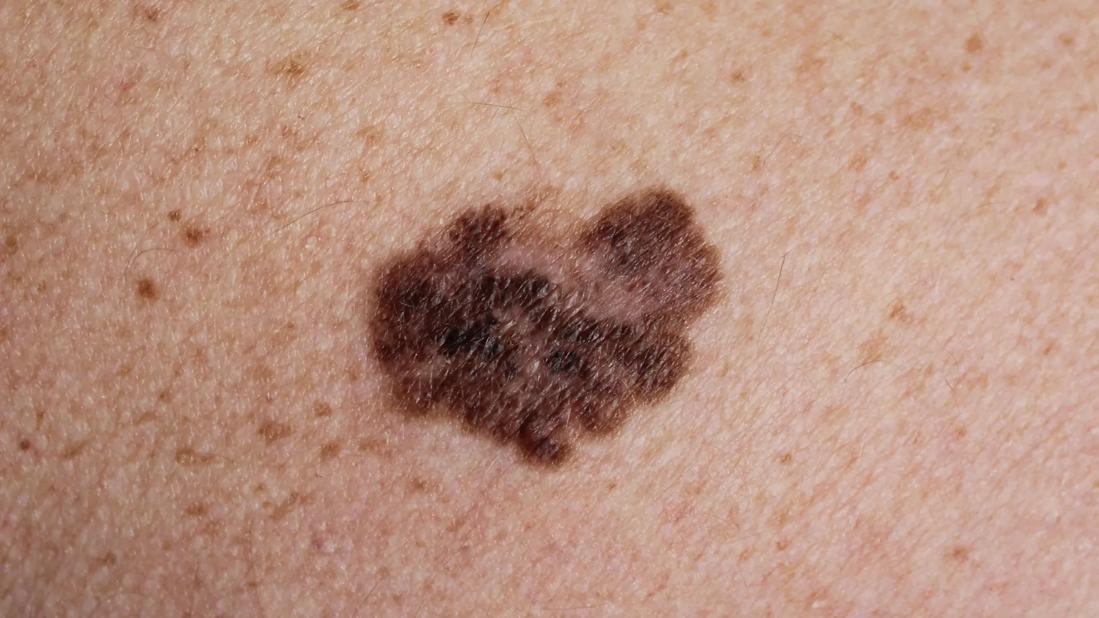
Image content: This image is available to view online.
View image online (https://assets.clevelandclinic.org/transform/618698b9-651b-4145-a662-47832dc49ea4/Melanoma-skitzki)
melanoma
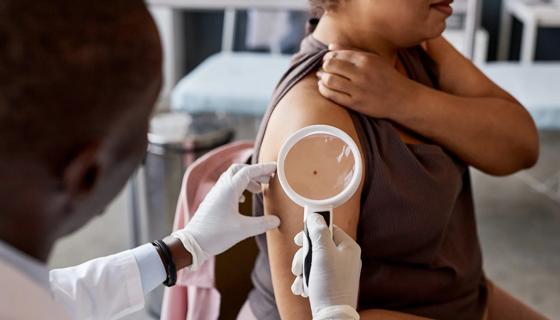
A 79-year-old woman with no previous health issues presented with newly diagnosed melanoma on the right shoulder. Biopsy confirmed stage IIB melanoma, with a 3.1 mm thick, ulcerated lesion.
Advertisement
Cleveland Clinic is a non-profit academic medical center. Advertising on our site helps support our mission. We do not endorse non-Cleveland Clinic products or services. Policy
Because of the stage of disease, the patient underwent a staging PET scan, which identified a suspicious lymph node above the right clavicle. Image-guided core biopsy was performed, confirming metastatic melanoma.
Previously, standard of care would typically involve surgery to remove the melanoma and the involved nodal basins, followed by adjuvant immunotherapy, notes Joseph Skitzki, MD, surgical director of Cleveland Clinic’s Melanoma program.
However, that approach changed three years ago with two clinical trials (PRADO and SWOG 1801) showing that outcomes are significantly improved when immunotherapy is given prior to surgery.
The patient received three infusions of pembrolizumab, given at three-week intervals, which she tolerated well. Surgery followed, and the melanoma and suspicious lymph node were removed.
Dr. Skitzki says that, when a neoadjuvant approach is taken, it’s important to mark the node during biopsy so it can be identified later.
“What can happen is the patient can respond so well that the node just disappears,” he explains. “In this case, it was pretty small — I would have had a hard time finding it without that marking clip.”
Following surgery, pathology confirmed no residual melanoma in the excision site or lymph node.
Although some patients with a complete or very good response do not require further treatment after surgery, in this case, the patient’s oncologist advocated continuing to follow the protocol used in the SWOG 1801 trial, which involves following surgery with one year of immunotherapy. The patient completed treatment with no side effects. She continues to do well, undergoing scans at three-month intervals, with no signs of recurrence.
Advertisement
A key point from the case is that surgeons should no longer remove affected lymph nodes prior to immunotherapy. This is because the lymph node can serve as a target to “educate” the immune system and be used to measure the patient’s response to immunotherapy, with studies showing that this response is also a good predictor of the patient’s long-term outcome.
“The standard in the past was just to remove any disease that was there, but surgeons really shouldn’t be in a rush to do that, because you can actually use that lymph node to program the immune system and identify how the treatment went and how the patient’s going to do,” Dr. Skitzki explains.
The case also demonstrates that age is not a limiting factor for this immunotherapy-first approach, he added.
“When people think of 79-year-olds, they may not necessarily think about being aggressive,” he says. “Technically, this is more of an aggressive approach, but it actually may have fewer side effects and potential for great outcomes.”
Advertisement
Advertisement
Neoadjuvant immunotherapy improves outcomes
Largest study of its kind identifies three treatment exposures that contribute to risk
Family history may eclipse sun exposure in some cases
Immunotherapy is preferred initial treatment for majority of patients
Timing of adjuvant immunotherapy unclear for maximum overall survival

Melanoma may be more heritable than we think
Phase 2 trials investigate sitagliptin and methimazole as adjuvant therapies
Why Cleveland Clinic is launching its cardioimmunology center
 Search