Locations:





Microvascular “supercharging” is a critical newer step to promote favorable outcomes
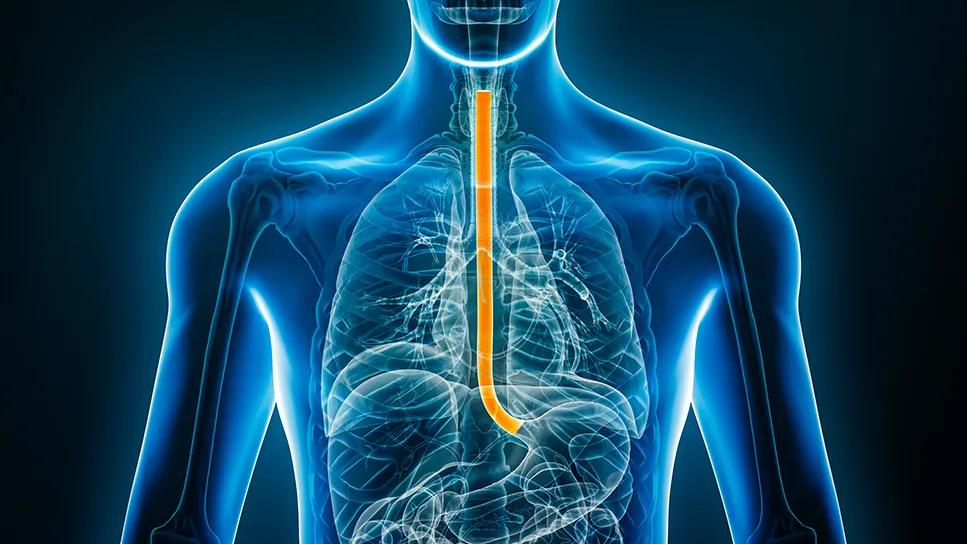
Image content: This image is available to view online.
View image online (https://assets.clevelandclinic.org/transform/e1bc98ec-3ce4-49c8-9ec8-da9ef895f40b/esophagus-illustration-2230778383)
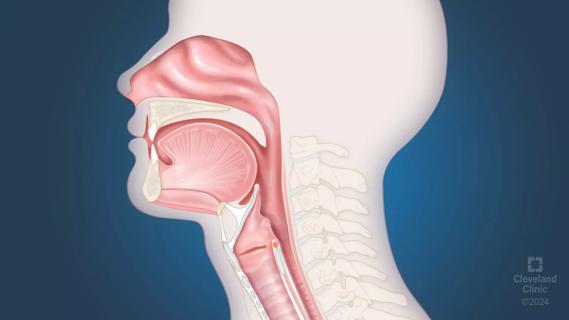
stylized illustration of the esophagus within the human body
When a gastric conduit is unavailable for salvage esophageal reconstruction, interposing a segment of colon between the cervical esophagus and abdomen can result in postoperative complications and long-term functional outcomes similar to those achieved with a gastric pull-up operation. Key to success is performing microvascular “supercharging,” — i.e., creating a dual blood supply to the implanted colon.
Advertisement
Cleveland Clinic is a non-profit academic medical center. Advertising on our site helps support our mission. We do not endorse non-Cleveland Clinic products or services. Policy
So found a study of patients who underwent substernal colonic interposition at Cleveland Clinic over a 25-year period, recently published in the Journal of Thoracic and Cardiovascular Surgery.
“Colonic interposition for salvage esophageal reconstruction has traditionally been perceived as a poor option owing to its technical difficulty and propensity to lead to anastomotic leaks,” says the study’s senior and corresponding author, Siva Raja, MD, PhD, Surgical Director of the Center for Esophageal Diseases at Cleveland Clinic. “But because modern surgical and management strategies have improved considerably, it should be regarded as a reliable solution when the stomach cannot be used.”
Following esophagectomy, the stomach is ideally used for reconstruction, requiring a simpler operation involving only one anastomosis. For patients without a viable gastric conduit, colonic interposition is a well-known but infrequently used option. Early published series and anecdotal reports found the complex operation to be associated with high morbidity from anastomotic leakage as well as poor long-term function.
Over the past 25 years at Cleveland Clinic, techniques for this uncommon procedure have improved, especially with the routine adoption of middle-colic microvascular supercharging, which restores more native blood flow.
This long-term retrospective study was designed to assess outcomes in patients who underwent colonic interposition at Cleveland Clinic, with special attention to comparing patients early and late in the cohort.
Advertisement
The study group consisted of 99 patients (median age, 61 years; 71% male) who underwent colonic interposition at Cleveland Clinic between January 2000 and June 2024. Almost half (48%) had esophageal cancer.
Patients were evaluated periodically the first year and annually thereafter. Half the patients were followed for more than 3.8 years and 25% for more than 9.5 years.
Survival was 95% at 30 days, 77% at one year, 58% at five years and 47% at 10 years. Patients who underwent esophagectomy for a benign condition had significantly better survival at every follow-up point than those with esophageal cancer (66% vs. 25%, respectively, at 10 years).
Vascular supercharge — a technique to create a dual blood supply to the implanted colon — became routinely used later in the cohort and was performed in 16 patients (16%). These patients tended to be older and more likely to have a history of hypertension, smoking and esophageal cancer. Despite that, outcomes were improved, as follows:
“The use of microvascular supercharging had a positive impact on anastomotic complications, reducing them to a level comparable to gastric pull-up,” Dr. Raja observes. “Greater availability of microvascular expertise at large centers is making the routine use of supercharge for this procedure feasible.”
Advertisement
The Cleveland Clinic Esophageal Questionnaire (CEQ) was used to assess postoperative symptoms, with 18 patients having data available. Most symptoms were experienced never or rarely; the most frequent being weekly postprandial diarrhea and bloating, each of which was reported by about half of patients. Other common problems were dysphagia, nausea when eating, and food or liquid coming into the mouth when lying down.
CEQ scores were compared with 49 patients who had gastric reconstruction; long-term functional outcomes were similar.
“Standardization — of personnel, techniques and management — is key to successfully navigating this complex operation,” says study co-author Sudish Murthy, MD, PhD, Section Head of Thoracic Surgery. “For this reason, we perform it only as an elective procedure to ensure thorough preoperative planning and availability of experienced staff.”
Details of preoperative workup, preparation, surgical techniques, postoperative management and follow-up are provided in the published study report. Drs. Raja and Murthy highlight some key factors:
Advertisement
“Gastric conduit is the simplest solution to esophageal reconstruction, but this study demonstrates that colonic interposition performed with microvascular supercharging is an excellent backup option,” Dr. Raja concludes.
Advertisement
Advertisement
Research could help direct care pathways for patients with unexplained swallowing difficulties
Long-acting antiemetics and high-dose steroids key to minimizing acute nausea
25-year series of over 1,000 patients reveals good long-term palliation, esophageal preservation
Case highlights the benefits of a minimally invasive approach
Potential for new, non-invasive screening option

Pediatric and adult gastroenterologists offer team care for patients with eosinophilic esophagitis
3 pediatric gastroenterologists discuss advances in their diagnostic toolkits
Treatment for scleroderma can sometimes cause esophageal symptoms
 Search