Locations:





Data could help inform policy and patient-provider conversations
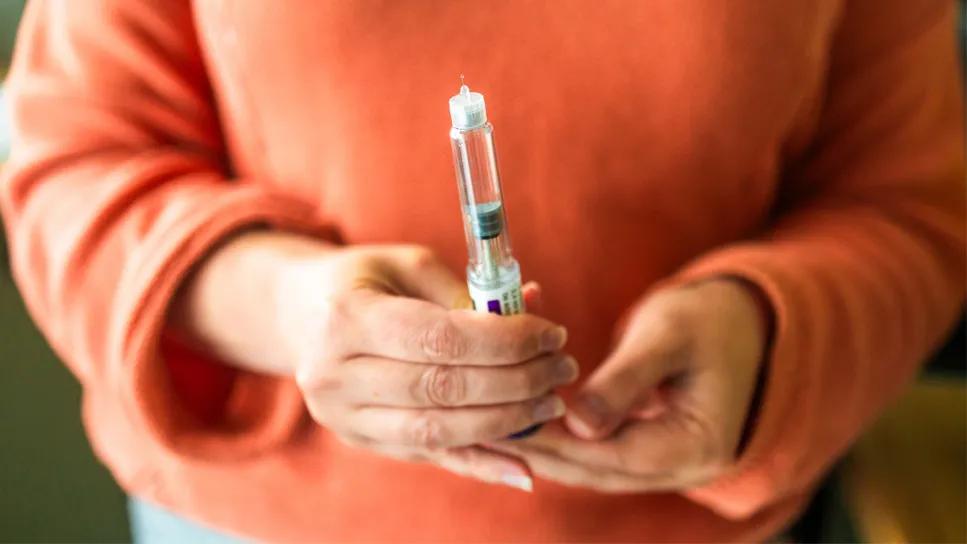
Image content: This image is available to view online.
View image online (https://assets.clevelandclinic.org/transform/ed364d4d-b934-4941-9c3e-2d69ee58c51a/womans-hands-holding-glp-1-stop-using)
Woman's hands holding drug injector
In late 2025, the nonprofit KFF health-policy organization published results of a poll that found that about one in eight Americans were taking GLP-1 medications for weight loss or other health condition. Eighteen percent of respondents reported having taken the drugs in the past, and use of the medications is expected to continue to increase.
Advertisement
Cleveland Clinic is a non-profit academic medical center. Advertising on our site helps support our mission. We do not endorse non-Cleveland Clinic products or services. Policy
As the popularity of GLP-1s grows, so does the population of people who abandon them, regardless of whether they have met their health goals. Well-publicized reasons for quitting include financial barriers and financial barriers. Until recently, however, evidence for why people quit has been anecdotal.
Results of a recent study by Cleveland Clinic researchers bolster the anecdotal evidence and supply other reasons as well. The study shows that of those who discontinued their prescribed injectable semaglutide or tirzepatide for obesity:
The study, Reasons for Discontinuation of Obesity Pharmacotherapy With Semaglutide or Tirzepatide in Clinical Practice, was published in the journal Obesity.
In addition to quantifying the data, the researchers had other reasons for their investigation, says first author Hamlet Gasoyan, PhD, an investigator in Cleveland Clinic’s Center for Value-Based Care.
First, knowing why people quit matters because people commonly regain weight after discontinuing GLP1s; identifying solutions that allow patients to achieve and maintain their goals depends on understanding the hurdles.
Advertisement
Second, the researchers wanted to see if reasons for quitting were aligned with when people quit. The study looked at those who quit within less than three months, and those who discontinued between the three-month mark and one year. As hypothesized, while financial barriers were the most common reason for discontinuation at all time points, patients discontinuing due to cost were more likely to do so later in treatment, whereas those discontinuing due to side effects tended to do so earlier.
Participants were adults who had a first prescription filled for injectable semaglutide or tirzepatide for obesity from Jan. 1, 2022, to Dec. 31, 2023, and who discontinued the injections within the first year. They had a body mass index (BMI) of at least 30 on the date of treatment initiation or during the latest available primary care visit, or a BMI of at least 27 with one or more weight-related comorbidities such as hypertension, dyslipidemia, obstructive sleep apnea or cardiovascular disease.
Participants were ineligible if they had a type 2 diabetes diagnosis or if they’d had bariatric surgery within two years of the start of the study.
Researchers analyzed electronic health record data from a pool of 288 randomly selected qualified participants. One-hundred-seventy-nine participants were female and 109 were male. The mean age was 52; mean baseline weight was 256 pounds; mean baseline BMI was 39.7. Most (about 77%) were privately insured.
Dr. Gasoyan’s research on anti-obesity medications yielded first insights in a 2023 study published in Obesity that showed only 19% of participants were still using their obesity medications one year after their initial prescriptions.
Advertisement
“After we published that first study on discontinuation rates and the impact on real-world outcomes, other groups across the country replicated our findings,” says Dr. Gasoyan. “It was satisfying to see that what we reported is true and applies in other settings, but it was still not sitting right with me that we still only had speculations on why people discontinue.”
Anecdotal information can be useful, but policymakers and insurers require objective data.
“We wanted to look at this systematically in part to address the Catch-22 of third-party payers declining to cover these anti-obesity drugs because people quit them at a higher rate, when in truth some people stop the medications because coverage was terminated by the insurance company or the patient failed pre-authorization or they simply can't afford the out- of-pocket cost.”
Data is also important for clinicians and patients, he adds.
“It's important for a clinician to be able to explain these factors to the patient at the onset of decision-making about GLP-1 medications for obesity,” says Dr. Gasoyan. “Patients should understand the challenges around staying on medication, and that it is common for patients to stop. And, as we described in our earlier research, once you stop, the outcomes are unlikely to be the same as those reported from randomized clinical trials where on average patients achieve 15% to 20% weight loss.”
Years ago, Dr. Gasoyan’s PhD dissertation concerned the underutilization of bariatric surgery for treatment of obesity. He sees a parallel with GLP-1s.
Advertisement
“To date, bariatric surgery is the most effective treatment for severe obesity. But when it was new, like the new anti-obesity medications, it was labeled ‘weight loss surgery’ or ‘cosmetic surgery,’ and was not being covered by Medicare or by most third-party payers,” he says. “Then the evidence accumulated over a decade. It showed not only the effectiveness of the surgery in terms of weight loss but also in terms of putting several chronic diseases into remission and saving money by reducing obesity-related comorbidities.”
He expects the new anti-obesity drugs might follow a similar path. And improving care and options for patients with obesity drives his research.
“Anything we can do to help patients receive the care they need is good, even if they can’t stay on a GLP-1 medication,” he says. “We want to understand what the best alternatives might be, if they need to stop their GLP-1 medication. We are trying to help provide evidence-based recommendations for patients who want to manage their obesity and then help them to access care and be persistent with it.”
Advertisement
Advertisement

Certain patients likely to benefit from slow-releasing drug
Procedure offers potential for less pain and faster recovery in selected patients

Challenges include multimorbidity, polypharmacy, limited mobility and sarcopenia
Pheochromocytoma case underscores the value in considering atypical presentations

Advocacy group underscores need for multidisciplinary expertise

A reconcilable divorce

A review of the latest evidence about purported side effects

High-volume surgery center can make a difference
 Search