Locations:


Findings support further studies of potential one-time treatment strategy
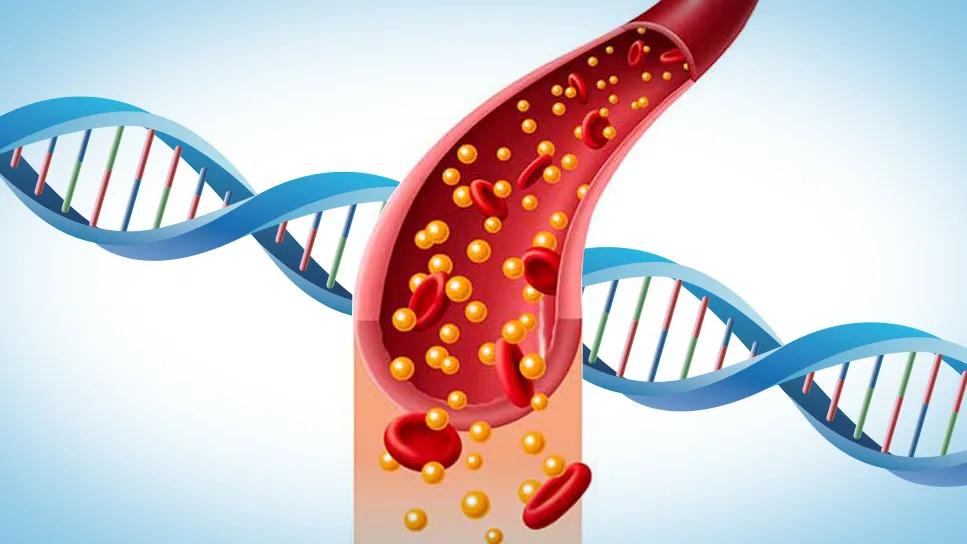
Image content: This image is available to view online.
View image online (https://assets.clevelandclinic.org/transform/7f13a195-e096-4835-9590-f5a9663233b5/gene-therapy-for-high-triglyceride)
blood vessel on top of a DNA double helix
In patients with severe hypertriglyceridemia, one-time in vivo CRISPR-Cas9-mediated editing of the hepatic ANGPTL3 gene was safe and lowered serum triglyceride (TG) levels by a mean of 63% at 30 days, according to a phase 1b trial reported in a late-breaking science presentation at the American Heart Association (AHA) Scientific Sessions 2026.
Advertisement
Cleveland Clinic is a non-profit academic medical center. Advertising on our site helps support our mission. We do not endorse non-Cleveland Clinic products or services. Policy
“This first-in-human study of CRISPR-Cas9 gene editing for severe hypertriglyceridemia found that a single dose of the studied therapy, CTX310, was well tolerated and showed the desired effect on triglyceride levels,” says lead investigator Ashish Sarraju, MD, a cardiologist in Cleveland Clinic’s Section of Preventive Cardiology who presented the results. “Human trials of gene editing are still in early stages, but these findings signal a new frontier in drug development for severe hypertriglyceridemia, as they represent the potential for a cure rather than chronic management with medications.”
Development of CTX310 arose from recognition that angiopoietin-like 3 (ANGPTL3), a hepatically produced protein, is an important regulator of lipid metabolism by inhibiting lipoprotein and endothelial lipase. Naturally occurring loss-of-function gene variants for ANGPTL3 are known to result in lifelong reductions in triglycerides, LDL cholesterol and the risk of atherosclerotic cardiovascular disease without evidence of adverse effects.
These observations prompted interest in using the in vivo technology CRISPR-Cas9 to edit the ANGPTL3 gene to produce a durable genetic modification and permanent reductions in circulating atherogenic lipoproteins. This led to the development of CTX310, a lipid nanoparticle-encapsulated CRISPR-Cas9 formulation targeting ANGPTL3 with the aim of inducing a permanent loss-of-function mutation in hepatocytes.
A Cleveland Clinic-led phase 1a ascending-dose trial evaluated CTX310 in 15 adults with refractory forms of a variety of lipid disorders. Results of that trial, reported in the New England Journal of Medicine in late 2025 and earlier this year, showed the therapy to be safe and efficacious at lowering ANGPTL3 and various lipid biomarkers — including triglycerides — through one year in a population with heterogeneous lipid disorders.
Advertisement
That success cleared the way for phase 1b of the trial, which is concurrently evaluating fixed doses of CTX310 in distinct groups of patients with specific lipid disorders: severe hypertriglyceridemia; hypercholesterolemia, including heterozygous and homozygous familial hypercholesterolemia; and mixed dyslipidemia.
The results presented at the AHA meeting are from the portion of the phase 1b trial specific to severe hypertriglyceridemia, which is associated with increased risk for acute pancreatitis and cardiovascular disease.
The investigation was an open-label study of 10 participants with a fasting serum triglyceride level ≥ 500 mg/dL. All received a one-time infusion of CTX310 at a fixed dose of 40 mg (for patients weighing < 85 kg) or 50 mg (for those weighing ≥ 85 kg). The primary end points were safety (dose-limiting toxicities) and percent change over time in ANGPTL3, triglycerides and triglyceride-rich lipoprotein cholesterol, a significant residual contributor to atherosclerotic disease risk. Percent changes in other lipid levels were assessed as well.
Participants were from four sites in New Zealand, Australia, the United Kingdom and the United States. Dr. Sarraju and other Cleveland Clinic investigators provided academic leadership of the study, which was run by the Cleveland Clinic Coordinating Center for Clinical Research (C5Research).
The 10-patient cohort had a median age of 56.5 years and was 60% male. All participants had diabetes.
The cohort’s median baseline triglyceride level was 1,067.7 mg/dL, with an interquartile range of 740.4 to 2,269.2 mg/dL. Baseline LDL cholesterol was well controlled (mean of 59.9 mg/dL).
Advertisement
Mean percent changes from baseline to 30 days for ANGPTL3 and various lipids are detailed in the table below.
| Metric | Mean change from baseline |
|---|---|
| ANGPTL3 | –65.3% |
| Triglycerides | –62.8% |
| Direct triglyceride-rich lipoprotein cholesterol | –60.5% |
| Non-HDL cholesterol | –50.9% |
| LDL cholesterol | –16.4% |
| Apolipoprotein B | –23.4% |
| Metric | |
| ANGPTL3 | |
| Mean change from baseline | |
| –65.3% | |
| Triglycerides | |
| Mean change from baseline | |
| –62.8% | |
| Direct triglyceride-rich lipoprotein cholesterol | |
| Mean change from baseline | |
| –60.5% | |
| Non-HDL cholesterol | |
| Mean change from baseline | |
| –50.9% | |
| LDL cholesterol | |
| Mean change from baseline | |
| –16.4% | |
| Apolipoprotein B | |
| Mean change from baseline | |
| –23.4% |
Individual participants’ change from baseline ranged from +7.2% to –86.8% for ANGPTL3 levels and from –28.2% to –84.6% for triglyceride levels.
The safety results reported are through the most recent follow-up of this ongoing trial, covering at least 30 days for all participants and more than 90 days for 70% of participants. The single infusion of CTX310 has been well tolerated overall, with no elevations in aspartate aminotransferase or alanine aminotransferase and no serious adverse events deemed related to CTX310. Four patients (40%) had an adverse event considered related to the study drug; none of these events were grade 3 or higher.
Follow-up of the study’s participants is continuing, and Dr. Sarraju says full publication of the results is likely planned after future completion of the portions of the phase 1b trial in the cohorts with the other lipid disorders.
“These are preliminary data in a small population, but the reassuring safety profile and the general efficacy data support the continued study of CTX310 for severe hypertriglyceridemia in larger trials to explore this new frontier for the treatment of this condition,” Dr. Sarraju says.
The stakes could be considerable, as between 1% and 2% of U.S. adults have triglyceride levels over 500 mg/dL and approximately 0.4% have levels greater than 1,000 mg/dL like the participants in this cohort.
“Patients with severe hypertriglyceridemia can be extremely difficult to treat,” notes coinvestigator Steven Nissen, MD, Chief Academic Officer of Cleveland Clinic’s Heart, Vascular & Thoracic Institute. “This is a therapy that has considerable promise for giving these patients a lifelong reduction in triglyceride levels.”
Advertisement
The study is funded by CRISPR Therapeutics, which is developing CTX310.
Dr. Sarraju reports that he has served as a consultant to and/or trial leader or steering committee member for CRISPR Therapeutics and other biopharmaceutical companies. Dr. Nissen reports that the Cleveland Clinic Coordinating Center for Clinical Research (C5Research) has received funding to conduct clinical trials from multiple biopharmaceutical companies, including CRISPR Therapeutics. He reports that he is involved in conducting these trials but receives no personal remuneration for his participation. He also consults for these companies but does not accept compensation.
Advertisement
Advertisement

Early, individualized diagnosis and comprehensive management key to preserving fertility

Key considerations when diagnosing and managing severe hyponatremia

Study demonstrates ability to reduce patients’ reliance on phlebotomies to stabilize hematocrit levels

Cleveland Clinic and Cleveland Clinic Abu Dhabi expand access to potentially curative care

Study finds exome sequencing can uncover additional diagnoses after nondiagnostic panel testing

Durability findings propel potential one-time treatment approach to phase 1b testing

Life-changing gene therapy is currently under FDA review

GenT framework aims to improve drug development with focus on entire genes, not individual mutations
 Search