Locations:


Phase 1 trial of azer-cel reports good preliminary safety and efficacy
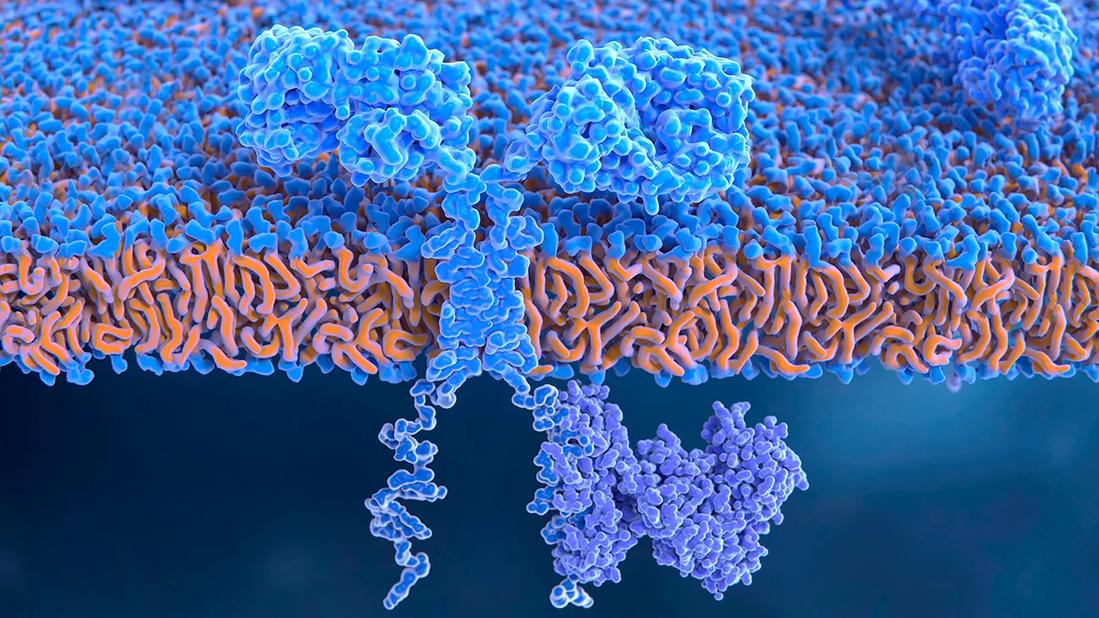
Image content: This image is available to view online.
View image online (https://assets.clevelandclinic.org/transform/3984d9a0-25c8-4afd-92f2-fa6a7e6278da/2066588-1300X900-jpg)
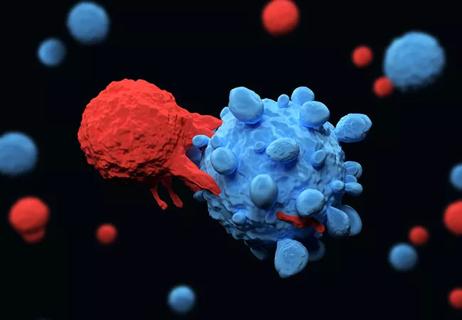
stylized illustration of a CAR T receptor
The first reported clinical evaluation of azer-cel, an allogeneic CD19-directed chimeric antigen receptor (CAR) T-cell therapy for progressive multiple sclerosis (MS), indicated no high-grade toxicities, stable or improved Expanded Disability Status Scale (EDSS) scores, and good peripheral B-cell depletion and subsequent repopulation with early evidence of immune reset.
Advertisement
Cleveland Clinic is a non-profit academic medical center. Advertising on our site helps support our mission. We do not endorse non-Cleveland Clinic products or services. Policy
These preliminary results of the TG-Azercel-101 trial (NCT06680037) were presented in a late-breaking oral session at the 10th Joint ACTRIMS/ECTRIMS Meeting by first author Daniel Ontaneda, MD, PhD, a neurologist with Cleveland Clinic’s Mellen Center for Multiple Sclerosis Treatment and Research.
“These early results are very reassuring,” says Dr. Ontaneda, who serves as principal investigator for the trial’s Cleveland Clinic site, which has recruited six patients thus far, among the most among the eight participating centers. “The allogeneic method of manufacturing CAR T cells has important advantages over the autologous method, so we hope to see it perform well with better scalability.”
Although many good treatments are now available for MS, they are mostly ineffective against progressive disease, which involves accumulation of disability independent of relapse activity. Progressive MS is believed to be mediated in part by chronic inflammation that is mediated by B cells in the central nervous system, compartmentalized behind the blood-brain barrier and out of reach of current MS therapies.
CAR T-cell technology has revolutionized treatment of B-cell blood malignancies and is now being tested for treating a variety of autoimmune B cell-mediated diseases. Autologous CAR T-cell therapy involves collecting a patient’s T cells with leukapheresis, genetically modifying them with a CAR that targets B cells, then growing the CAR T-cell population ex vivo, a process that takes several weeks. When replaced back into the patient in a single infusion, the new CAR-T cells attack and deplete targeted B cells. In autoimmune disease, the hope is that naturally repopulating naïve B cells will allow for a reset, halting disease progression without the need for other therapies. Autologous CAR T-cell therapy is currently being tested for progressive MS in the Breakfree-2 phase 1 trial (NCT06220201), with encouraging results out to 26 weeks
Advertisement
In contrast, allogeneic (or so-called off-the-shelf) CAR T-cell therapy involves using healthy donor T cells to manufacture the CAR T cells. The CAR, containing a single chain variable fragment that binds to CD19 (a marker of B cells), is inserted at the T-cell receptor alpha constant (TRAC) locus using ARCUS (a gene editing platform derived from algae), a method aimed at disrupting the T-cell receptor and preventing graft-versus-host disease (GVHD).
Because allogeneic CAR T cells are premanufactured and frozen, patients can receive treatment almost immediately. Other advantages of this approach include more consistent product quality and scalable manufacturing.
More than 130 cancer patients have now received allogeneic azer-cel therapy, with no cases of GVHD reported.
The main objective of the phase 1, open-label TG-Azercel-101 trial is to determine the recommended dose of azer-cel for future clinical development. The cohort for these preliminary results consists of 26 patients: nine with primary progressive MS, 10 with nonactive secondary progressive MS and seven with active secondary relapsing MS.
Median age is 51.5 years (range, 36 to 59), with equal numbers of both sexes. All patients had disability progression independent of relapse activity in the 12 months before enrollment despite all using anti-CD20 therapy. Median follow-up was 4.9 months (range, 0.1 to 15.0 months), with one patient discontinuing early.
After discontinuation of disease modifying therapies, lymphodepletion was induced using bendamustine. Patients were then given a single infusion of azer-cel starting at a dose of 30 × 106 cells. Dose escalation rose to dose-level 6 (500 × 106 cells) for subsequent patients.
Advertisement
Patients were assessed for safety, function and pharmacokinetics, using periodic clinical testing, lumbar puncture and MRI. The primary outcome was assessment of dose-limiting toxicity in the first 28 days after treatment.
Major findings from the cohort of 26 patients include the following:
“CAR T-cell therapy is usually tempered by safety issues, so we were very encouraged that azer-cel appears to be associated with milder toxicity than has been seen in the use of other CAR T-cell therapies for cancer and in experimental autologous CAR T-cell therapy for MS,” Dr. Ontaneda says. “Furthermore, we did not see any increased toxicity associated with escalating dose.”
Clinical outcomes at day 90 included improved or stable scores on the following tests:
Advertisement
“These data are remarkable, especially considering that patients had a lot of disability at baseline and were not taking disease-modifying treatments for MS throughout the trial,” Dr. Ontaneda notes.
As has been seen in autologous CAR T-cell therapy, most patients (17/18) experienced a rapid reduction in CD19 B cells in peripheral blood following azer-cel infusion. At the same time, varicella zoster virus humoral immunity was preserved.
“Over the ensuing weeks and months, B-cell reconstitution was enriched for transitional and naïve phenotypes,” Dr. Ontaneda reports. “This is consistent with an immune reset, suggesting that this therapy could be used as a one-time infusion.”
Cerebrospinal fluid signals were also positive, with a reduction of CD19+ B cells. There was no increase in neurofilament light chains, and oligoclonal bands were unchanged or decreased at day 10 in 77% of patients.
“These early findings in a small cohort are very encouraging,” Dr. Ontaneda concludes. The TG-Azercel-101 trial will continue to enroll patients, escalate the dose to assess tolerability, and follow efficacy and pharmacokinetics for two years. There is a plan to expand enrollment for other autoimmune conditions, including myasthenia gravis and chronic inflammatory demyelinating polyradiculoneuropathy. Subsequent trials are expected to start once the optimal dose has been determined.
The study is sponsored by TG Therapeutics, Inc., which is developing azer-cel.
Advertisement
Advertisement
Phase 1 Breakfree-2 trial reports good safety and efficacy at week 26

Updates on this fast-evolving therapeutic landscape from a leading trialist

Age alone should not rule out patients from potentially curative treatment

Higher type 2 immunity observed in persistent CAR T cells
Real-world study shows high response rates that are durable with commercial lisocabtagene maraleucel
Minimal residual disease testing shows promising results
Dispelling myths and sharing practical experiences

Combining customized care, research capabilities and flexibility for the future
 Search