Locations:





Analysis of HNSCC patients shows HPV status to be predictive of higher abundance of oncobacteria within the tumor

Image content: This image is available to view online.
View image online (https://assets.clevelandclinic.org/transform/1f69ef42-1180-4ab3-9805-77b802c1069a/HNI_3584008_02-07-23_097_SG-r)
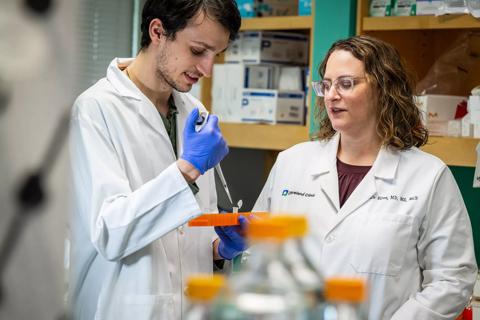
Dr. Silver in lab
With the rising incidence of head and neck squamous cell carcinoma (HNSCC), a better understanding of the tumor microenvironment has become an increasing priority. A particular focus of the Silver and McGrail laboratories at Cleveland Clinic is the intratumoral microbiome and its role in cancer progression. Part of the increase in HNSCC cases is due to the increase in human papillomavirus (HPV)-associated oropharyngeal squamous cell carcinoma (OPSCC). While most patients respond to treatment initially, some cancers come back and are often resistant to further treatment, leaving patients with no more curative options. This clinical need further underscores the importance of a better understanding of the factors that can lead to treatment resistance and disease progression.
Advertisement
Cleveland Clinic is a non-profit academic medical center. Advertising on our site helps support our mission. We do not endorse non-Cleveland Clinic products or services. Policy
“One of the main drivers for this study was to develop a better understanding of what influences disease aggression or recurrence,” explains Natalie Silver, MD, MS, FACS, Director, Head and Neck Cancer Research at Cleveland Clinic. “There’s a real need to identify different biomarkers or prognosticators to assess how patients will respond to treatment and which tumor factors put patients at higher risk for treatment resistance.”
An article published in Oncogene quantified the presence of oncobacteria in HNSCCs to explore why the abundance of bacteria differs between tumors. The group, led by Dr. Silver, Daniel McGrail, PhD, and Travis Kerr MS, a graduate student in Dr. McGrail’s laboratory, found that accumulation of oncobacteria was independent of tumor stage and size, as well as certain patient characteristics. What they discovered was that HPV-negative tumors exhibited significantly higher accumulation of oncobacteria than HPV-positive tumors.
“Originally, we hypothesized that tumor size and associated hypoxia may contribute to oncobacteria abundance,” explains Dr. Silver. “However, we found that tumor size was not actually associated with oncobacteria abundance. We also did not find any association between oncobacteria abundance and pathologic node positivity. We were also surprised that there were no differences associated with patient biological sex or ethnicity, nor HNSCC risk factors, including alcohol usage and smoking.”
The group focused their analyses on bacteria confirmed to be relevant within the intratumoral microbiome, and subsequently defined oncobacteria as the three bacterial taxa enriched in tumors — Fusobacteria, Clostridia and Actinomyces israelii.
Advertisement
“We chose to focus our analysis these three taxa for our analysis, as Dr. Silver had previously shown their relevance in HNSCCs and in particular their potential to induce an immunosuppressive microenvironment,” explained Travis Kerr, MS. original work can be found in the journal Neoplasia.
Analysis was originally done using The Cancer Genome Atlas (TCGA), a publicly available data set that includes whole exome sequencing. Across HNSCC tumors, they found no differences associated with clinical or pathological stages.
While tumor size and patient factors were not associated with oncobacteria abundance, tumor location within the head and neck did demonstrate a significant correlation.The group observed the highest levels of oncobactera in oral cavity tumors compared to tumors originating in the larynx or oropharynx.
“Once we saw the pattern or oncobacteria abundance between the tumor subsite, it was natural to then look at HPV-status, as HPV-driven HNSCCs arise in the oropharynx,” describes Travis.
In analyses led by Dr. McGrail, “we found significantly more oncobacteria in HPV-negative tumors. Even when we restricted our comparison to tumors within the oropharynx, we still found that HPV-negative oropharynx tumors exhibited significantly more oncobacteria than HPV+ oropharynx tumors.” says Dr. Silver
Using the same TCGA dataset, the group also looked at how the HPV status of tumors impacted survival rates.
“Knowing that HPV-negative tumors typically have a worse prognosis than HPV+ tumors and finding that HPV-negative tumors typically exhibited a higher abundance of oncobacteria, we hypothesized that a high oncobacteria abundance may be associated with worse prognosis in HPV+ tumors,” explains Dr. Silver.
Advertisement
The group found that an abundance of oncobacteria was significantly associated with worse overall survival in HPV+ oropharynx tumors. After stratifying the tumors into high and low oncobacteria abundance groups, univariate analysis also showed a similar trend of worse prognoses in HPV+ oropharynx tumors.
To validate their observations, the group generated an internal cohort of 34 patients with HPV+ and HPV-negative OPSCC tumors. They found that HPV-negative oropharyngeal tumors exhibited significantly more tumor-associated bacteria than their HPV+ counterparts, which mirrored their original observations from the TCGA.
“Again, we found that within the HPV+ tumors, a higher bacteria abundance was associated with worse overall survival,” explains Dr. Silver. “We also saw, once again, no differences in sex, smoking status or stage between high and low oncobacteria HPV+ oropharynx tumors.”
The group believes their findings may improve understanding and treatment of the rising number of HPV+ tumors. One of the primary barriers restricting therapeutic efficacy in HNSCC is the immunosuppressive tumor microenvironment. By demonstrating that in vitro head and neck cancer cell lines also produce a distinct phenotype in response to co-culture with bacteria, based on HPV-status of the cell line, the group is hopeful that they can develop better methods for targeting intratumoral bacteria.
“We hope these findings can help lay the groundwork for more clinical trials down the road and help us figure out ways to target bacteria, whether that’s with antibiotics or something more specific, like bacterial metabolites, to help improve the outcomes of our patients,” says Dr. Silver. “One of the things that’s been so great about Cleveland Clinic is the level of teamwork involved in our group. Our clinical specialists, physician-scientists, and basic science researchers collaborate to translate lab
Advertisement
Advertisement
Research aims to better understand the tumor immune micorenvironment
A new single-port system well-suited for oropharyngeal cancer treatment

New guidelines offer insight into emerging therapies, dental issues and more
Combination therapy demonstrates effectiveness in first-line treatment setting
Fine-tuning radiation for recurrent cancers
Recommendations focus on selecting the right biomarkers for the right setting
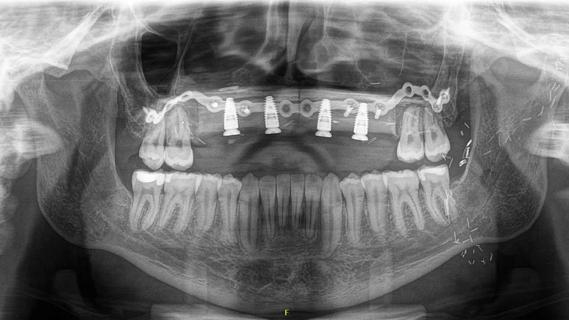
Two cases show how integrated surgical and prosthodontic planning is necessary for dental rehabilitation of major maxillary defects

Neurotology and neurosurgery specialists outline collaborative strategies for preserving function and tailoring treatment
 Search