Locations:





Multidisciplinary simulations provide realistic emergency training to help achieve optimal patient outcomes
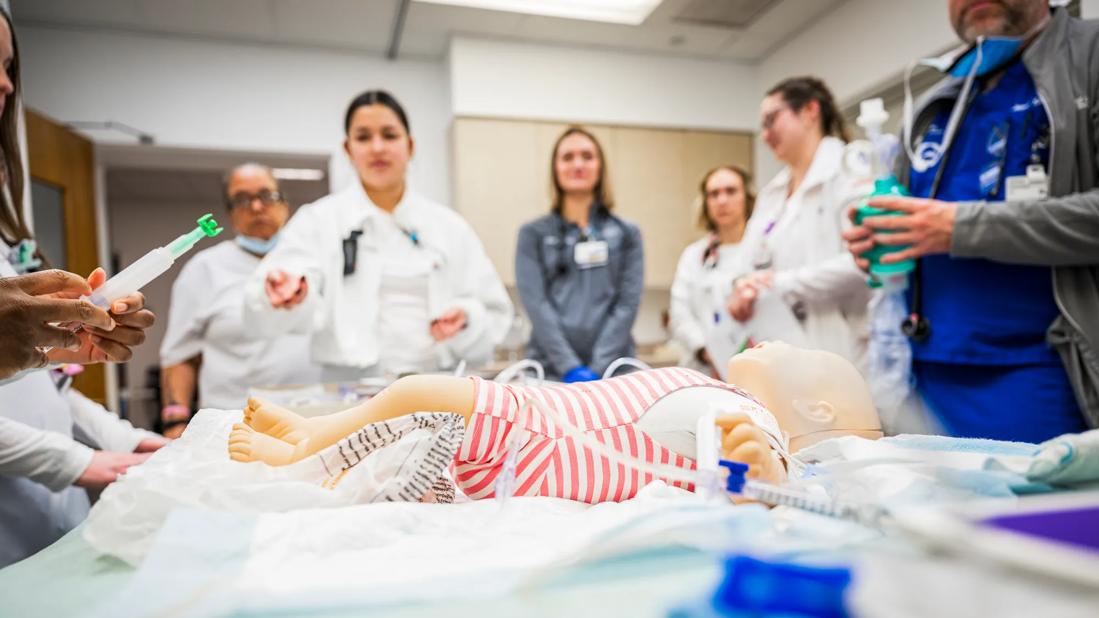
Image content: This image is available to view online.
View image online (https://assets.clevelandclinic.org/transform/4aef7cb3-960f-4873-93d5-fedf41a2753c/NUR_7872108_02-23-26_042_SCG)
Resuscitation training
Each year, children account for approximately 30 million emergency department (ED) visits in the United States, with more than 80% treated in general EDs.1 Although Cleveland Clinic operates dedicated pediatric EDs at two of its regional hospitals in Northeast Ohio — Fairview and Hillcrest — the enterprise understands the need to provide quality care for children who visit all of its EDs.
Advertisement
Cleveland Clinic is a non-profit academic medical center. Advertising on our site helps support our mission. We do not endorse non-Cleveland Clinic products or services. Policy
"An ED nurse has to know how to take care of the tiniest baby to the oldest adult,” says Cindy Willis, DNP, MSN, MBA, RN, CMSRN, Senior Director of Nursing Education at Cleveland Clinic. “Pediatric visits make up approximately 20% of ED visits, so it’s important to train our caregivers specifically for this population.”
In 2017, Cleveland Clinic’s Emergency Services Institute adopted the Handtevy System for pediatric resuscitation to help standardize the process and improve
outcomes. Last year, Lora Laszlo, MSN, APRN, FNP-C, CEN, Nursing Professional Development Specialist, spearheaded multidisciplinary simulation training using the Handtevy method at EDs across the enterprise.
Designed to eliminate the need for complex calculations, the Handtevy System assigns specific roles to ED team members during a resuscitation, including a lead physician, documentation nurse, medication nurse, and an airway/respiratory and procedure nurse/medic.
The team uses color-coded, age-based resources, including a set of medication and equipment manuals for pediatric resuscitations, and scripting that promotes accuracy and closed-loop communication.
“Pediatric resuscitation is a high-stress, low-frequency event that demands seamless coordination and high competency from an interprofessional team,” Laszlo says. “Implementation of standardized resources like the Handtevy method ensures uniformity in the pediatric resuscitation process, allowing caregivers to work confidently and cohesively during emergencies. Further, practice in a realistic, team-based environment will translate more effectively into real-life scenarios.”
Advertisement
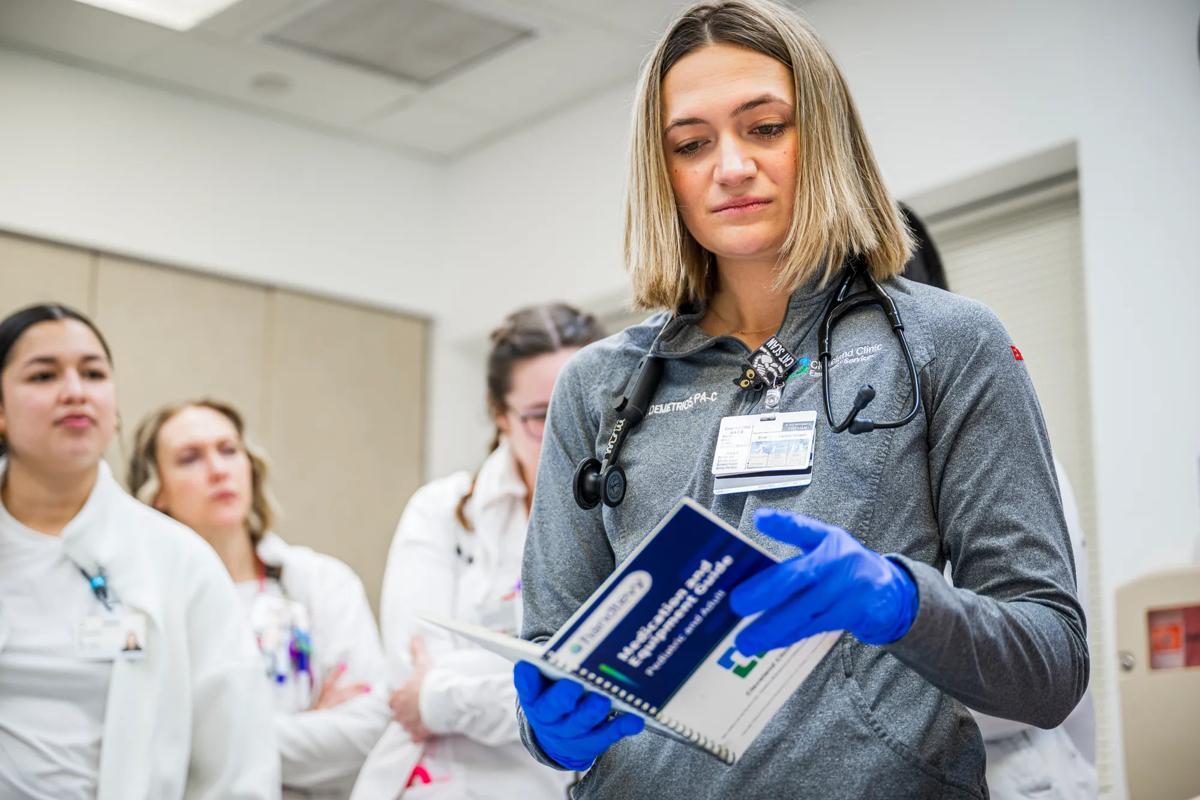
Image content: This image is available to view online.
View image online (https://assets.clevelandclinic.org/transform/821ae067-04e3-4bdf-9977-490e8fb87cff/NUR_7872108_02-23-26_007_SCG)
The Handtevy System is designed to eliminate the need for complex calculations during pediatric resuscitations.
Cleveland Clinic caregivers initially received training on the Handtevy System starting in 2017. To reinforce learning, the instruction was followed by in-situ simulations in the ED. Then the COVID-19 pandemic hit, and EDs experienced high staff turnover. Post-COVID, when new caregivers joined the ED and patient volumes increased, it became more challenging for nurses to attend classes.
“We identified the lack of unified training among physicians and nursing staff as a significant challenge,” Laszlo says. In 2024, she applied for and received an Education Caregiver Grant from Cleveland Clinic’s Education Institute to offer multidisciplinary simulation training. The nearly $17,000 award funded the Improving US in Pediatric Res"US"itations program in 2025.
The program aims to:
“The last aim is such a key part of training for caregivers, but it also helps the patient’s family,” Laszlo explains. “When a family walks into the room, they are trusting us — complete strangers — with the person they love the most. If we are not confident, then we don’t inspire hope in the family.”
Advertisement
Laszlo and emergency medicine physician Matthew Oliverio, DO, conducted Handtevy simulation training at 15 EDs, including at Cleveland Clinic’s Main Campus, regional hospitals and free-standing facilities. Participants in the 30-minute sessions included physicians, nurses, respiratory therapists, paramedics, clinical technicians, patient care nursing assistants and health unit coordinators.
“The more disciplines we had involved in the simulations, the more effective they were,” Laszlo says. “Teams were able to work through a scenario in their own environment, so they could see what it would be like to resuscitate an infant or child in a specific room.”
The simulation scenario selected for the training involved an infant presenting to the ED with supraventricular tachycardia. During the mock emergency, the patient is initially stable, so the team is instructed to perform vagal maneuvers and administer two rounds of adenosine. The infant, who soon becomes unstable and undergoes synchronized cardioversion, eventually goes into cardiopulmonary arrest, requiring the team to initiate CPR and defibrillation. Ultimately, spontaneous circulation returns.
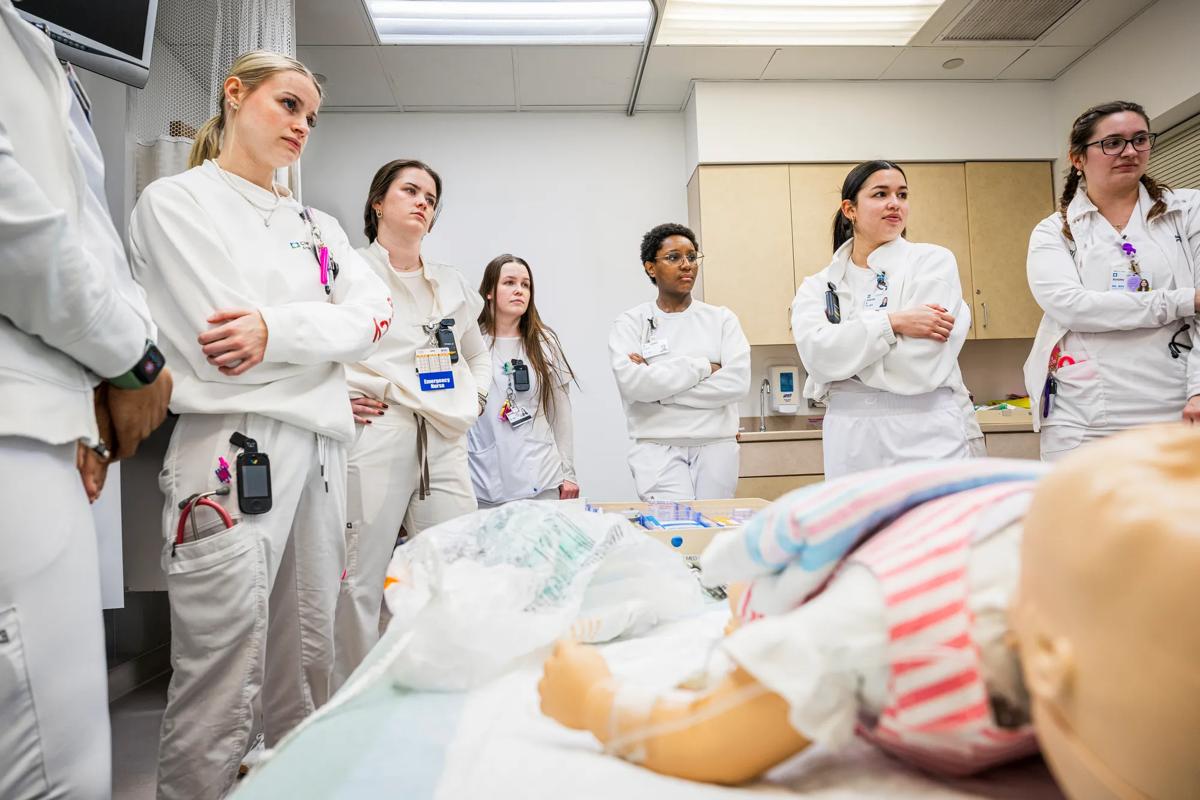
Image content: This image is available to view online.
View image online (https://assets.clevelandclinic.org/transform/4c90c04a-a8b5-4fb2-9dc0-c651971a4fdd/NUR_7872108_02-23-26_001_SCG)
Resuscitation refresher courses in the emergency department are designed to ensure caregivers can meet any challenge as a cohesive unit.
Nearly 160 ED caregivers participated in the simulation training last year. Since then, Laszlo has collaborated with the ED Education team to design a two-day class for emergency nurse residents and experienced nurses on the basics of pediatric care. The class includes information on the Handtevy process and simulated pediatric resuscitations. It also covers pediatric growth and development, therapeutic communication, comfort positioning, pain mitigation, medication administration, and information on common childhood illnesses and injuries. The first session is scheduled for this spring.
Advertisement
Laszlo says that the Improving US in Pediatric Res”US”citations program — and continued education, such as the upcoming two-day classes — aligns with Cleveland Clinic’s four care priorities:
1. Pershad J, Ha J, Chamberlain J, McKinley K. Pediatric emergency care before and during the late pandemic period: a national perspective. Hosp Pediatr. 2025;15(4):e160–e162.
Advertisement
Advertisement

Translating clinical questions into meaningful, sustainable change
Guidance for creating a relevant framework that reflects organizational values, supports professional practice

Helping patients recognize respiratory changes, navigate treatment barriers and stay connected to their clinical team
Initiative provides hands-on opportunities to promote early, progressive activity

Continuing to grow by following the right path at the right time

Teaching caregivers to recognize warning signs, de-escalate difficult situations and maintain professional boundaries

Veteran caregivers offer practical wisdom for building confidence and practicing with purpose
Skill, dedication and a passion for women and children inspire this joy-filled specialty
 Search