Locations:





Program helps caregivers prepare for the unique pressures of the ICU
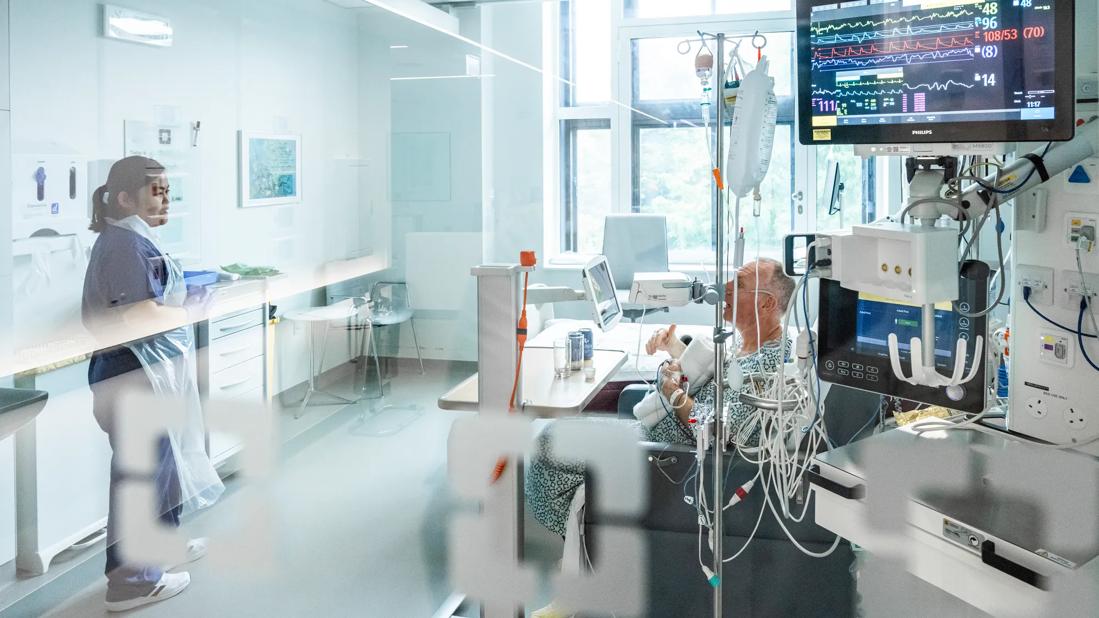
Image content: This image is available to view online.
View image online (https://assets.clevelandclinic.org/transform/c8e65669-d883-441a-85f0-1363da99d16c/CCC_5210909_09-06-24_1558_MLC)
Critical care nurse (London)
As the demand for highly skilled critical care nurses continues to outpace supply, health systems across the UK are confronting a familiar challenge: how to prepare nurses for one of the most complex and high-stakes environments in healthcare. At Cleveland Clinic London, nurse leaders have taken a proactive approach by developing an immersive experience designed to bridge the gap between acute and intensive care practice.
Advertisement
Cleveland Clinic is a non-profit academic medical center. Advertising on our site helps support our mission. We do not endorse non-Cleveland Clinic products or services. Policy
As the third cohort begins the program, the hospital’s Dr. Omar Al-Zawawi ICU fellowship program reflects a strategic investment not only in workforce development but also in the long-term sustainability of critical care nursing, explains Khaled Hussein, DNP, RN, Nursing Professional Development Specialist and fellowship lead.
Hussein, who designed and oversees the six-month program from candidate selection through final assessment, says the initiative was born from a clear need.
“The shortage of ICU nurses isn’t unique to the UK — it’s a global issue,” he says. “Critical care is an incredibly demanding clinical environment that requires highly skilled caregivers. Too often, nurses are expected to sink or swim when they start, but that model isn’t sustainable for a hospital that wants to retain top talent.”
Tiina Thornton, MSc, BSc, RN, Chief Nursing Officer at Cleveland Clinic London, notes that undergraduate nursing curricula in the UK offer only limited exposure to critical care. Nurses often pursue specialty education later, sometimes after one to three years in practice. In the interim, many are expected to function in ICU settings without a strong theoretical foundation — a disconnect that can contribute to stress, burnout and attrition, she explains.
Hussein says the Al-Zawawi fellowship was designed to change that trajectory by blending classroom learning, simulation, online modules and direct clinical experience with expert preceptors.
Rather than compressing education into isolated study days, the curriculum is intentionally distributed to reinforce bedside care.
Advertisement
“We know that participants are happier when we space classroom weeks more evenly across the program to improve the learning experience,” he notes. “This approach helps ensure a seamless transition from theory to practice.”
The program cohorts are intentionally small — six fellows per intake — reflecting both the size of the ICU and the organization’s commitment to meaningful clinical exposure.
This measured approach has yielded strong outcomes. All six fellows in the 2024-2025 cohort successfully completed the program in June 2025. One graduate accepted a permanent ICU staff nurse role at Cleveland Clinic London, while the others secured ICU positions in hospitals across the UK.
For Hussein, the broader impact is intentional.
“Our goals extend beyond our own hospital,” he explains. “Although we may not have vacancies for every graduating fellow, we know we’re contributing to the country’s critical care workforce. That’s part of our mission.”
Cleveland Clinic London’s nursing staff comprises caregivers trained across healthcare systems worldwide. Although the wide variety of backgrounds enriches practice, it can also create challenges in preparation and expectations, Hussein says.
“Nurses who were trained in ICUs overseas sometimes feel unprepared when they arrive in the UK, where technology, protocols and role expectations may be different,” he explains. “The fellowship helps contextualize and standardize critical care by helping put everyone on the same page.”
By establishing a shared foundation in evidence-based practice, clinical reasoning and advanced technical skills, the fellowship strengthens both patient safety and team cohesion, Thornton says. She points to one recent graduate who noted that the protected learning time allowed for a deeper and more direct application and understanding of evidence-based care. The fellow reported increased confidence, improved engagement with the multidisciplinary team and having made a measurable impact on patient safety and experience — outcomes that align closely with the program’s aims.
Advertisement
“Protected learning time isn’t a luxury; it’s an investment in patient outcomes,” Thornton says. “We’re seeing our fellows step into practice with stronger clinical judgment and a deeper commitment to critical care nursing.”
The Dr. Omar Al-Zawawi ICU Fellowship is delivered in partnership with Cleveland Clinic Philanthropy UK — what Thornton describes as “a shining example of how philanthropy can empower the nursing profession by fostering long-term impact and benefiting patients and communities nationwide.”
Unlike many similar programs in the UK that are unpaid or require post-completion service contracts, critical care nurse fellows at Cleveland Clinic London receive financial support during their training period.
“We didn’t want financial barriers to prevent talented nurses from pursuing critical care,” Hussein explains. “Our goal is to prepare the next generation of ICU nurses for the UK.”
He adds that the fellowship offers a compelling model for professional nurses considering a transition to critical care, as well as for leaders seeking scalable workforce solutions.
“By combining structured education, clinical mentorship and philanthropic support, we hope to demonstrate that thoughtful preparation is one of the most effective strategies for strengthening both nurse retention and patient outcomes in the ICU,” he says. “In a specialty where excellence is nonnegotiable, training makes all the difference.”
Advertisement
Advertisement
Specialized training prepares caregivers to address the unique physical and emotional needs of young patients
Using meticulous preparation and teamwork to manage critically ill patients in constantly changing environments

Translating clinical questions into meaningful, sustainable change
Guidance for creating a relevant framework that reflects organizational values, supports professional practice

Helping patients recognize respiratory changes, navigate treatment barriers and stay connected to their clinical team
Initiative provides hands-on opportunities to promote early, progressive activity

Continuing to grow by following the right path at the right time

Teaching caregivers to recognize warning signs, de-escalate difficult situations and maintain professional boundaries
 Search