Locations:





How critical care expertise, rapid decision-making and patient advocacy are shaping perioperative care
Podcast content: This podcast is available to listen to online.
Listen to podcast online (https://www.buzzsprout.com/2256206/19123043)
Certified registered nurse anesthetists (CRNAs) combine the technical expertise of critical care nursing with the rapid decision-making, vigilance and patient advocacy required in high-acuity procedural environments. From managing complex physiologic changes during surgery to quickly building trust with anxious patients, CRNAs play a vital role in delivering safe, compassionate care during some of healthcare’s most vulnerable moments.
Advertisement
Cleveland Clinic is a non-profit academic medical center. Advertising on our site helps support our mission. We do not endorse non-Cleveland Clinic products or services. Policy
“We’re the calm voice for patients during what could otherwise be a highly stressful experience,” says Angela Milosh, DNP, APRN-CRNA, FAANA, Program Director of Cleveland Clinic's School of Nurse Anesthesia. “CRNAs often have only minutes to demonstrate the clinical expertise and compassion needed to establish trust with their patients, so clear communication is essential.”
In this episode of Nurse Essentials, Milosh shares practical advice for nurses interested in pursuing the anesthesia specialty and provides insights into its demands, rewards and evolving leadership opportunities.
Click the podcast player above to listen to the episode now, or read on for a short, edited excerpt. Check out more Nurse Essentials episodes at my.clevelandclinic.org/podcasts/nurse-essentials or wherever you get your podcasts.
Podcast host Carol Pehotsky, DNP, RN, NEA-BC: How would you describe the role of a certified registered nurse anesthetist to someone who's familiar with nursing but not necessarily the specialty?
Milosh: I think nurse anesthesia practice is really the epitome of critical care nursing. It encompasses all the great technical skills, the critical care knowledge, the critical thinking and the judgment that goes along with being an intensive care nurse — all in a dynamic, rapidly changing perioperative environment.
Pehotsky: It is so important for nurse anesthetists to develop rapport [with their patients] very quickly. What tips and tricks do you have for helping patients understand your role?
Advertisement
Milosh: I always look to see where each patient is coming from — from home or the hospital — and then I try to talk to them just like a normal person. I introduce myself and shake their hand. Tell me where you're from. What are we doing for you today? How can we help you? This is our understanding of what's happening. Do you have any questions? I explain what's going to happen and make sure they're well informed.
Patients are often nervous about things like: Am I going to remember anything? How long will I be in the hospital? Am I going to say funny things after I've had medicine? Is [my procedure] going to hurt? So I think it's really important to set clear expectations and ensure they understand what we can and can't do.
Every CRNA I know has hugged patients...cried with patients...prayed with patients. We want to provide whatever support they need in crucial moments. Sometimes [our job] is to reassure a mom or a dad whose child is having surgery.
It's mostly about being human with people during a critical time in their life. We see the inside of the OR day in and day out, but patients don't. This may be the only surgical experience they've had, so it's important for us to [demonstrate] understanding. It's a sacred time for them, and we treat it as such.
Advertisement
Advertisement
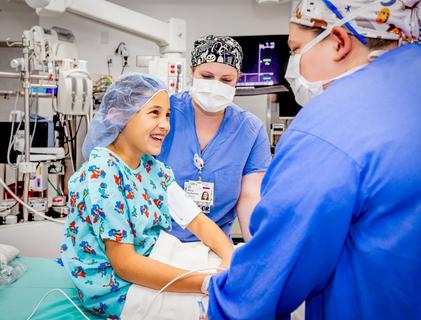
Specialized training prepares caregivers to address the unique physical and emotional needs of young patients
Using meticulous preparation and teamwork to manage critically ill patients in constantly changing environments

Translating clinical questions into meaningful, sustainable change
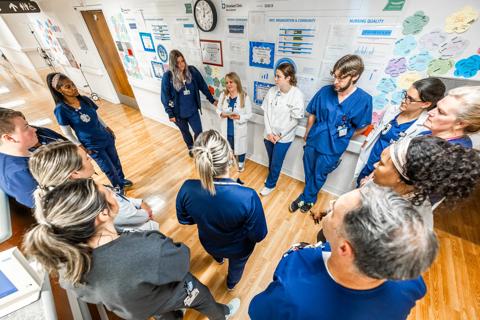
Guidance for creating a relevant framework that reflects organizational values, supports professional practice

Helping patients recognize respiratory changes, navigate treatment barriers and stay connected to their clinical team
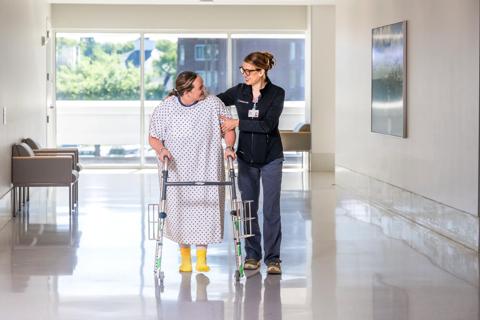
Initiative provides hands-on opportunities to promote early, progressive activity

Continuing to grow by following the right path at the right time

Teaching caregivers to recognize warning signs, de-escalate difficult situations and maintain professional boundaries
 Search