Locations:





Interdisciplinary initiative leverages technology, documentation and diagnostic clarity to prevent skin breakdown
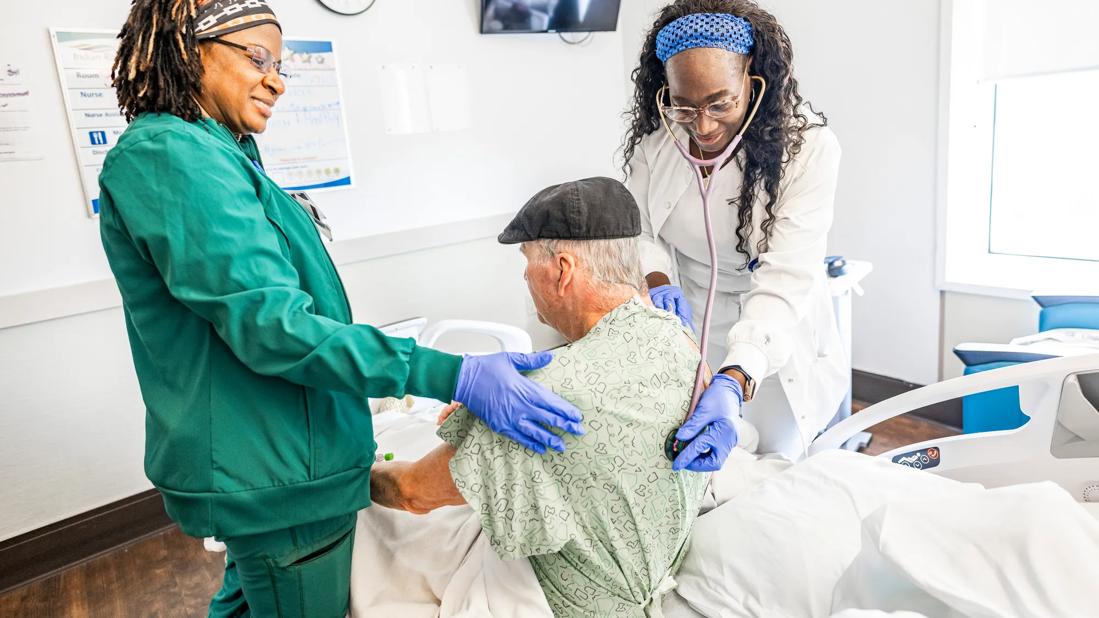
Image content: This image is available to view online.
View image online (https://assets.clevelandclinic.org/transform/ff2c469c-b825-4d4d-bf80-cc7c913e7179/HRC_3877362_04-27-23_415_MLC-jpg)
Nurses with geriatric patient at bedside
Hospital-acquired pressure injuries (HAPIs) remain a persistent challenge across acute care settings, particularly in complex, high-acuity environments. Beyond their effect on clinical outcomes, these injuries carry significant financial and regulatory implications that can negatively shape patient care.
Advertisement
Cleveland Clinic is a non-profit academic medical center. Advertising on our site helps support our mission. We do not endorse non-Cleveland Clinic products or services. Policy
To address this problem, an interprofessional team of Cleveland Clinic caregivers has implemented a comprehensive, systems-based strategy to reduce the incidence of HAPIs that is yielding measurable improvements in both patient safety and organizational performance.
“Pressure injuries are often seen as a nursing-sensitive indicator, but the reality is far more complex,” explains Kayla Little MSN, APRN, AGCNS-BC, PCCN, FCNS, who spearheaded the initiative. “We knew we needed to look beyond individual practice and examine the systems, workflows and assumptions that influence how we recognize and report these cases.”
The project brought together a wide range of Cleveland Clinic stakeholders, including advanced practice and clinical nurses, informatics specialists, quality and coding experts, respiratory therapists and surgical specialists. Little, a clinical nurse specialist in Cleveland Clinic’s Heart, Vascular & Thoracic Institute, says multidisciplinary collaboration supported a strategy built around three primary objectives: improving the recognition of existing pressure injuries on admission, reducing HAPIs and better identifying alternative causes of skin breakdown.
The initiative began with a series of nurse focus groups designed to identify barriers to accurate assessment and documentation during the admission process. In response, the team developed targeted education materials, including visual guides for wound imaging and best practices for conducting dual-nurse skin assessments. Documentation workflows within the electronic health record (EHR) were also optimized with reminders and new quality-reporting tools.
Advertisement
One notable innovation was the introduction and standardization of thermal imaging to support the early detection of skin compromise, Little says. By complementing traditional visual assessment methods, the technology provided clinicians with additional data to help inform their clinical judgment.
She adds that the team’s efforts to reduce HAPIs focused on real-time learning and resource optimization. Weekly interdisciplinary reviews of severe injuries created opportunities to identify trends, reinforce best practices and address gaps in care. The team also introduced advanced support surfaces for high-risk patients and evaluated the accessibility of prevention supplies to ensure frontline staff could act quickly and effectively.
The final exercise — differentiating pressure injuries from other forms of skin breakdown — proved particularly impactful, explains Mary Montague-McCown, DNP, APRN, ACNS-BC, CWOCN, program manager of Cleveland Clinic’s wound, ostomy and continence nursing program. By involving vascular and plastic surgeons in case reviews, the team gained deeper insight into other skin conditions that can mimic pressure injuries but stem from systemic factors like hypoperfusion, she says.
“Not all skin breakdown is preventable, and not all of these wounds are pressure injuries,” Montague-McCown notes. “Developing clear diagnostic criteria for skin failure helped us tell a more accurate clinical story — one that reflects the patient’s overall condition, not just what we see on the surface.”
Advertisement
To reinforce these efforts, a dedicated task force was created to establish standardized documentation language and conduct EHR audits to reduce unnecessary coding queries and improve consistency.
The results of this comprehensive approach were significant, Little says. Between 2024 and 2025, the organization achieved a 36% reduction in HAPIs. In addition, Patient Safety Indicator 03 (PSI 03) performance — a metric developed by the Agency for Healthcare Research and Quality to monitor rates of severe pressure injuries – improved by 59%, translating to an estimated $8.4 million in cost savings.
Equally notable was the team’s success in refining diagnostic accuracy. In 2025, 102 patients met the newly established criteria for skin failure, and PSI 03 events were eliminated in 93.6% of those cases. Little says these findings underscore the importance of distinguishing between preventable harm and clinically unavoidable conditions — both for quality reporting and guiding appropriate care.
Importantly, the initiative has also yielded practical insights for other healthcare organizations, Little says.
“First, it’s important to remember that the accurate recognition of pressure injuries begins at admission,” she says, adding that thorough head-to-toe skin assessments, supported by both visual and thermal imaging, are essential for distinguishing existing conditions from hospital-acquired events.
In addition, Little stresses the value of ongoing review processes for sustained improvement. “Regular, interdisciplinary case reviews not only identify opportunities for prevention but also foster a culture of accountability and shared learning,” she says.
Advertisement
Montague-McCown reiterates the importance of collaborating with clinical and non-clinical specialists, whose unique perspectives can enhance patient care and data integrity.
“Prevention doesn’t stop at the bedside,” she notes. “It’s built into the systems we design, the way we communicate and the partnerships we form across disciplines.”
Although the initiative resulted in substantial progress, Little highlights opportunities for further advancement. “In particular, additional research is needed to validate and refine diagnostic criteria for skin failure,” she says. “This is key to ensuring consistent application across care settings.”
As healthcare systems continue to navigate growing complexity and accountability, Montague-McCown believes nurse-led, interdisciplinary strategies like this one offer a powerful model for improving patient outcomes.
“By addressing both clinical practice and system-level factors, organizations can move closer to the shared goal of eliminating preventable harm,” she says.
Advertisement
Advertisement
Using meticulous preparation and teamwork to manage critically ill patients in constantly changing environments

Translating clinical questions into meaningful, sustainable change
Guidance for creating a relevant framework that reflects organizational values, supports professional practice

Helping patients recognize respiratory changes, navigate treatment barriers and stay connected to their clinical team
Initiative provides hands-on opportunities to promote early, progressive activity

Continuing to grow by following the right path at the right time

Teaching caregivers to recognize warning signs, de-escalate difficult situations and maintain professional boundaries
Veteran caregivers offer practical wisdom for building confidence and practicing with purpose
 Search