Locations:





Registry data highlight visual gains in patients with legal blindness
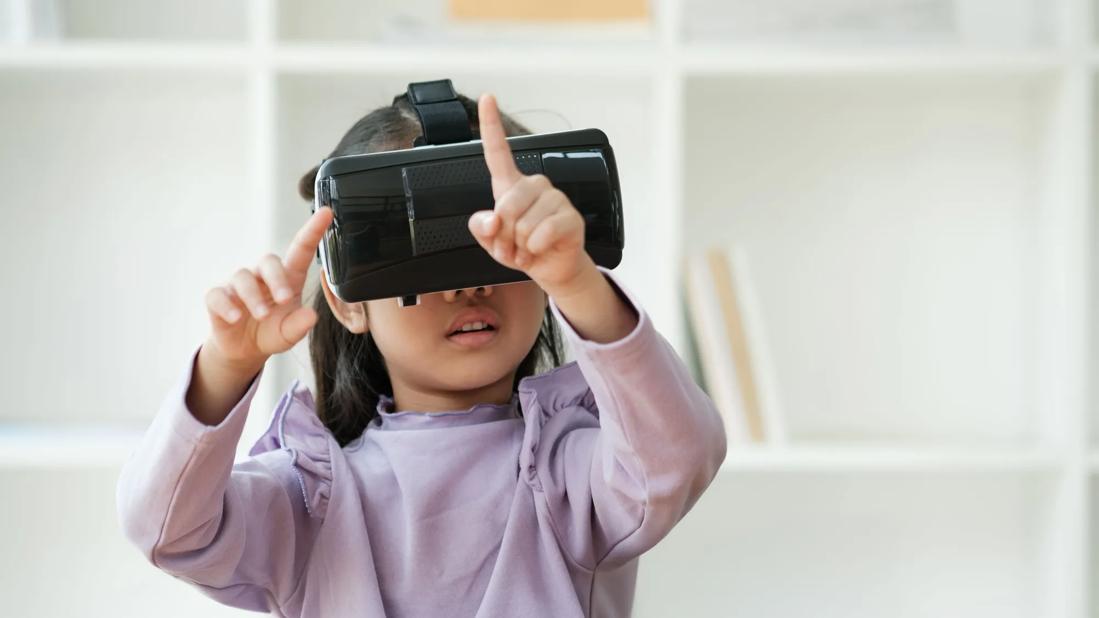
Image content: This image is available to view online.
View image online (https://assets.clevelandclinic.org/transform/13e7ee31-8715-4f62-8bd9-ddb443d13120/severe-amblyopia-analysis-PUPiL)
Child wearing a virtual reality headset
Until the recent introduction of dichoptic therapies, treatment for amblyopia had not advanced in decades. Conventional eye patches and atropine eye drops have been the most widely used treatments, although they are notorious for inconvenience and sometimes discomfort, leading to lack of adherence especially by young patients.
Advertisement
Cleveland Clinic is a non-profit academic medical center. Advertising on our site helps support our mission. We do not endorse non-Cleveland Clinic products or services. Policy
Now with the advent of binocular vision technologies, including Luminopia, CureSight and Vivid Vision, optometrists and ophthalmologists have more treatment options for their patients.
“It can be difficult to reason with a 4-year-old who doesn’t want to wear a patch over their eye while playing outside,” says Alexandra Williamson, OD, a pediatric optometrist at Cleveland Clinic Cole Eye Institute. “Or maybe a young child fights getting eye drops that make their good eye blurry because they don’t understand that it will help their other eye get stronger. Or maybe an older, school-aged child cannot tolerate atropine-induced blur in their good eye during school hours but has reached a plateau or is otherwise unsuccessful with patching. We are excited to finally have alternative therapies to offer these patients.”
Dr. Williamson, who has prescribed Luminopia and CureSight for select patients, presented a study at the 2025 American Academy of Optometry meeting that showed real-world vision improvement in patients with severe amblyopia using Luminopia.
Dichoptic therapies use innovative devices available by prescription that present patients with simultaneous but different stimuli to their amblyopic and healthy eyes.
With Luminopia, the device is a virtual reality headset. Users watch content from popular TV shows with contrast reduced to the healthy eye, forcing the amblyopic eye to compensate. One randomized controlled trial showed that children with amblyopia had significant improvement in their vision after being treated with Luminopia one hour a day, six days a week for 12 weeks.
Advertisement
CureSight is similar, but patients wear red-blue filters while watching videos on a portable screen. Eye-tracking technology allows the device to create a blurred image at the central fixation of the healthy eye. With Vivid Vision, which currently is not available in the U.S., patients play virtual reality games while wearing a head-mounted display.
“Dichoptic therapies are more fun and engaging for kids, so we’re seeing good adherence and good outcomes,” Dr. Williamson says. “However, each patient with amblyopia needs an individualized treatment plan. Dichoptic therapies may not be right for everyone, but it’s good to have multiple options to address a variety of patient needs and family preferences. Some patients benefit from using a mix of dichoptic and conventional therapies.”
Luminopia, which was approved by the U.S. Food and Drug Administration (FDA) to treat amblyopia in children ages 4-7 in 2021 and expanded to ages 8-12 in 2025, has been the subject of several recent studies based on the Patients Using Prescription Luminopia (PUPiL) Registry. The registry tracks real-world outcomes of more than 500 patients using Luminopia over 12 weeks or more. Dr. Williamson and her research team relied on this registry in their analysis of patients with severely low visual acuity in their amblyopic eye.
The team reviewed the records of 59 patients (mean age 7.8) with best-corrected visual acuity (BCVA) of 20/100 or worse in their amblyopic eye before dichoptic treatment. From baseline to their last visit documented in the registry (through March 2025), these patients recorded a(n):
Advertisement
In a subanalysis of patients with legal blindness, BCVA of 20/200 or worse in their amblyopic eye before dichoptic treatment (n = 9), the research team reported a(n):
“This dichoptic treatment led to a statistically significant improvement in real-world visual acuity, including in severe cases,” Dr. Williamson says. “The patients whose vision improved the most were those with worse BCVA at baseline.”
Other factors significantly associated with better visual improvement were:
Fatema Ghasia, MD, a pediatric ophthalmologist at the Cole Eye Institute, coauthored two abstracts on real-world outcomes of dichoptic therapy presented at the 2025 American Academy of Ophthalmology meeting. One indicated clinically meaningful gains in visual acuity in children ages 8-12 who had been heavily treated for amblyopia before beginning dichoptic treatment. The other indicated that visual improvement lasted more than four months after children stopped dichoptic treatment.
In addition to these and other real-world studies of dichoptic therapies, new multicenter clinical trials are being conducted by the Pediatric Eye Disease Investigator Group (PEDIG). Currently, the Cole Eye Institute is enrolling patients with amblyopia in two major randomized studies:
Advertisement
“With all of the amblyopia research occurring now, new clinical guidelines are in development,” Dr. Williamson says. “Given these new technologies and the pace of publications helping us understand their application, it is becoming more important for comprehensive eye care providers to refer kids with amblyopia to pediatric eye specialists.”
Advertisement
Advertisement

New studies clarify how sensory loss and nystagmus shape real-world visual function
Learn the latest recommendations in diagnosis, treatment and surveillance
The drug does not provide lasting disease control for most patients
A review of pathophysiology, risk factors, clinical presentation and treatment options
Study is first to show reduction in autoimmune disease with the common diabetes and obesity drugs
It’s the first step toward reliable screening with your smartphone
Fixational eye movement is similar in left and right eyes of people with normal vision

Oral medication may have potential to preserve vision and shrink tumors prior to surgery or radiation
 Search