Locations:





Podcast content: This podcast is available to listen to online.
Listen to podcast online (https://www.buzzsprout.com/2256206/18892084)
As healthcare systems contend with workforce strain, turnover and rising patient complexity, nurse leaders are placing renewed emphasis on helping nurses define their professional purpose. Clarifying one’s “why" is increasingly viewed as a critical factor in strengthening engagement, improving retention and supporting high-quality patient care.
Advertisement
Cleveland Clinic is a non-profit academic medical center. Advertising on our site helps support our mission. We do not endorse non-Cleveland Clinic products or services. Policy
"The impact of purpose extends beyond the caregiver experience," explains Kelly Hancock, DNP, RN, NE-BC, FAAN, Cleveland Clinic’s Chief Caregiver Officer. "Engaged nursing teams that feel connected to their work consistently deliver higher-quality care and create more positive patient experiences by demonstrating compassion and commitment across roles."
In this episode of Nurse Essentials, Hancock shares the importance of understanding why caregivers choose their professions, how that "why" can evolve over time and the connection between individual purpose and an organization’s mission, vision and values.
Click the podcast player above to listen to the episode now, or read on for a short, edited excerpt. Check out more Nurse Essentials episodes at my.clevelandclinic.org/podcasts/nurse-essentials or wherever you get your podcasts.
Podcast host Carol Pehotsky, DNP, RN, NEA-BC: You've had many great opportunities to listen to caregivers throughout your career. Is there a particular moment that helped [shape] how you envision your own purpose?
Hancock: You know, I can recall countless wonderful conversations with our caregivers, many of which were just circumstantial — impromptu. I remember meeting one colleague…who supports our laboratory building by cleaning and making sure that we have a safe environment to do our work. She shared that she's always wanted to stop me and ask about her career pathway. She believed in this organization…she believed that she could continue to make a meaningful impact, but she just didn't understand what the right pathway was. What’s next for me? Who do I call?
Advertisement
'I have so much more that I want to give to this organization.' Those were her words. We had a really rich conversation, and I was able to connect her with the appropriate teammates who could get her on the path she so desired. So, when I think about purpose…that caregiver comes to mind. She allowed herself to be vulnerable enough to ask. I think it’s just a wonderful testimonial.
Pehotsky: What advice would you give emerging nurse leaders who are developing a new why or are thinking about how their purpose has evolved?
Hancock: It’s so important to have that conversation. Exploring your motivations through reflection and experience is a good place to start. I encourage [nurses] to try different roles…different projects and volunteer opportunities. Get involved in shared governance as a magnet ambassador or as an ambassador in your area of work, and learn what inspires you.
I also think you should pay attention to what makes you feel fulfilled. See what really jazzes you up…what gets you excited. It may be a pathway! Whether it involves being an educator or a researcher…excelling at the bedside…or being in advanced practice…there are so many different things that you can do.
Secondly, seeking mentorship is so important. I know you and I have benefited from many mentors both within and outside the organization. [Nurses need] somebody that they can bounce ideas off of…a trusted confidante who can answer the questions they may be afraid to ask elsewhere.
The last piece of advice I would offer is: Focus on impact, and your why may evolve over time. I think it’s important to think about the difference you want to make for others – that’s the impact. Then, you can let your purpose grow through your daily work…and see how it continues to evolve.
Advertisement
Advertisement

Translating clinical questions into meaningful, sustainable change
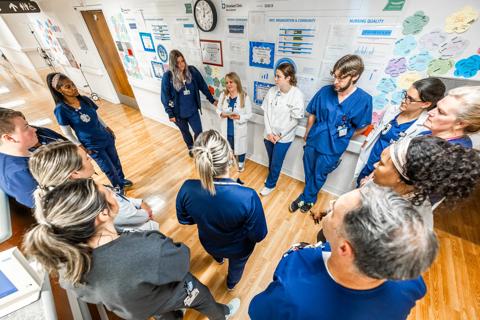
Guidance for creating a relevant framework that reflects organizational values, supports professional practice

Helping patients recognize respiratory changes, navigate treatment barriers and stay connected to their clinical team
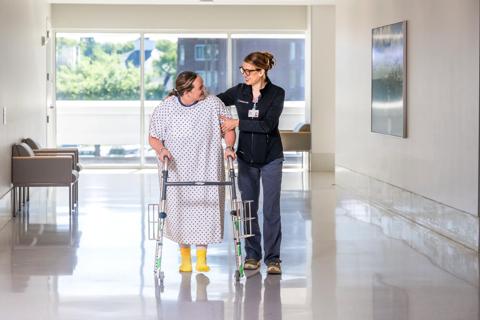
Initiative provides hands-on opportunities to promote early, progressive activity

Continuing to grow by following the right path at the right time

Teaching caregivers to recognize warning signs, de-escalate difficult situations and maintain professional boundaries

Veteran caregivers offer practical wisdom for building confidence and practicing with purpose
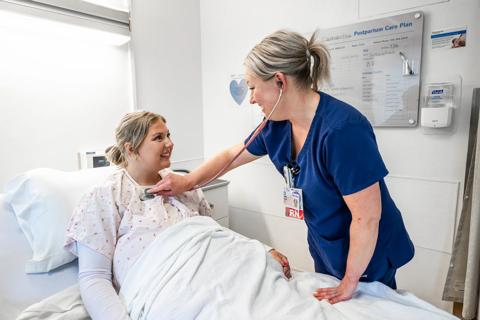
Skill, dedication and a passion for women and children inspire this joy-filled specialty
 Search