Locations:





Cleveland Clinic’s new program uses a cross-institute model to provide complete care for women of all ages and athletic levels
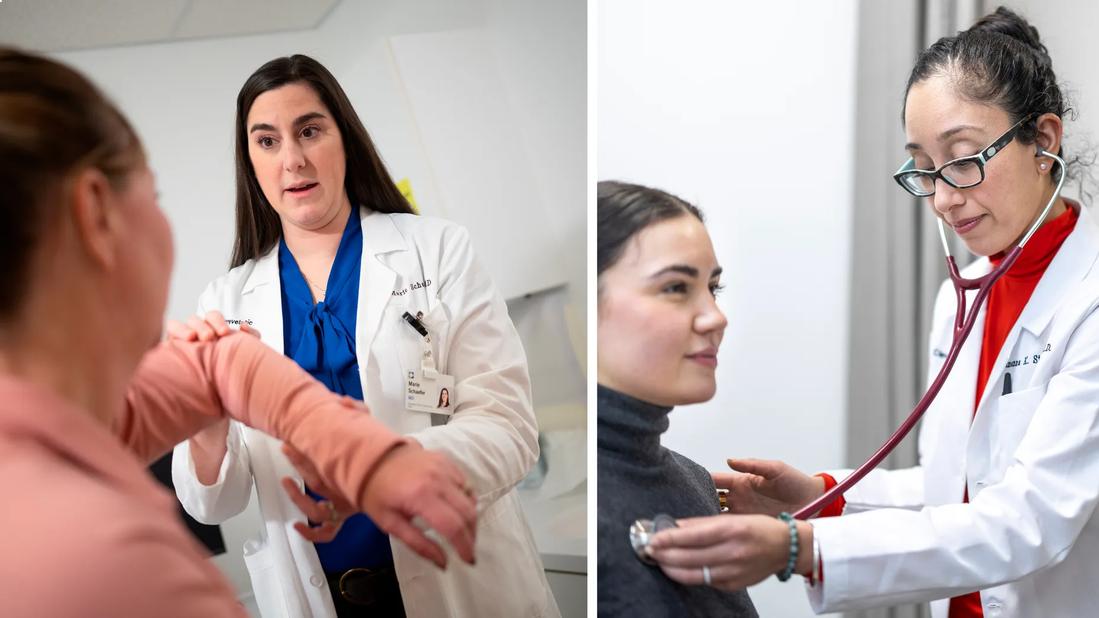
Image content: This image is available to view online.
View image online (https://assets.clevelandclinic.org/transform/45a4ad03-3dc0-4043-95c1-20d0881c0a42/wiser-schaefer-singh)
Dr. Schaefer and Dr. Singh working with patients
Cleveland Clinic has established the multidisciplinary Women’s Integrated Sports, Exercise and Research (WISER) program to more effectively meet the needs of women athletes throughout all stages of life. WISER is the first center to use an integrated care model to address the needs of women and competitive athletes seeking to engage and optimize their performance.
Advertisement
Cleveland Clinic is a non-profit academic medical center. Advertising on our site helps support our mission. We do not endorse non-Cleveland Clinic products or services. Policy
Two of the physicians behind WISER’s development, Marie Schaefer, MD, a sport and exercise physician in Cleveland Clinic’s Department of Orthopaedics, and Tamanna Singh, MD, Director of the Sports Cardiology Center at Cleveland Clinic, discussed the impetus for creating the program along with its goals on an episode of Cardiac Consult.
“Women in sports are not as studied as our male counterparts,” says Dr. Schaefer. “We thought about taking a novel approach to treat women comprehensively, make sure that we include research in this and really get to celebrate the woman athlete.”
“I think only about 6 to 9% of publications actually focus on women athletes specifically,” adds Dr. Singh. “I know that was one thing that the two of us really shared in terms of trying to develop a clinical program that also allowed us to generate an abundance of research so that we can give very specific biological female advice for the athlete.”
The multi-disciplinary team will consist of sports medicine specialists, orthopedists, sport social workers and athletic counselors, sports cardiologists, adolescent medicine specialists, gynecologists, endocrinologists, sleep medicine experts, dermatologists, psychiatrists and psychologists, physical therapists and athletic trainers. The goal with WISER is not to just treat injuries, but to care for active women and support them in ways that meet their specific needs.
One of the program’s distinguishing features is how it provides four clinical care paths for women athletes, all of which are mediated by an Athlete Support Team. The team works to provide comprehensive care and multidisciplinary recommendations for the athlete's long-term follow-up. Dr. Schaefer says that they hope to make this a visit where women can come in and address their problems using a multidisciplinary treatment approach.
Advertisement
“We want to focus on things that are important to women, making sure we get this done in a timely manner and that we have great follow-up,” she says. “Communication is one of our highlights. At the same time, we are also supporting all the awesome women's events in our community.”
Dr. Singh explains, “We really want to be there to support performance, however our women athletes define it. Because it could be someone going into sport, exiting sport, interested in sport, but at every level, we’re trying to incorporate movement. We want to create that optimizing performance kind of care package.”
Since WISER is for athletes of all ages and levels, the drive is really to get women moving. Dr. Singh says that, as a cardiologist, much of what she does with patients is predicated on incorporating physical activity into their lives.
“I always tell my women patients, athletes or non, ‘Hey, we really should get a check on things like your cholesterol, your blood pressure levels, your basic cardiovascular risk factors early on,’” Dr. Singh explains. “That way, when we do enter more of a period of transition with the decline in estrogen, we can either talk about hormone replacement therapy options, or we can talk about intentional movement. We know things like movement and nutrition play a huge role in helping to control some of those transitional symptoms that we see.”
Coming from the orthopaedics and sports health side of things, Dr. Schaefer echoes these sentiments.
“Estrogen is our key player too in how the athlete ages regarding bone health,” she says. “Making sure that as our younger athletes are growing up, and hopefully growing up in our WISER care model, that we're finding ways early on while they have those high supplies of estrogen to really maximize the benefit to bone health. Then, by the time they reach that perimenopause, menopause, postmenopause era, their risk of stress fractures and bone injury is going to be lower as we're paying more attention to it.”
Advertisement
Both physicians reiterate that WISER aims to take a holistic and long-term approach to care. Beyond injury care and prevention, WISER providers are also looking at issues that can affect an athlete's edge or competitiveness, but that also carry through life. Then, as the athlete is transitioning into middle age and late adulthood, providers have an abundance of data so they can really tailor their care approach.
Although WISER is geared towards athletes of all levels, both Dr. Schaefer and Dr. Singh treat athletes at the highest levels. Dr. Schaefer is the head team physician at Cleveland State and a team physician for the Cavs, and Dr. Singh is the team cardiologist for Cleveland State as well as several other colleges and for the Cavs and the Guardians. They both regularly treat professional and former professional athletes. These positions have helped reinforce the importance of such things as cardiac screenings for athletes.
When asked how to optimize cardiac screenings for athletes, Dr. Singh says that the answer is complicated.
“In the sports cardiology network, at least nationally as well as internationally, many of us feel that if you do want to include a cardiac risk assessment or EKG screening, you really have to be intentional about how you are doing that test,” she explains. “I think if you're able to have answers and address that pathway very clearly and remember that anything you do can always have an implication on the athlete, then you can do it right.”
While Dr. Singh doesn’t necessarily advocate for a cardiac risk assessment for every single individual, she believes the way it’s done at Cleveland Clinic, WISER and with her Cleveland State athletes has been quite successful. By targeting very high-risk individuals and interpreting the assessments both timely and accurately, they can perform the assessments in a financially responsible way that helps ensure athletes are hopefully not kept out of play for more than 48 to 72 hours.
Advertisement
Dr. Schaefer says that WISER's coordinated care structure helps them be effective in this.
“Because we have that nice structure, especially speaking on behalf of Cleveland State, where, as a team physician, those are my primary care patients for the next four years, we can follow them continually throughout,” she says. “It’s been an invaluable asset. We've caught a few people who have had risky situations that were able to be addressed, managed and risk-stratified, and they’ve gone on to have really successful careers.”
“We're really looking to take care of women athletes as young as adolescents, and one of my oldest athletes is an 86-year-old triathlete who's still competing,” says Dr. Singh. “I think at least in terms of what we're creating here, we are really excited to meet more women who are excited about sport and movement, and we’re really excited to see where this takes us.”
Appointments with WISER can be made by calling 855.751.2469 or emailing wiser@ccf.org.
Advertisement
Advertisement
Women’s Comprehensive Health and Research Center addresses unmet needs

Helping pediatricians and families make safer, more individualized activity decisions
Even seemingly healthy athletes can be at risk for SCD, making prevention a complex challenge

Findings reinforce the benefits of long-term high physical activity, lower smoking rates and better baseline health

Clinical complexity demands personalized care strategies
Alzheimer’s studies delve into sex-related variances in the expression of the disease

Approximately 500 million people globally are experiencing 'period poverty'
Most return to the same sport at the same level of intensity
 Search