Locations:





Podcast content: This podcast is available to listen to online.
Listen to podcast online (https://www.buzzsprout.com/2250706/13626999)
Beryllium is used widely across a variety of different fields - aerospace, plane building, ship building and everywhere in between. In its inert form, it is safe to touch, but beryllium exposure to the lungs can trigger an autoimmune response called sensitization where the immune system loses tolerance to its own healthy cells.
Advertisement
Cleveland Clinic is a non-profit academic medical center. Advertising on our site helps support our mission. We do not endorse non-Cleveland Clinic products or services. Policy
“Because beryllium is used in so many industries, we really don't know how many workers are truly exposed to beryllium,” says Maeve MacMurdo, MD, a staff pulmonologist at Cleveland Clinic, on an episode of Respiratory Exchange. “They estimate around 150,000 workers, roughly, but in reality, because all these industries use these small amounts kind of here and there, it's probably closer to around 800,000 workers across the United States who are exposed.”
While the HLA-DPB1 gene has been linked to increased risk of developing sensitization, even workers who do not have that mutation can develop sensitization. Those who do carry the gene, though, are more likely to become sensitized when they're exposed. But it's really a mix of the environment, the kind of work being done, the level of exposure and the underlying genetics that all increase and will alter sensitization risk.
“We can screen for sensitization with something called the beryllium lymphocyte proliferation [LPT], which is a blood test,” says Dr. MacMurdo. “It's a test which is very specific but not all that sensitive. It's only run in a couple of labs throughout the country. I think right now, there are three or four labs total, including Cleveland Clinic who can run the LPT because it requires a lot of expertise and interpretation.”
In addition to covering chronic beryllium screening measures, the episode also touches on:
Advertisement
Click the podcast player above to listen to the episode now, or read on for a short, edited excerpt. Check out more Respiratory Exchange episodes at clevelandclinic.org/podcasts/respiratory-exchange or wherever you get your podcasts.
Raed Dweik, MD (podcast host): You mentioned a couple of things I want to follow up on. One is exposure, continued exposure. When do you tell workers to no longer be exposed to beryllium? I know it's a tricky topic, whether they have sensitization or disease, whether they can get another job or not, so there are a lot of factors to think about. So, how do you approach that with your patients?
Dr. MacMurdo: It's really a patient-centered discussion because, as you said, it's complicated. My general rule of thumb is that if you're sensitized, we know there is probably an increased risk of developing chronic beryllium disease if there is ongoing exposure. So ideally, you would leave the workplace. I do have a lot of patients who don't leave the workplace at that point, and again, as I said, these are skilled jobs, and it's sometimes challenging to say, you know, I might have a risk of disease, let me change my entire life.
Once you have chronic beryllium disease, I'm pretty firm that really, we need to get you out of the workplace because it's very hard to treat and control chronic beryllium disease if you've got ongoing exposure to beryllium. Not everyone does, but that's my recommendation.
I think one thing that's been really helpful and what I'm really grateful for is the [Energy Employees Occupational Illness Compensation Program Act] EEOCPA, which, sorry, another acronym. Basically, the reinvestment policy for people who've got beryllium-related disease, which is a government policy, but basically, it's a program that reimburses these workers. It helps them get financial support for ongoing screening. And it's got a really well-streamlined protocol to follow to get workers enrolled and registered, which makes it a lot easier.
Advertisement
I have workers who go for other pathways, like the black lung pathway, which requires a lot of litigation, a lot of back and forth. The EAOCPA, again the beryllium pathway, is much more straightforward. It's really, do you have the disease? OK, here you go. And that makes it a lot less stressful both for the workers and for employers.
Dr. Dweik: My conversation about exposure with patients is usually that we don't have direct evidence that continued exposure will worsen the disease, but the absence of that evidence doesn't mean it's not happening. It just makes sense clinically and medically that if you're allergic or sensitized to something, to just avoid it. You know, I think, uh, that's my general advice.
Dr. MacMurdo: There's no slam dunk evidence, but there are some cohorts, particularly people who have heavy exposure are machinists, where we saw that those who had ongoing exposure did have an increased risk of CBD. So I think that's not necessarily a slam dunk, but I think it's enough that I would say, if it were me, I would get out of there.
Dr. Dweik: Clearly, I think you and I would both recommend removal from exposure. What else? How else can you treat these patients, and do you always treat them, or do you sometimes watch and sometimes treat? What's your approach?
Dr. MacMurdo: Again, I think this is where having a lot of experience and seeing all these patients is really helpful. So, I don't always treat. If people are not symptomatic, if they feel good, if their pulmonary function is stable, then I often will just watch and monitor. But if things are progressing or if things are changing, even if things are still normal, I often start discussing whether we should start treatment.
Advertisement
First-line treatment is typically steroids or prednisone, and that usually works really well. I've got a lot of patients I'm seeing currently who have got more of a small airway asthma-like phenotype, and I use a lot of inhaled steroids, too, which has actually been helpful in reducing the steroid dosing down. Then, like sarcoidosis, there are steroid-sparing agents that actually also work really well here. Methotrexate, but I don't typically need to go that far. Depending on the MERN, I mean, there are a lot of options. This is one of those diseases that really is treatable. Very much so.
Dr. Dweik: It seems like it all works around immunosuppression basically because you explained it a little bit at the beginning, but maybe it's worth revisiting as we talk about treatment, that beryllium itself does not damage the lung. It's the lungs' response, the immune system response to the beryllium that does the damage. Most treatment really focuses on reducing the immune response to beryllium.
Dr. MacMurdo: Exactly. I basically tell patients that they have an autoimmune disease. It's not the beryllium that's causing a problem, it's the beryllium that triggered the pathway which is now active, and we need to turn it off.
Advertisement
Advertisement

A look into recent developments in the diagnosis of LAM and its clinical presentation

A review of treatment options for patients who may not qualify for surgery
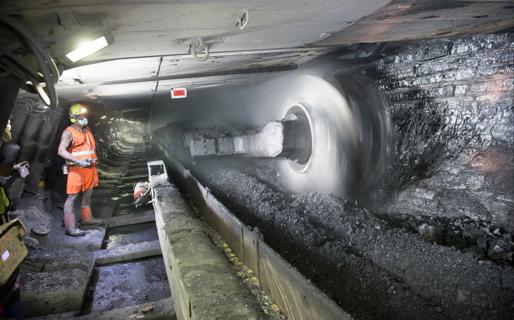
Rising rates in young miners illustrate the need for consistent prevention messaging from employers and clinicians

Multidisciplinary focus on an often underdiagnosed and ineffectively treated pulmonary disease

Management and diagnostic insights from an infectious disease specialist and a pulmonary specialist
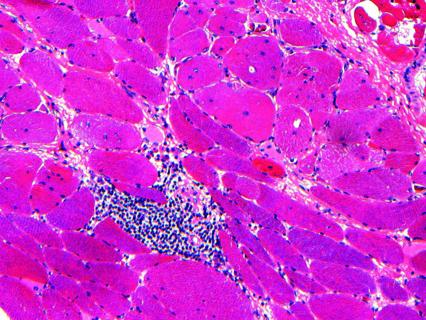
Treatments can be effective, but timely diagnosis is key
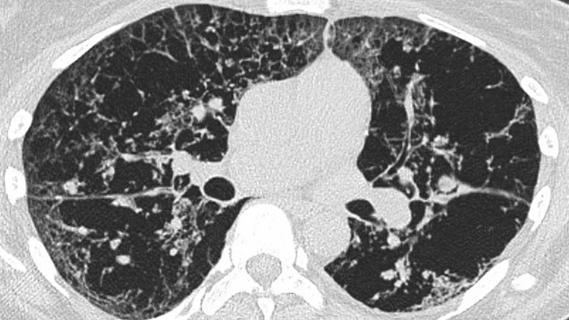
A Cleveland Clinic pulmonologist highlights several factors to be aware of when treating patients
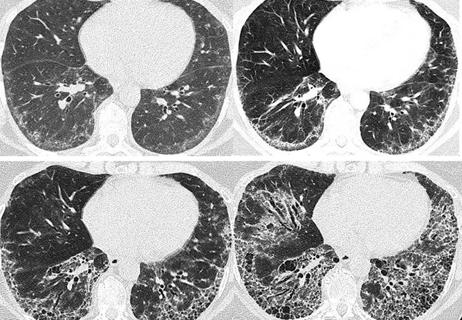
Patient experience improves with a multidisciplinary approach
 Search