Locations:





A new CME opportunity in Chicago, May 15-16

Image content: This image is available to view online.
View image online (https://assets.clevelandclinic.org/transform/e95390ce-bdb0-43ea-8238-e0cf47a3ba51/young-adult-heart-exam-2219267638)
Young adult having heart exam
Young adults with congenital or inherited heart disease are often overlooked in traditional medical training. These patients need specialized care that goes beyond managing their conditions. They require a holistic approach that supports their long-term health and quality of life.
Advertisement
Cleveland Clinic is a non-profit academic medical center. Advertising on our site helps support our mission. We do not endorse non-Cleveland Clinic products or services. Policy
Cleveland Clinic’s new CME course, Caring for Young Adults With Heart Disease, is designed to help clinicians learn how to provide comprehensive, patient-centered care during this critical life stage. The course will be held for the first time, Friday-Saturday, May 15-16, at the InterContinental Hotel Chicago Magnificent Mile. Presentations will run all day on Friday and end around noon on Saturday.
“While cardiovascular care continues to advance for children and older adults, young adults with heart conditions remain under-recognized,” says course director Milind Desai, MD, MBA. “There is a critical gap in addressing the complex needs of these individuals, which can include managing electrophysiology devices across a lifetime, concerns about pregnancy, and setting appropriate targets for athletics and exercise.”
Conducting the course will be more than a dozen Cleveland Clinic Heart, Vascular & Thoracic Institute faculty, including specialists in cardiac surgery, adult congenital heart disease, pediatric cardiology, electrophysiology, heart failure, cardio-obstetrics, interventional cardiology, cardiovascular imaging and more.
Friday sessions will offer a comprehensive look at managing young adults with:
Saturday sessions will provide an overview of:
Advertisement
Each of the nine sessions will begin with a case study, continue with multiple brief presentations, and conclude with panel discussion and attendee Q&A.
“Young adults with heart disease are a distinctive and often vulnerable patient population,” says course director Lars Svensson, MD, PhD, Chief of Cleveland Clinic’s Heart, Vascular & Thoracic Institute. “By bridging the divide between pediatric and adult cardiovascular care, our course’s specialized curriculum will empower providers to address the complex challenges faced by young adults.”
The event’s unique array of presentations will provide a comprehensive view of care, intended to improve patients’ long-term outcomes, as indicated by these presentation titles:
“By exploring key areas like genomics, congenital differentiation and advanced therapies, this course will help clinicians identify nuanced presentations, personalize care plans, and truly optimize lifelong health for young adults with heart conditions,” says course director Christine Jellis, MD, PhD, MBA.
For more information or to register, visit ccfcme.org/YAHeart.
This activity has been approved for AMA PRA Category 1 Credit™.
Advertisement
Advertisement
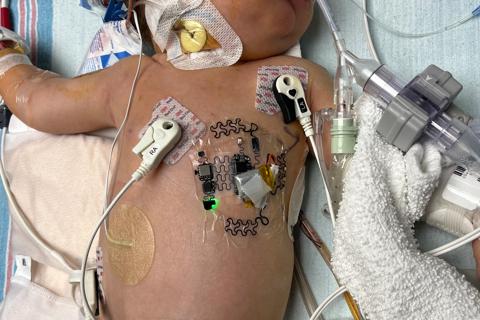
Innovative hardware and AI algorithms aim to detect cardiovascular decline sooner
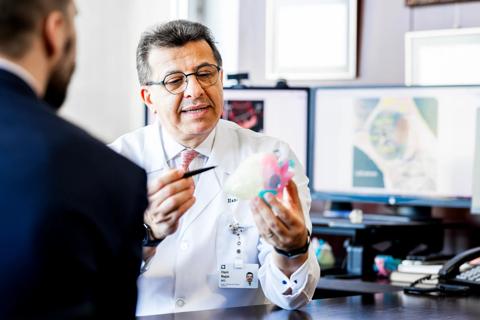
Experts advise thorough assessment of right ventricle and reinforcement of tricuspid valve
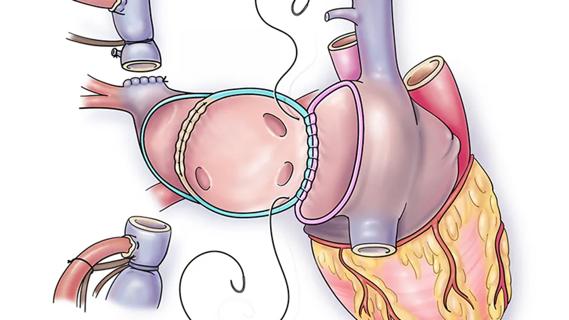
Reproducible technique uses native recipient tissue, avoiding risks of complex baffles
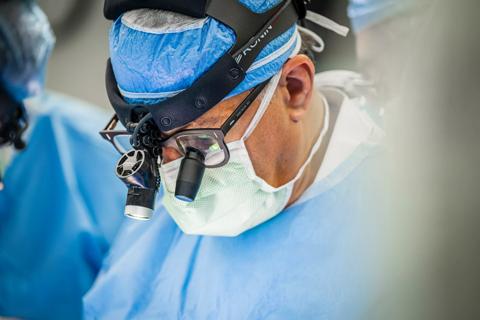
A reliable and reproducible alternative to conventional reimplantation and coronary unroofing

Program will support family-centered congenital heart disease care and staff educational opportunities

Case provides proof of concept, prevents need for future heart transplant
Science advisory examines challenges, ethical considerations and future directions
Center uses advanced imaging techniques to optimize valve repair strategies
 Search