Locations:





Why shifting away from delayed repairs in high-risk athletes could prevent long-term instability and improve outcomes
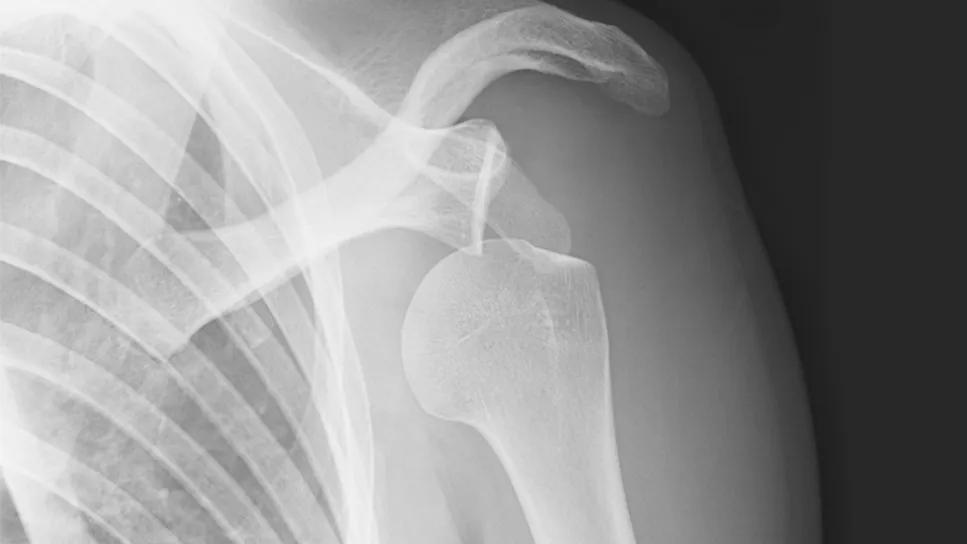
Image content: This image is available to view online.
View image online (https://assets.clevelandclinic.org/transform/84101b9e-7b72-4a46-a2cd-5a5b229089cb/dislocated-shoulder-xray-182240772)
Shoulder dislocation x-ray
“The shoulder joint itself is an inherently unstable joint,” says Anthony Egger, MD, an orthopedic surgeon in Cleveland Clinic’s Sports Medicine Department. “So, when it experiences trauma, such as in contact sports, for example, it becomes increasingly unstable. Historically, the treatment approach for an in-season athlete with a shoulder dislocation was to rehab them to a level where they could return to play and then repair the shoulder after the season. We’re now seeing a shift towards earlier repair — which, in my opinion, is a very good thing.”
Advertisement
Cleveland Clinic is a non-profit academic medical center. Advertising on our site helps support our mission. We do not endorse non-Cleveland Clinic products or services. Policy
Dr. Egger co-authored a 2023 article published in the American Journal of Sports Medicine, which found that nearly one-third of adolescents who had undergone arthroscopic Bankart repair either required revision surgery or reported subjective feelings of instability.
“When I was in training, we did a lot of hamstring ACL repairs, and the failure rate was around 15-20%,” says Dr. Egger. “Nowadays, most high-volume ACL surgeons prefer quadriceps tendon reconstruction over hamstring autograft if choosing a soft tissue graft option, because the latter demonstrated unacceptably high failure rates. Multiple studies, including our 2023 research, have shown at least a 30% failure rate for adolescent shoulder repairs — significantly higher than rates linked with hamstring ACL reconstruction. We were proactive in finding a solution to reduce ACL reconstruction failures, and now we need to do the same with shoulder dislocations.”
Dr. Egger believes one of the simplest solutions is to consider recommending shoulder dislocation repair surgeries earlier. He explains that when you consider all the relevant risk factors—age, sport, hand dominance, sex, etc. — and look at them in risk-factor calculators, there are athletes who have an extremely high chance of reinjury.
“We’ve seen studies indicating that as the number of dislocations increases, the success rates for arthroscopic repair drop precipitously,” he explains. “So, we can look at risk factors and know that we’re treating an athlete who has a near definite chance of reinjury. This is not a benign issue, as each time the shoulder dislocates, more damage is done to the joint. Due to this, there is an inverse relationship between the number of dislocations and surgical success.
Advertisement
Dr. Egger admits that these conversations are not easy, though.
“We’re treating adolescents who often have a hard time looking beyond the now and wanting to get to play as quickly as possible,” he explains. “But it's not just focusing on how we can get them back to doing what they want to do now safely, but we also have to look forward and remember that they’re going to be an adult someday. We need to have educated conversations with them, and especially with their family as well. This is a huge shared decision-making conversation and there can be some back-and-forth with it. I’ll hear, “OK, well, he feels really good, so why does he need surgery?”
Dr. Egger explains that he often shows his patients their MRI as one way to illustrate potential ongoing damage. Dr. Egger also notes that on exam, it’s important for clinicians to watch out for subtle signs of ongoing damage, such as apprehension, when patients are put in certain positions and begin to feel discomfort or feelings of instability.
“I think that my goal as a physician is to try and provide them with an accurate diagnosis and literature-supported treatment options,” says Dr. Egger. “So, we discuss the chances of re-dislocating, both with and without surgery, and I let them know that even with surgery, I can’t guarantee they’re never going to dislocate again, but it significantly lowers their chances. My analogy is that we’re taking an hourglass where each grain of sand represents their chance of dislocating, and we’re flipping it. There are still some grains of sand at the bottom now, but it’s significantly less than what it was before surgery.”
Advertisement
Dr. Egger believes his goals as an orthopaedic surgeon specializing in treating pediatric and adolescent athletes are two-part. His first goal is to help the patient safely return to play. His second goal is to limit the chance of re-dislocation in the future.
“I tell parents, it's almost a certainty that if they go back to contact sports without surgery, they're going to have another instability event,” he says. “I can't tell them if it's going to be the first game back. I can't tell them if it's even going to be this season, but it's a near 100% chance in that under 18 years old age group of having recurrent instability if they're returning to those sports.”
For athletes who do not get surgery, they may be able to return to play faster, but there is quite a bit of long-term risk involved. A football player, for example, who returns to play could still experience several subtle subluxations throughout the season and continue to damage the cartilage and/or bone.
“There are also cases of athletes who have had several dislocations, so they can kind of pop it back in themselves because they've already done damage to the labrum, stretched out the capsule and so they can pop it back in,” says Dr. Egger. “There are several times where I have an athlete who tells me they want to go back and finish the season, and then they come back to me a couple of months later, they've now had six or seven dislocations and they've chipped off a portion of their glenoid. So now we’re having a very different conversation because the rate of arthroscopic success for patients with critical bone loss is very low. Now we start having to talk about doing open bone procedures, and so it starts to get much more complex.”
Advertisement
Although patients remain central to decision-making regarding shoulder care, Dr. Egger notes that discussions among high-volume shoulder clinicians have increasingly focused on earlier intervention and considering prompt surgical solutions. Surgical techniques have improved success rates compared to earlier repairs.
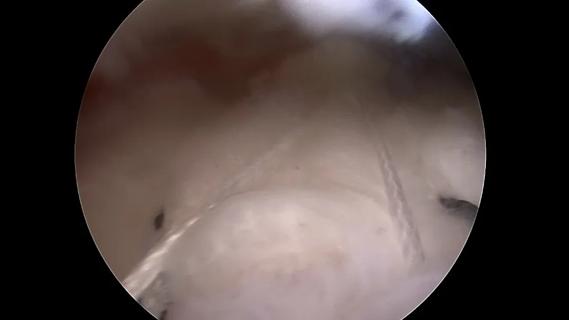
“I think with arthroscopic surgery, especially when we can get to patients early enough, and there's not a ton of bone loss, we've just become so much more advanced in techniques in terms of what we’re doing,” says Dr. Egger. “One of these reasons is the anchors and our ability to access the lower parts of the capsule. We’ve shifted to smaller anchors so that we can put more in, creating more rivet points to which to secure the labrum back. Those anchors also allow us to use a knotless or retentionable technique that helps us really secure the shoulder. There have been several really good techniques that have come out over the past five years or so that have made a major impact, including the addition of remplissage, or a technique to address the bone loss on the humerus.”
At Cleveland Clinic, Dr. Egger and the orthopaedic surgery team take an individualized approach to care when it comes to shoulder instability repair. “We really try to look at the patient and their interests,” he says. “For example, if we have a high-school patient who injured their shoulder in gym class but doesn’t otherwise play contact sports and it’s their first shoulder injury, then that’s probably a kid who most likely would do well with rehab. But I still have the surgery conversation with them because we know that life happens — they could injure themselves at the pool or playing around with friends. But if this is their second traumatic shoulder dislocation, it’s usually an automatic surgery recommendation.”
Advertisement
However, he notes that when treating a high-school football player with a shoulder dislocation, he takes a much different approach. For this patient, whose shoulder is likely to be subjected to repeated trauma throughout the season, he will now discuss and relay the advantages to surgery after the initial injury.
“At the end of the day, we know these are difficult conversations to have with patients and their families, but we just want to set these kids up for success — both now and in the future,” says Dr. Egger. “We know how the rate of surgical success diminishes with each shoulder dislocation. I think the goal is to get this information out to the public so that families can make informed decisions. The 30% instability rate is not an acceptable number to me, and even though there are many unmodifiable risk factors that we, as surgeons, cannot control in these types of cases, we can try to control the quality of the shoulder tissue and how good the repair is. I think treating surgery as a first-line option is a way we can do this and help increase the success of the operation.”
Advertisement
Innovative procedure offers less-invasive alternative to Latarjet procedure
Conventional arthroplasty performs better than reverse arthroplasty for patients with an intact rotator cuff
Sinus tracts can occur years later and not near the incision site
CT imaging using radiopaque markers can help assess healing after surgery
Iliac crest structural autograft repairs large, uncontained defect
Ultrasound-guided debridement for selected patients with persistent symptoms
Cleveland Clinic’s new program uses a cross-institute model to provide complete care for women of all ages and athletic levels
A practical look at patient selection, implant choice and the unanswered questions around long-term value
 Search