Locations:





Collaboration must cross borders and disciplines
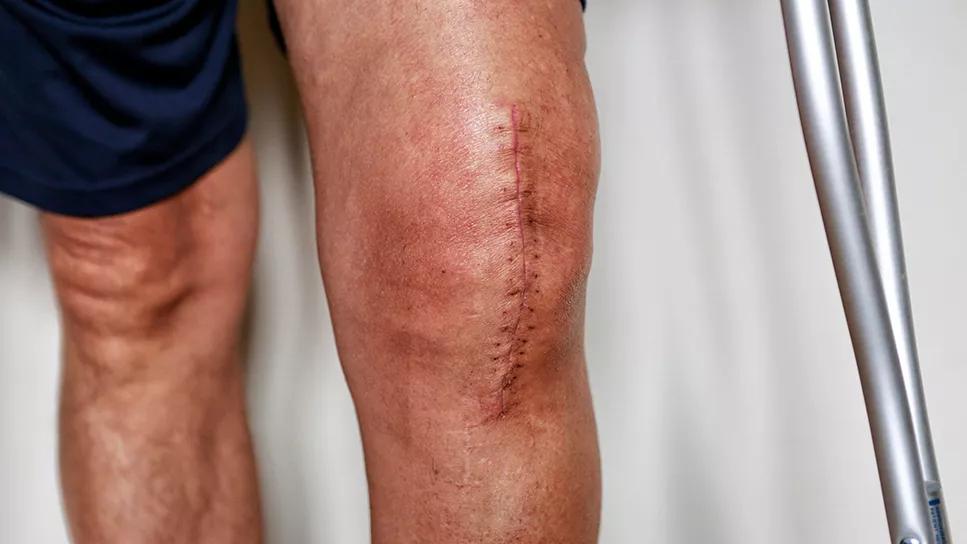
Image content: This image is available to view online.
View image online (https://assets.clevelandclinic.org/transform/57dd1d50-e7e2-479c-b8c5-f55a0ba37cf6/24-ORI-4538171-CQD-967x544-1-jpg)
Periprosthetic joint infection after knee replacement
Periprosthetic joint infection (PJI) has five-year mortality rates between 15% and 25%. That’s higher than the rates for early-stage breast and prostate cancers and similar to the rates for colorectal and blood cancers.
Advertisement
Cleveland Clinic is a non-profit academic medical center. Advertising on our site helps support our mission. We do not endorse non-Cleveland Clinic products or services. Policy
However, these numbers don’t reflect the full burden of PJI, says Cleveland Clinic orthopaedic surgeon Nicolas S. Piuzzi, MD.
“Patients experience loss of strength, confidence and mobility when they have PJI,” he says. “They become fatigued — physically, emotionally and financially — by repeat surgeries. The burden affects medical centers and staff as well. Around the world, we’re seeing the same devastating effects of infection after joint arthroplasty.”
For more than a decade, the orthopaedic surgery community has been exploring new surgical and antibiotic therapies to address PJI, but patient outcomes haven’t improved much.
“There are a lot of unanswered questions, and we keep struggling with how to manage PJI because there aren’t established standards,” Dr. Piuzzi says.
A recent international collaboration of experts has led to a review article, published in The Journal of Bone and Joint Surgery, that captures the current global state of PJI. Rather than serving as a consensus statement, the article presents a snapshot of worldwide trends, challenges and evolving practices in the diagnosis and management of PJI, highlighting similarities and differences across regions.
“We wanted to bring a global perspective to the issue, to understand how physicians and patients around the world face similar challenges, see what we can learn from each other, and collect insights that we can bring back for our patients,” says Dr. Piuzzi, who was lead author of the article.
The article highlighted how:
Advertisement
PJI care is difficult to standardize because PJI is complicated, says article coauthor Anabelle Visperas, PhD, one of the leading PJI scientists at Cleveland Clinic and a researcher specializing in immunology and orthopaedics.
“One major problem is that we don’t understand infection very well,” she says. “A major, often unrecognized component is the host, the patient. Each patient is different, and even if you know the pathogens involved in their infection, you still don’t know how their body will react.”
Defense mechanisms are highly personalized, she says. To better understand treatments, researchers need to better understand how individual bodies fight infections.
In addition, surgical and antibiotic strategies vary globally because the strains of bacteria are different in different regions.
Dr. Visperas predicts that advances in understanding host immune response will be a big development in PJI care over the next decade. Dr. Piuzzi agrees and adds that the ability to modulate biology in different ways and personalize treatment also will change PJI care.
“Treatments will challenge convention and come from outside our current tool kit,” he predicts. “There are some novel therapies that we’re testing now that may prove to be effective in certain settings. However, testing the efficacy and safety of these therapies is hard because the cohorts of patients with PJI are so small.”
Progress in improving PJI care requires multidisciplinary and likely global collaboration, say the researchers.
Advertisement
“We are not going to achieve this in isolation,” Dr. Piuzzi says. “This isn’t a fight we can win only in infectious disease or orthopaedics or research. We need to get out of our comfort areas and interact with cross-specialty teams to find answers collectively.”
That approach has driven advances in oncology, he notes. The same level of multidisciplinary care is required for PJI.
“Our review article is a call to action for medical institutions, funding agencies and philanthropic groups that are willing to collaborate to solve the PJI problem and provide an environment of meaningful change for patients,” Dr. Piuzzi concludes. “PJI isn’t just a complication of joint surgery, it’s a chronic, life-changing disease. It’s up to us to restore hope and quality of life for our patients.”
Advertisement
Advertisement
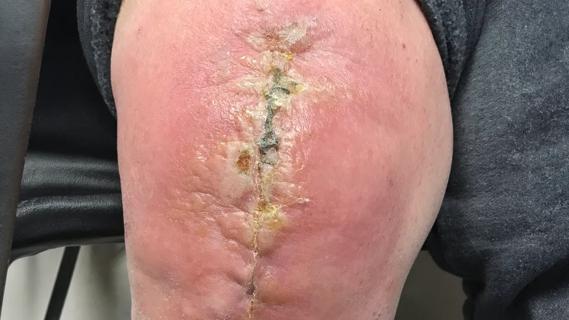
Protein expression in synovial fluid indicates patients’ immune factors may be involved

Clinical complexity demands personalized care strategies
Higher than 5-year rates for prostate cancer and melanoma and about the same as breast cancer
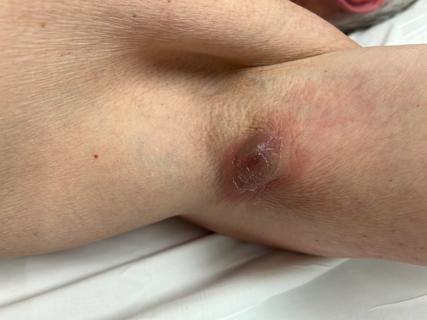
Sinus tracts can occur years later and not near the incision site

Researchers hope it may one day help patients avoid explantation surgery
Symptoms complement one another

Cleveland Clinic’s new department chair discusses clinical priorities, prevention, stewardship and the evolving role of technology

Even patients with reported penicillin allergies can receive it without increased complications
 Search