Locations:





Nursing quality experts help drive policies and practices designed to meet the highest clinical standards
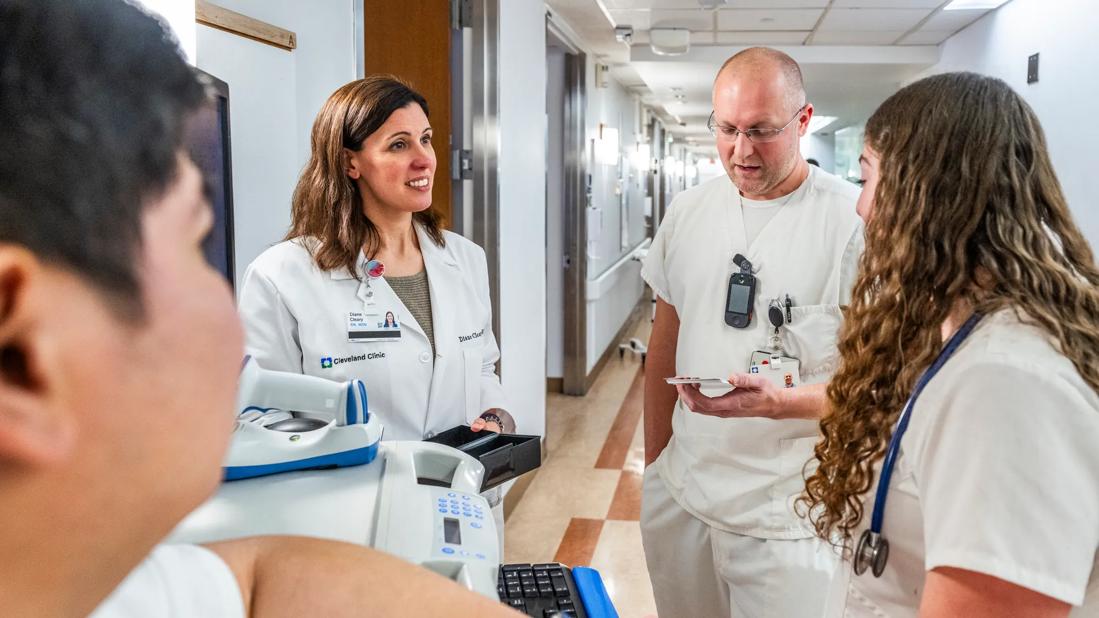
Image content: This image is available to view online.
View image online (https://assets.clevelandclinic.org/transform/232d858a-1dc2-4c29-929a-05166035b86e/NUR_7707509_2-04-26_126_MLC)
Nurses talking in hallway
Quality nurses – crucial members of any healthcare team – are experts in assessing and analyzing data, implementing quality improvement initiatives and measuring outcomes. Their work ensures adherence to best practices and evidence-based guidelines, enabling high-quality clinical standards and safe patient care.
Advertisement
Cleveland Clinic is a non-profit academic medical center. Advertising on our site helps support our mission. We do not endorse non-Cleveland Clinic products or services. Policy
“What’s most compelling about working in nursing quality is the specialty’s widespread impact on patients and caregivers,” says Laura Pease, DNP, RN, RN-BC, NEA-BC, Senior Director, Enterprise Nursing Quality, Cleveland Clinic. “Quality nurses work with nursing teams to implement interventions and areas of improvement that ultimately affect every patient seen.”
Pease oversees Cleveland Clinic’s Nursing Quality Program Managers, who evaluate the quality of nursing care delivered at all Cleveland Clinic hospitals. They monitor, analyze and benchmark nurse-sensitive indicators — elements of care directly affected by nursing practice — against the National Database of Nursing Quality Indicators® (NDNQI).
An important aspect of their job is to understand nursing practice and the expected standards of care to ensure that high-quality nursing is consistently delivered. “No matter where a patient goes in our enterprise, they should receive the same nursing care,” Pease explains.
Nursing Quality Program Managers are embedded within hospital nursing leadership teams and partner with nurse leaders to develop action plans that effect change and embrace improvement opportunities. They work alongside clinical nurse specialists and other caregivers who focus on policies and practices that reflect the highest nursing standards. They also collaborate with safety, patient experience, continuous improvement and accreditation professionals.
“There’s a lot of collaboration in a team of teams environment because our work often extends beyond nursing,” Pease says. “You really get a global picture of how nursing units and hospitals can come together to standardize care for patients.”
Advertisement
To effectively enhance care quality, quality nurses aim to promote progress in manageable and meaningful ways. “Our job is not accountability — it’s more about using our influence to advance the professional practice of nursing,” Pease explains. “We want everyone on our quality ‘bus’.”
Because quality nurses are expected to identify solutions to improve care, they also educate their clinical nursing colleagues, fostering collaboration to advance best practices.
“I love working with teams to find solutions to difficult problems with the understanding that improving nursing practice affects every patient we serve,” Pease adds. “No, Nursing Quality Program Managers don’t work at the bedside every day, but we make sure the systems and processes are robust so those who do provide direct care can do it the best way possible."
Pease also notes the importance of earning Magnet® or Pathways to Excellence® recognition from the American Nurses Credentialing Center (ANCC). “Every Cleveland Clinic hospital either holds one of these distinctions or is on the journey,” she states.
She further explains, “To earn this level of excellence, organizations must consistently perform better than their benchmarked peers. The achievement is a testament to how important this work is. Nursing quality drives teams to understand how they are performing and where improvements are needed.”
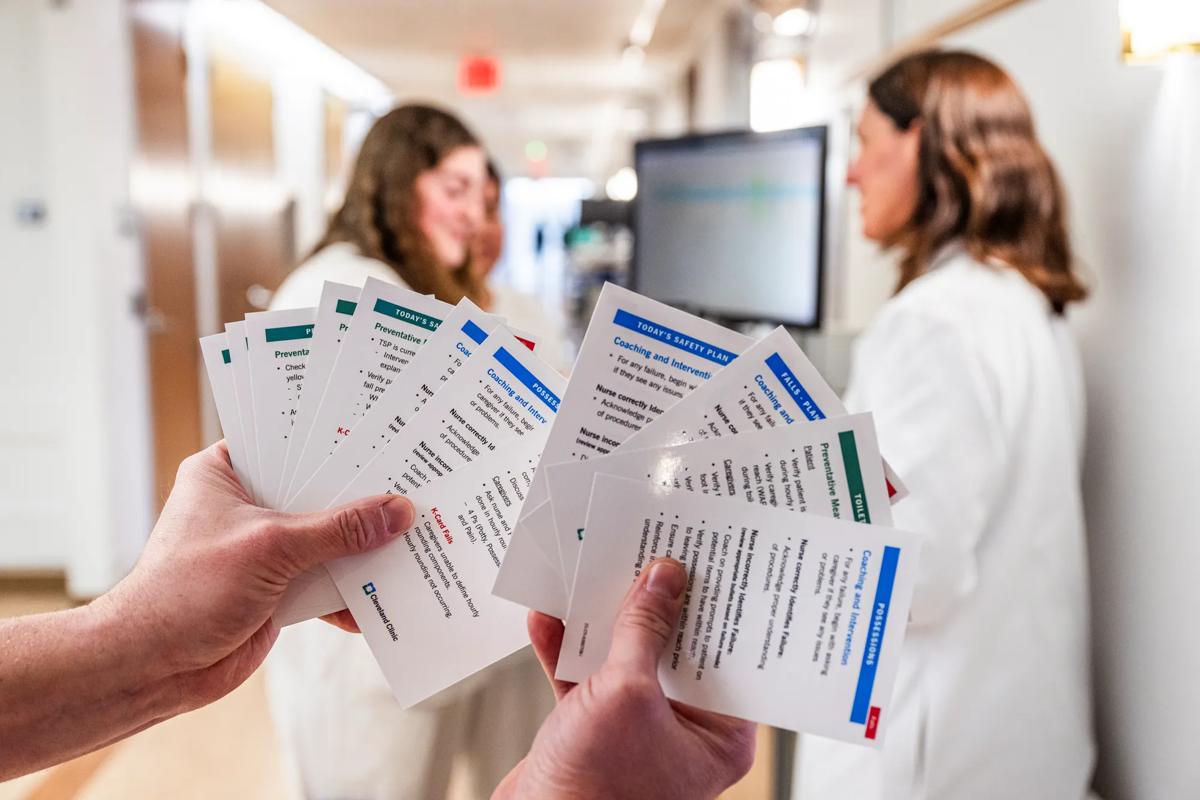
Image content: This image is available to view online.
View image online (https://assets.clevelandclinic.org/transform/b5e8184a-c546-48c4-8606-be353621cc41/NUR_7707509_2-04-26_152_MLC)
Quality nurses are often tasked with developing policies and action plans that effect clinical change.
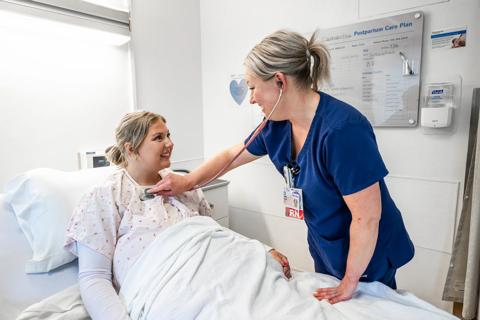
Cleveland Clinic Nursing Quality Program Managers frequently round on inpatient nursing units, gathering information, offering education and addressing concerns or questions at the bedside.
Advertisement
“We try to provide a combination of data and personal touch,” Pease says.
She adds that the specialty requires many of the skills seen in bedside nurses, including a deep understanding of clinical practices, strong analytical skills, attention to detail, critical thinking, problem-solving and a thorough understanding of healthcare regulations and patient safety.
“No one knows nursing like nurses, so it’s important that those who are trying to advance the profession understand the practice,” Pease says.
Pease marvels at how far quality in healthcare has come since she began her nursing career 36 years ago. “When I first started, we weren’t tracking quality metrics; we were just taking care of patients,” she admits.
In particular, she cites the widespread influence of To Err is Human, a landmark book about the prevalence and consequences of medical errors.
“The transformation began after that report was released in 1999. Now, quality is a top priority.”
While healthcare quality is improving every day, Pease notes there is more work to be done.
“Until we get it 100% right, we’ll keep moving forward,” she says. “I’m excited to see how technology will support our efforts in the coming years and how the role of quality nurses will continue to grow as healthcare becomes more complex and digital.”
Advertisement
Advertisement
Translating clinical questions into meaningful, sustainable change
Guidance for creating a relevant framework that reflects organizational values, supports professional practice
Helping patients recognize respiratory changes, navigate treatment barriers and stay connected to their clinical team
Initiative provides hands-on opportunities to promote early, progressive activity
Continuing to grow by following the right path at the right time
Teaching caregivers to recognize warning signs, de-escalate difficult situations and maintain professional boundaries
Veteran caregivers offer practical wisdom for building confidence and practicing with purpose
Skill, dedication and a passion for women and children inspire this joy-filled specialty
 Search