Locations:





Podcast content: This podcast is available to listen to online.
Listen to podcast online (https://www.buzzsprout.com/2256206/19635994)
Workplace violence was once viewed by many medical professionals as simply “part of the job.” Today, that mindset is changing as healthcare organizations, leaders and regulatory bodies recognize the need to create safer environments for both patients and caregivers.
Advertisement
Cleveland Clinic is a non-profit academic medical center. Advertising on our site helps support our mission. We do not endorse non-Cleveland Clinic products or services. Policy
Experts stress the value of de-escalation techniques, situational awareness and clear communication when attempting to calm an agitated patient or visitor.
"By setting clear limits, offered with empathy, and providing patients with appropriate choices, caregivers can help diffuse tense situations before they reach a boiling point," explains Ashley Withrow, PhD, Director of Cleveland Clinic’s Center for Workplace Violence Prevention and Caregiver Well-Being. "Although it's essential to establish trust and reassure patients that they are safe, caregivers should know that empathy does not mean tolerating inappropriate behavior."
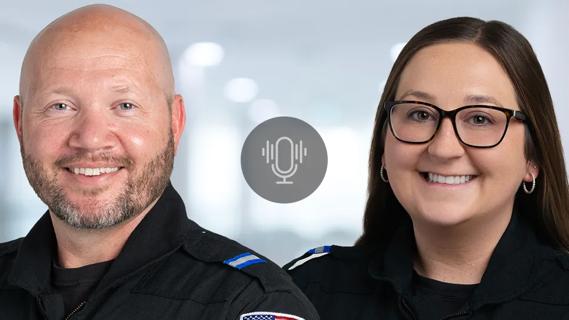
In this episode of Nurse Essentials, Dr. Withrow is joined by Erica Shields, MBA, BSN, RN, NE-BC, Associate Chief Nursing Officer for Emergency and Behavioral Health Nursing and co-chair of the Enterprise Workplace Violence Committee. The pair explores how caregivers can recognize early warning signs of workplace violence, employ de-escalation strategies and establish compassionate boundaries. They also emphasize the importance of teamwork, reporting incidents, leadership support and resources that help caregivers recover and feel safe after an incident.
Click the podcast player above to listen to the episode now, or read on for a short, edited excerpt. Check out more Nurse Essentials episodes at https://my.clevelandclinic.org/podcasts/nurse-essentials or wherever you get your podcasts.
Podcast host Carol Pehotsky, DNP, RN, NEA-BC: Are there certain clinical settings or circumstances that are higher risk for violent incidents, and what warning signs indicate that tensions may be escalating?
Advertisement
Shields: That's a great question, Carol. In the past, most of these events were said to be happening in emergency departments or behavioral health units — but the risk now extends to all of our care areas. We have seen an increase in our med-surg units, our ICUs...and even at the front desk and lobby areas. When patients are waiting, they can become frustrated, and that can lead to verbal and sometimes physical outbursts.
I think it can be a scary time for patients and visitors who come to our organization seeking care. They may not understand what's happening, and their anxiety is high. People can feel they've lost control, which can [heighten] emotions and lead to [violent behavior].
One warning sign is verbal — a raised voice...pressured speech. We might also see uncomfortable body language like pacing or clinched fists.
Pehotsky: How can we help caregivers remain empathetic while maintaining their professional boundaries?
Dr. Withrow: Well, I think the first step is reminding our caregivers that they are allowed to set those boundaries. People come into the field thinking their most important responsibility is taking care of patients — and that is absolutely true, but there are [limits]. [Cleveland Clinic's] ombudsman often says, "There are ways to set boundaries with empathy." So, we work closely with our ombudsman and nursing education teams to teach our caregivers how to do that.
First, we tell them to communicate within our framework: start with heart...respond with heart...but be able to set clear limits and communicate them up front and early. As much as we can, we want to offer the patient a choice...to help them regain a sense of control. They are likely frustrated and struggling [to absorb] information in this difficult setting. So, you might say something like, "You have a choice. We can continue this call now, or you can call me back later when you're less emotional."
Advertisement
We also acknowledge that workplace violence is an issue that affects every caregiver across all spaces. In fact, we're emphasizing these same skills when training nonclinical caregivers and those who work with patients exclusively over the phone.
Advertisement
Advertisement
Using meticulous preparation and teamwork to manage critically ill patients in constantly changing environments

Translating clinical questions into meaningful, sustainable change
Guidance for creating a relevant framework that reflects organizational values, supports professional practice

Helping patients recognize respiratory changes, navigate treatment barriers and stay connected to their clinical team
Initiative provides hands-on opportunities to promote early, progressive activity

Continuing to grow by following the right path at the right time

Veteran caregivers offer practical wisdom for building confidence and practicing with purpose
Skill, dedication and a passion for women and children inspire this joy-filled specialty
 Search