Locations:





Scribing system helps create more face-to-face interactions
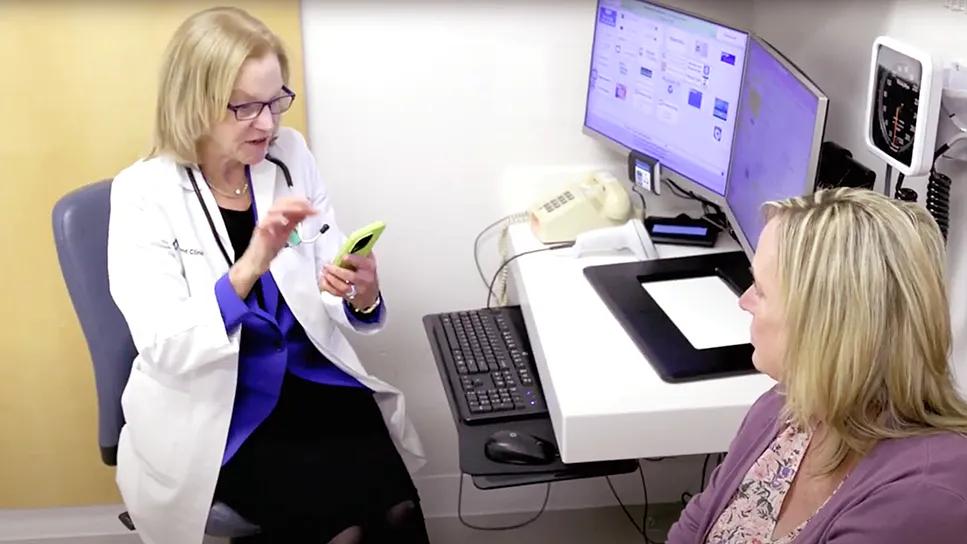
Image content: This image is available to view online.
View image online (https://assets.clevelandclinic.org/transform/6fefc504-ea29-48ec-bcba-eadb1159b0c4/AbelsonAI1)
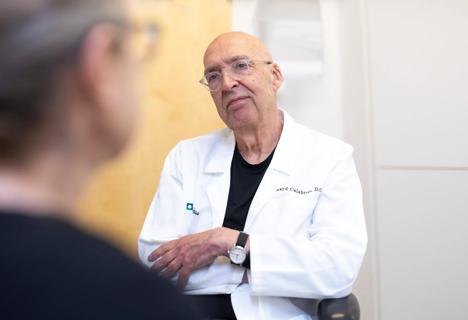
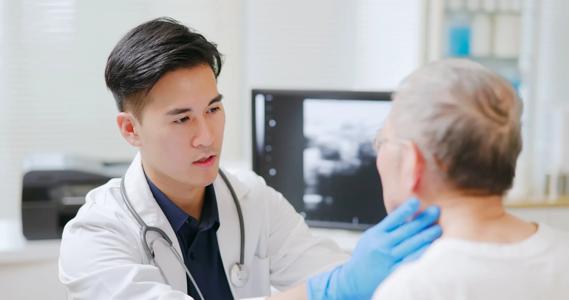
Doctor using AI scribing tool during patient meeting
By Abby Abelson, MD
I walk into the exam room and start the visit.
Advertisement
Cleveland Clinic is a non-profit academic medical center. Advertising on our site helps support our mission. We do not endorse non-Cleveland Clinic products or services. Policy
Over 30 years in medicine, I have had the honor of caring for patients with chronic rheumatic diseases and each day opening the door to new patients with multisystem immune-mediated conditions. Time spent with patients at each visit has felt like a gift, but the hours of chart documentation at the end of a clinic day could feel burdensome and stressful.
I have never been a skilled touch typist, so I was always apologizing for the computer work during the visit. When I started out in my career, pen and paper were the “technologies” physicians used for making notes for the medical record. During patient appointments, I was able to jot down the essentials — a few lines of history, brief notes about abnormalities on the physical exam, and my treatment and medicines.
The introduction of electronic medical record (EMR) systems in the 1990s allowed us to capture much more data during patient visits but with a well-known trade-off: less time looking at the person on the exam table and more time looking at the computer. Multiple studies have shown that EMR recordkeeping can account for more than 30% of face-to-face consultation time with patients.
However, through the technology of the artificial intelligence (AI) scribe service that Cleveland Clinic now provides for all outpatient clinicians, I am able to greet the patient, ask permission to use the phone to record confidential notes on the visit, and set down the phone. Then I proceed to look into the patient’s eyes and focus on their history and care.
Advertisement
Having had significant skepticism about AI scribing technology at the beginning, I still volunteered to be part of our enterprise’s piloting of various products. As a physician leader, I wanted to experience the AI scribe for myself, evaluate how it impacted the patient experience, be sure that it would be a help to our colleagues, be accurate, and know that it would save us documentation time.
My experience has been transformative. Now I am able to relax, get the patient’s entire history, verbally describe the physical exam to the patient, and discuss the problem list, assessment, plans for testing, and further consultations or referrals. I share considerations and differentials in ways that are accessible to the patient, discuss next steps and solicit their concerns and questions.
The new process under our AI scribing program has become second nature now, but there was a small learning curve. For example, I had to learn to describe the joint and laterality when the patient pointed to a pain location. I had to remember to verbally share observations about mobility. These were small adjustments to make for a significant payoff in efficiency and detail. The AI scribe generates patient instructions that clearly outline the plan and next steps. I am now able to construct a note within minutes that accurately details the visit, assessment and plans.
The tool even reminds me that there were additional issues for the problem list that we discussed, such as medication monitoring, that I previously had not documented, since it seemed second nature to the interaction, but which is important for our patients' care. The program adapts to non-English speakers and documents comments from others in the room, such as family members.
Advertisement
I always read the note carefully and edit before signing it, but the documentation is usually accurate, much faster and more complete. After the pilot trials of several AI products, Cleveland Clinic offered AI scribe capabilities to all physicians and APPs for outpatient visits. By mid-2025, over 5,000 clinicians had trained on the technology, 3,500 were active users and they were using the scribe for 72% of their visits.
Recent expansions into the ER, and planning for hospital inpatient use, are proceeding. We have been working with the vendor to expand specialty-specific chart summary tools (including from other healthcare institutions) and pend orders associated with diagnoses, provide coding assistance and integrate it with other tools.
We have not been required to see patients in less time or otherwise increase productivity with this incorporation of the AI scribe. The positive impact on clinician well-being and life balance has been substantial. I frequently say that I couldn't get along without the AI scribe, and almost all of my colleagues agree.
Dr. Abelson is Chair of the Department of Rheumatic and Immunologic Diseases at Cleveland Clinic.
Advertisement
Advertisement
Patient had tenolysis and fasciectomy but sympoms recurred
Best practices in a changing landscape
Case: Presentation includes joint pain and neurological symptoms
Evidence suggests empathy influences immune function and well-being
Going beyond simple referrals to streamline patient access
Tracing our understanding of this complex systemover more than a century
Drug-free remission holds more than a year after treatment
Cleveland Clinic group works toward earlier diagnosis of this rare disease
 Search