Locations:





Summit broadens understanding of new therapies and disease management
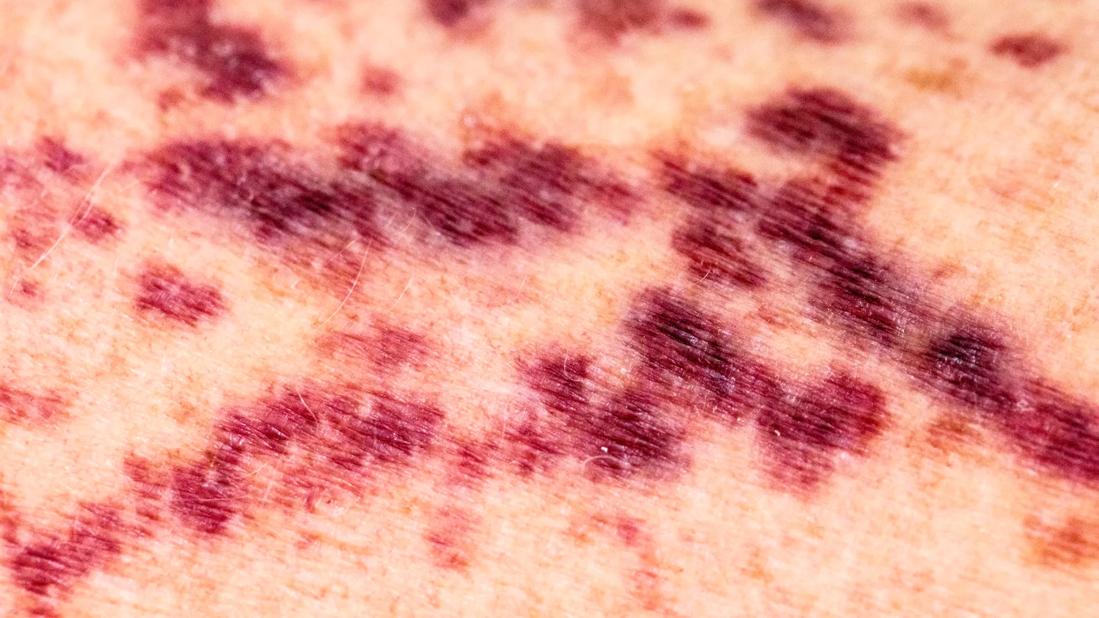
Image content: This image is available to view online.
View image online (https://assets.clevelandclinic.org/transform/16a3183a-4432-4d7e-84d0-27f1ffb90c9e/vasculitis-639952822-largersize)
vasculitis rash
Does plasma exchange (PLEX) have a role in care for patients with ANCA-associated vasculitis? Last May at Cleveland Clinic’s vasculitis conference, nephrologist Ali Mehdi, MD, took part in a debate on the topic, making a passionate case for why PLEX should indeed remain an option for some patients. The procedure has not been shown to reduce the incidence of end-stage kidney disease or death for those with severe AAV, but Dr. Mehdi said some patients can benefit by being able to take a break from dialysis and using PLEX.
Advertisement
Cleveland Clinic is a non-profit academic medical center. Advertising on our site helps support our mission. We do not endorse non-Cleveland Clinic products or services. Policy
“The reality is that a bunch of patients choose PLEX all the time,” Dr. Mehdi said. "So I think we just have to talk to our patients and factor in the practical considerations, like do we have PLEX available? Do we need to ship the patient somewhere else to do it? All these have to factor in, but... I don't think the answer is no. I don't think it's yes, either, but somewhere in between.”
Opposing Dr. Mehdi in the debate was Alexandra Villa-Forte, MD, a staff physician in Cleveland Clinic’s Center for Vasculitis Care and Research. Dr. Villa-Forte leaned on the research so far, which has shown no overall benefit to using PLEX with AAV patients. “There's no data to support the use of plasma exchange,” said Dr. Villa-Forte. “You can tell how much effort Dr. Medhi put in [to his argument], but I'm trying to convince you that I don't have to do that. The data will tell itself.”
Their lively presentation was part of “Debates in Vasculitis” at Vasculitis 2025: Advances and Controversies. Other debate matchups featured Tanaz Kermani, MD, vs. Kinanah Yaseen, MD, on “Biopsy or Imaging in the Diagnosis of Giant Cell Arteritis?” and Michael Putman, MD, vs. Adam Brown, MD, on “Should Tocilizumab Be Used in Every Patient with Giant Cell Arteritis?”
The debates were new to the conference this year, part of an ongoing effort to ensure that participants take away information they can use in their own practices. “This is important in an era when we are fortunate enough to have a variety of therapeutic options,” says Rula A. Hajj-Ali, MD, symposium chair and Associate Director of Cleveland Clinic’s Center for Vasculitis Care and Research.
Advertisement
“We tailor our programming to clinicians in two ways. First, we want to widen their thinking about what is coming down the road with vasculitis. And second, we hoped to bring them current management insights. Debates can inform their thinking when they are in front of a patient considering various therapeutic approaches.”
The agenda was tailored to include expert faculty appraisals of emergent treatment options in small vessel and large vessel vasculitis. In “Advances in Treatment,” Dr. Hajj-Ali, along with Benjamin Terrier, MD, Carol Langford, MD, MHS, and Michael Wechsler, MC, MMSc, illuminated advancements in vasculitis research and treatment. They delivered comprehensive appraisals of emerging therapies and future directions in the management of vasculitides.
“Our conversations underscored the critical importance of these topics, offering invaluable insights that are poised to shape the future of patient care and therapeutic innovation,” says Dr. Hajj-Ali.
She delivered an in-depth and thought-provoking presentation that shed light on central nervous system (CNS) involvement, one of the most challenging manifestations of vasculitis. The discussion underscored the need for continued innovation in this area.
In “Ask the Masters: Challenging Cases in Vasculitis,” Ruoning Ni, MD, presented a series of complex cases that pushed the boundaries of clinical understanding. Faculty delved into the nuances of decision-making and shared insights on managing critically ill patients with vasculitis.
Advertisement
Given the general goal of minimizing glucocorticoid exposure in the management of vasculitis, the symposium featured “The Landscape of Glucocorticoids in Systemic Vasculitides: Current and Future Use.”
Tanaz Kermani, MD, and Benjamin Terrier, MD, PhD, explored current practices and emerging strategies for use of glucocorticoids. Their presentation underscored the importance of balancing efficacy with the need to mitigate the long-term risks associated with glucocorticoid use.
Learning objectives included:
• evaluating the evolving landscape of glucocorticoid therapy
• reviewing the evidence for their use in conditions such as giant cell
arteritis (GCA), Takayasu's arteritis and small vessel vasculitides
• discussing best practices for tapering
• determining the optimal duration of therapy
In “Diagnostic Modalities in Systemic Vasculitides,” the symposium delved deeply into the realm of diagnostic modalities across various vasculitides, highlighting advancements in imaging techniques, pathology and the invaluable role of eye examinations. Led by Kaitlin Quinn, MD, Leal Herlitz, MD, Carmela Tan, MD, and Amy Babiuch, MD, the session underscored the importance of precision in diagnosis, equipping attendees with cutting-edge insights to enhance their clinical decision-making in managing these complex conditions.
Dr. Hajj-Ali, along with Benjamin Terrier, MD, Carol Langford, MD, MHS, and Michael Wechsler, MC, MMSc, illuminated leading-edge advancements in vasculitis research and treatment. They delivered comprehensive appraisals of emerging therapies and future directions in the management of vasculitides.
Advertisement
“Our conversations underscored the critical importance of these topics, offering invaluable insights that are poised to shape the future of patient care and therapeutic innovation,” says Dr. Hajj-Ali.
She delivered an in-depth and thought-provoking presentation that shed light on central nervous system (CNS) involvement, one of the most challenging manifestations of vasculitis. The discussion underscored the need for continued innovation in this area.
In “Ask the Masters: Challenging Cases in Vasculitis,” Ruoning Ni, MD, presented a series of complex cases that pushed the boundaries of clinical understanding. Faculty delved into the nuances of decision-making and shared insights on managing critically ill patients with vasculitis.
Given the general goal of minimizing glucocorticoid exposure in the management of vasculitis, the symposium featured “The Landscape of Glucocorticoids in Systemic Vasculitides: Current and Future Use.” Tanaz Kermani, MD, and Benjamin Terrier, MD, PhD, explored current practices and emerging strategies for use of glucocorticoids. Their presentation underscored the importance of balancing efficacy with the need to mitigate the long-term risks associated with glucocorticoid use. Learning objectives included:
• evaluating the evolving landscape of glucocorticoid therapy
• reviewing the evidence for their use in conditions such as giant cell
arteritis (GCA), Takayasu's arteritis and small vessel vasculitides
• discussing best practices for tapering
• determining the optimal duration of therapy
Advertisement
In “Diagnostic Modalities in Systemic Vasculitides,” the symposium delved deeply into the realm of diagnostic modalities across various vasculitides, highlighting advancements in imaging techniques, pathology and the invaluable role of eye examinations. Led by Kaitlin Quinn, MD, Leal Herlitz, MD, Carmela Tan, MD, and Amy Babiuch, MD, the session underscored the importance of precision in diagnosis, equipping attendees with cutting-edge insights to enhance their clinical decision-making in managing these complex conditions.
Presentations can be heard through July 9, 2027, by visiting
clevelandclinic.org/meded
Advertisement

Patient had tenolysis and fasciectomy but sympoms recurred

Best practices in a changing landscape

Case: Presentation includes joint pain and neurological symptoms
Evidence suggests empathy influences immune function and well-being

Going beyond simple referrals to streamline patient access
Tracing our understanding of this complex systemover more than a century

Drug-free remission holds more than a year after treatment

Cleveland Clinic group works toward earlier diagnosis of this rare disease
 Search