Locations:





Program empowers users with PsA to take charge of their mental well being
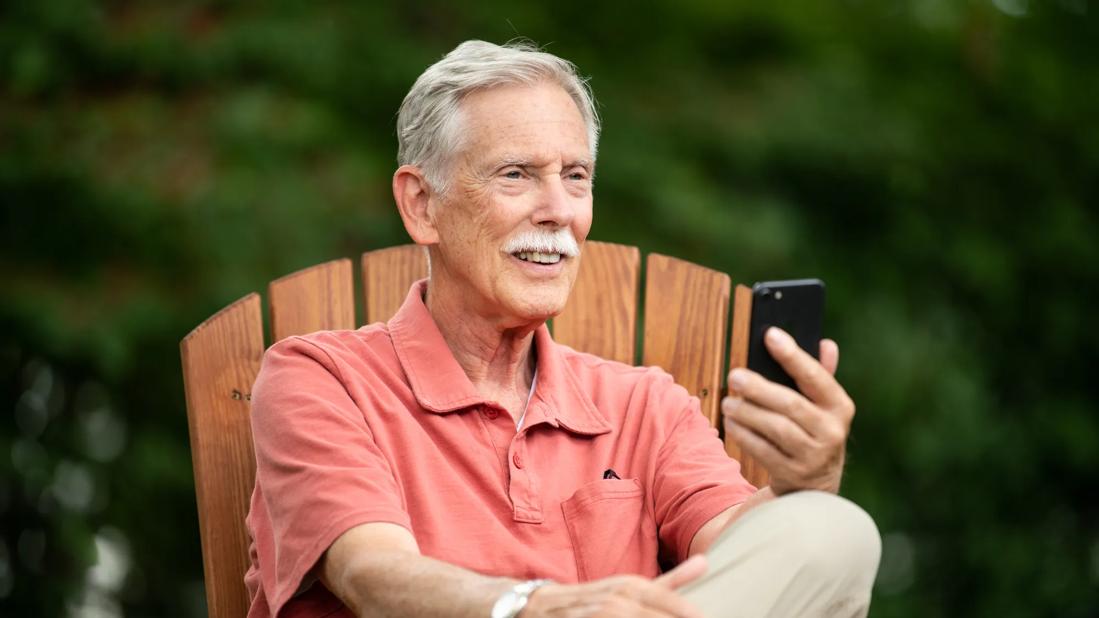
Image content: This image is available to view online.
View image online (https://assets.clevelandclinic.org/transform/3bfe334b-c290-42f2-9028-673c8939aed5/elder-male-talking-on-phone)
Older man looking at phone
By M. Elaine Husni, MD, MPH, Judy Zhang, BS, and Leonard H. Calabrese, DO
Advertisement
Cleveland Clinic is a non-profit academic medical center. Advertising on our site helps support our mission. We do not endorse non-Cleveland Clinic products or services. Policy
Psoriatic disease is closely associated with increased rates of depression and anxiety, yet addressing the mental health needs of patients with psoriatic arthritis (PsA) remains a persistent challenge. Despite progress in treatments for psoriatic conditions, individuals living with PsA experience mental health challenges at rates significantly higher than the general population.
Lifestyle factors such as sleep, physical activity, stress management and nutrition are understood to play important roles in mental health outcomes, yet programs designed to help patients improve those factors traditionally have not been tailored specifically for those with psoriatic disease.
To address this gap, Cleveland Clinic launched Immune Strength, a lifestyle e-coaching program tailored for the needs of this patient population. This program empowers users to take charge of their mental wellness through self-guided modules and regular support from certified health coaches. The goal is to enable individuals to build practices that enhance disease self-management.
Immune Strength aims to support patients in four areas: stress reduction, sleep improvement, healthy eating and exercise.
Users have access to resources and weekly contact with wellness professionals, including mental health counselors, dietitians, sleep experts and physical therapists.
In a recent prospective study, we evaluated the feasibility and preliminary efficacy of Immune Strength among adults with PsA. Participants recruited from our rheumatology clinic and a national patient advocacy group used the program for 10 weeks. Exclusion criteria included concomitant systemic autoimmune diseases and inability to engage in remote coaching.
Advertisement
The weekly program modules focused on helping participants strengthen four core lifestyle pillars — mindfulness, sleep hygiene, nutrition and exercise — with videos, self-guided exercises and tracking tools, such as sleep logs and food journals.
Certified health coaches used email and phone calls to deliver targeted education, answer questions and gather feedback in real time.
We measured engagement through module completion and coaching session attendance. Patient-reported outcomes were assessed using validated Patient-Reported Outcomes Measurement Information System (PROMIS) scales. Pain, fatigue and global health were measured at baseline and again post-intervention (week 10).
Of the 143 participants enrolled in the program, the majority completed the 10-week ecoaching intervention and were included in the final analysis.
Participants demonstrated statistically and clinically meaningful improvements across several patient-reported outcomes. PROMIS Global Mental Health T-scores increased from 42.2 to 44.7 (p < 0.001) and Global Physical Health scores rose from 39.1 to 41.1 (p = 0.001), approaching the minimal clinically important difference commonly cited for these measures. Perceived stress declined from 7.1 to 5.7 (p < 0.001), and fatigue scores improved from 60.4 to 57.2 (p < 0.001).
Self-efficacy showed notable gains, with symptom management and medication-management scores increasing by 3.45 and 3.0 points, respectively (both p < 0.001).
Most participants reported being satisfied or very satisfied with the program and indicated they would recommend it to others. Collectively, these findings suggest that an online, coach-led lifestyle intervention is both feasible and beneficial, supporting the potential of such an intervention as an adjunct to managing PsA.
Advertisement
Further research is needed to confirm these preliminary outcomes and evaluate long-term benefits.
Advertisement
Advertisement
Patient had tenolysis and fasciectomy but sympoms recurred
Best practices in a changing landscape
Case: Presentation includes joint pain and neurological symptoms
Evidence suggests empathy influences immune function and well-being
Going beyond simple referrals to streamline patient access
Tracing our understanding of this complex systemover more than a century

Drug-free remission holds more than a year after treatment

Cleveland Clinic group works toward earlier diagnosis of this rare disease
 Search