Locations:





Molecular profiles help guide referral and care planning
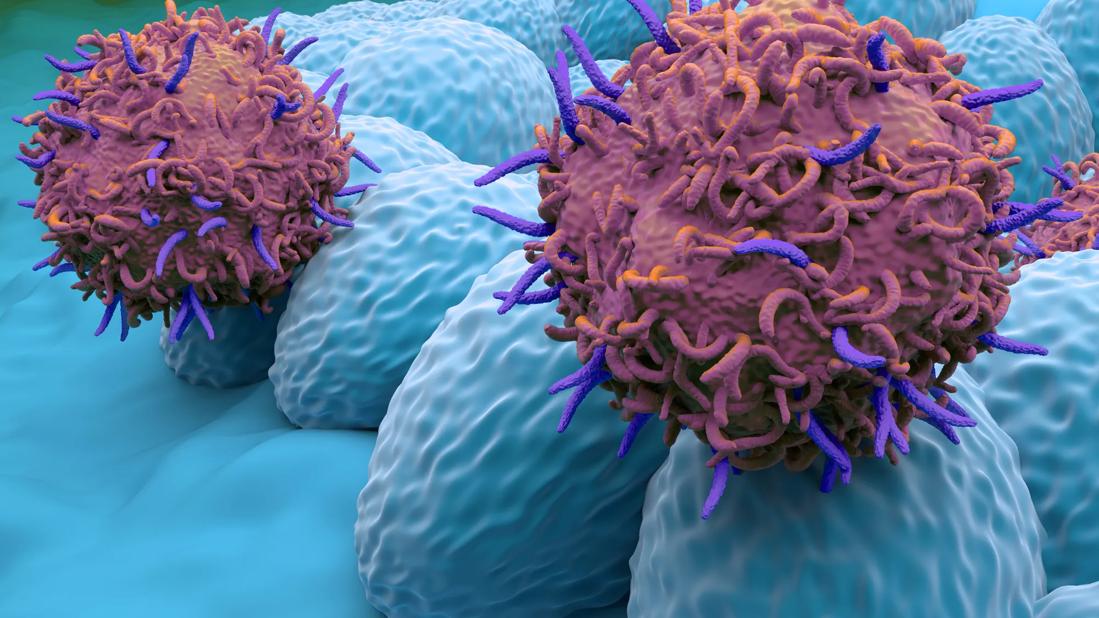
Image content: This image is available to view online.
View image online (https://assets.clevelandclinic.org/transform/a84adfe9-e4dd-4068-9a72-f781e05877e1/endometrial-cancer-2196144745)
illustration of endometrial cancer
As molecular profiling has reshaped the understanding of endometrial cancer, staging has evolved along with it. The result is a more refined system that may help clinicians better tailor surgery, adjuvant therapy and referral decisions.
Advertisement
Cleveland Clinic is a non-profit academic medical center. Advertising on our site helps support our mission. We do not endorse non-Cleveland Clinic products or services. Policy
Changes to staging protocols made in 2023 by the International Federation of Gynecological and Obstetrics (FIGO) reflect the work of The Cancer Genome Atlas (TCGA). This government-backed initiative molecularly characterized more than 30 types of cancer, including uterine corpus endometrial carcinoma – the most common gynecologic cancer.
The newer information – which may be more widely utilized in high-volume cancer centers – adds nuance to how cases of endometrial cancer are assessed and described, says surgeon Robert DeBernardo, MD, who leads the Section of Gynecologic Oncology at Cleveland Clinic.
“Back in the day, we recognized only two types of endometrial cancer,” says Dr. DeBernardo. “Type 1 tumors were low-grade cancers that rarely metastasized and were usually curable. Type 2 were way more aggressive. They often looked different under the microscope; you could have a Stage 1 Type 2 cancer and it would be highly aggressive. People could die fairly quickly, so we treated it differently.”
That two-pronged framing was based on histology, myometrial invasion and metastases. But research published by TCGA in 2013 identified four distinct molecular tumor profiles:
Each profile is associated with a different risk level, says Dr. DeBernardo.
“POLE-mutated tumors are good prognostically. Almost everybody with those is cured,” he says. “The p-53-abnormal tumors are super aggressive, and account for more than half of all endometrial cancer deaths. MMR-deficient tumors, which can happen in patients with Lynch syndrome and others, are in an intermediate-to-high risk category. And the ones that don't fit into a category behave not quite as well as the POLE-mutated, but better than the MMR-deficient.”
The updated system factors in these molecular phenotypes. A tumor that shows concerning traditional features may have an excellent prognosis if it is POLE-mutated. The opposite is true as well.
Advertisement
“If you have a non-invasive uterine serous cancer that's p-53-mutated, for example, it is Stage 2 by definition,” says Dr. DeBernardo. “We know that even if there is no other involvement anywhere else, we want to recognize that p-53-mutated carries a higher mortality risk.”
What these changes mean in practice can depend on the environment and specialty experience.
“Those of us who have been taking care of patients with endometrial cancer for years are still treating them essentially as we have been,” says Dr. DeBernardo. “Their stage will change, but practically speaking, very little else does.”
For generalists treating patients with endometrial cancer, molecular-based staging can offer important insights regarding therapies and/or when to seek a consultation.
Along with the evolution in staging, adjuvant therapies have advanced as well. Immunotherapy has shown to be helpful in people with MMR-deficient tumors, while data are emerging that indicate p53-mutated cancers do not reliably respond to radiation.
“So these molecular characteristics are going to influence the adjuvant therapies that we use,” says Dr. DeBernardo.
Those characteristics also may mean minimizing surgical intervention.
“All of this molecular information is available from the initial biopsy, which helps me as a surgeon,” he says. “If I'm looking at an endometrial cancer in an 80-year-old patient who has had a heart transplant, and all I know is that the tumor is a Grade 2, I don't know if it’s going to behave badly or not. But if I know it's p53-normal and it's POLE-mutated and I don't have to worry about removing nodes. I can get this uterus out and be confident she's going to do well.”
Advertisement
For clinicians and patients, Dr. DeBernardo says the important message is that a second opinion is always worthwhile.
“In general, cancer outcomes are better in National Cancer Institute designated cancer centers, because we just have more expertise in these bigger centers,” he says. “If their cancer has metastasized to the liver or a lymph node, or they have one of these higher risk cancers, then it's very reasonable to call for a second opinion or go to a bigger center.”
Advertisement
Advertisement
History of laparoscopy with morcellation should inform differential

Akron General project highlights the benefits of doula partnerships

Change eliminates waste associated with dual-field approach

Researchers compare two image modes in detecting left ventricular remodeling

Nutrition and cooking program supports maternal-infant health
New moniker brings clarity to this complex condition

A device implanted at the ankle joins the lineup of third-line treatments

Aiming for earlier detection of endometrial cancer in an era of increasing incidence
 Search