Locations:





A Q&A with Cleveland Clinic’s board-certified pediatric and adolescent gynecologist
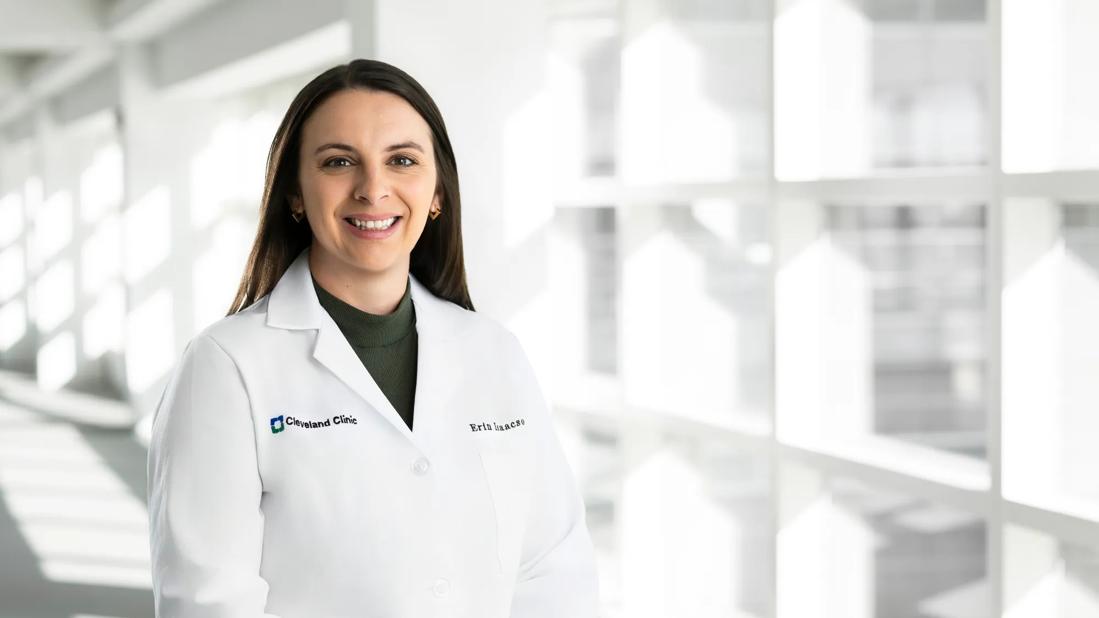
Image content: This image is available to view online.
View image online (https://assets.clevelandclinic.org/transform/a21ed8bf-afac-46d0-985d-5be681ac88d6/WHI_7787258_02-25-26_DG-1150_-3-_-2)
Picture of Dr. Isaacson
A spark was lit for Erin Isaacson, MD, when she first met a pediatric and adolescent gynecologist while in medical school at the Medical College of Wisconsin.
Advertisement
Cleveland Clinic is a non-profit academic medical center. Advertising on our site helps support our mission. We do not endorse non-Cleveland Clinic products or services. Policy
“I thought, wow, this is a really interesting connection between obstetrics and gynecology and pediatrics and pediatric surgery, which is where I really thought I was going,” says Dr. Isaacson. “I always had a pull toward pediatric patients but really loved the pathology and patients of Ob/Gyn, so it was the perfect mix.”
That was what drove her to pursue an Ob/Gyn residency at the University of Texas, followed by a fellowship in pediatric and adolescent gynecology at the University of Michigan.
Dr. Isaacson recently became the first board-certified specialist in that field in Cleveland Clinic’s Obstetrics & Gynecology Institute. She is a Fellow of the American College of Obstetricians and Gynecologists (ACOG) and a member of the North American Society for Pediatric and Adolescent Gynecology.
In a recent interview with Consult QD, Dr. Isaacson discussed topics including the unmet needs of her patient population, the influence of social media on how people understand healthcare, and conditions that distinguish younger gynecology patients from their adult counterparts.
Can you describe what specialty training in pediatric and adolescent gynecology entails?
The etiologies of the conditions we see — even the most frequent things, like issues with menses, painful periods, heavy periods — are often different in young patients, or the conditions might present much differently compared to adults. Some conditions are rare enough where a general Ob/Gyn may not have encountered it during their four years of residency.
Advertisement
So just like you would want to see a pediatric hematologist or endocrinologist for your kid, parents should expect the same specialized care for gynecology conditions. They should be able to see a pediatric gynecologist who knows the conditions specific to kids and knows the treatments recommendations that are pediatric- and adolescent-focused.
I take care of not just patients who are menstruating, but younger patients with vulvar concerns, pain or pelvic anatomy issues where the internal and/or external structures might not have developed appropriately. And those are important conditions to know early on and counsel about even at a young age, as they can be complex and need multidisciplinary care.
One of the complex conditions we learn to care for are patients with differences in sex development. These are unique patients whose genetic makeup is different than their internal organs or external genitalia. Those patients come under the care of a multidisciplinary team. They need to see gynecology when they have either a uterus, ovaries or female-appearing genitalia to understand their anatomy, or may need hormone replacement. But they also may need to consult with pediatric endocrinology, genetics, psychology, urology, etc. These are rare conditions that most adult general gynecologists would not have had the opportunity to see in their normal residency training.
Other conditions we learn to care for in fellowship include müllerian anomalies. The müllerian system is the uterus, the fallopian tubes and the vagina. There can be blockages in the development of that system that can lead to backup of menstrual blood at time of menses, creating significant pelvic pain. These conditions require careful planning of surgical intervention and counseling, and are, again, rare enough that most residency trainees don’t have enough exposure to feel comfortable managing as attendings.
Advertisement
How do communications issues differ with younger patients compared to adults?
It's very different talking with young kids and teenagers, and with working on their treatment plans with parental involvement. With patients who are teens, for example, how do we involve them in care and help them feel more empowered to participate in their healthcare decisions? It really becomes a team decision-making process with the parent, patient and physician to determine what will be the best fit for the patients to reach their goals of treatment.
What do you like about this patient population?
I really do love the younger patient and teen populations because puberty and the onset of menses can be a really complex and confusing time for them, especially when they're coming in to talk about their periods or vaginal/vulvar concerns. These are things that carry a lot of stigma and make people feel uncomfortable. That’s part of the reason we have so many issues with treating these conditions. People think things like extremely painful periods or heavy periods are just normal, and may not realize that these conditions can significantly lower quality of life for adolescents and might be the sign of other underlying pathologies.
So I love being able to engage the teens in their medical care. Once they understand a little bit more about their bodies, about their pelvic anatomy, about the menstrual cycle, and they understand why we may be recommending treatments or how we can improve their quality of life, they really do participate more and feel more empowered to share their thoughts and opinions.
Advertisement
That's really important because although they're not their own medical decision makers, they have to play an active role in what we're doing. There's so much room for them to gain knowledge and start to participate in their own healthcare decisions.
You have talked about social media. Do you feel a professional need to be on TikTok to see what your patient population is seeing out there?
I'm on TikTok and I think it's helpful to see the misinformation out there. It's frustrating, but it helps me counsel patients. I explain that everyone is entitled to their opinion, and we have to respect the experience of those who might have had negative side effects from medications or a painful IUD insertion. I tell them that with any medication, someone might not react well and that's expected. The most important thing is for them to be informed about what to look out for and to feel like they can stop any medication we start if they don’t feel comfortable with it. I recommend looking online and doing research, but ask that they then bring their questions and concerns back to the office so we can talk about them together and go through what's real and what's not.
What are some of the unmet needs of this group of patients?
There are definitely concerns and misconceptions about hormonal management of periods. I feel like it's our job as physicians to make sure we really explain in detail why we're doing what we're doing so patients don't just feel like all we did was offer one option without a choice. That's part of what I try to consider as part of our time as far as education and visits, really getting to the basics of anatomy, the menstrual cycle, hormones influencing the menstrual cycle and then why we recommend hormone management of periods.
Advertisement
There are concerns about the age of patients going on hormonal management, or false data about risks of cancer or infertility after use of these medication. In the age of social media, it's been hard to deal with some of those misconceptions and myths, but it is important to address them so patients and parents feel well informed.
The other gaps are definitely in literature, especially on the more rare pediatric and adolescent gynecology conditions. Because the conditions can be so rare or unique, it can be difficult to put together appropriate recommendations that meet the needs of every patient. The care may be very individualized. We do have great national and international societies for pediatric and adolescent gynecology, and we are continuously working to share and publish our clinical recommendations to help standardize care and make the general medical public more aware of these conditions.
Can you say something about your areas of interest in terms of research?
My main love in research is education, and that's not necessarily just education for patients, but also medical education. It starts from early on in medical school and educating trainees about what pediatric and adolescent gynecology is, and some of the interesting conditions that we see. That helps them not only consider it as a possible career path but also have it on their radar in the future when they're taking care of patients in whatever field they choose. I was lucky enough to come across pediatric and adolescent gynecology in my medical school training and it is the main reason I am in this specialty now.
I also find caring for and studying patients with bleeding disorders to be really interesting. This patient population requires a lot of collaborative care — their bleeding disorder from a hematology perspective, and then, from the gynecology side, managing their often heavy and uncontrollable period flow. Continued research will help us consider the best ways that we balance the treatment options, what’s safe for them, and what treatments are most successful.
What drew you to Cleveland Clinic?
There have been a few groundbreaking Ob/Gyn physicians before me here at Cleveland Clinic who helped pediatric and adolescent gynecology really start to be recognized, but there has never been a fellowship trained physician in pediatric and adolescent gynecology in the Cleveland/Akron area or an established department. The opportunity to provide care for patients within a system like Cleveland Clinic, and work with the many brilliant minds on multi-disciplinary teams for complex patients, is why I'm here.
Advertisement
Low-dose aspirin, more frequent checkups may lower risks
History of laparoscopy with morcellation should inform differential
Akron General project highlights the benefits of doula partnerships

Change eliminates waste associated with dual-field approach
Researchers compare two image modes in detecting left ventricular remodeling
Nutrition and cooking program supports maternal-infant health
New moniker brings clarity to this complex condition
A device implanted at the ankle joins the lineup of third-line treatments
 Search